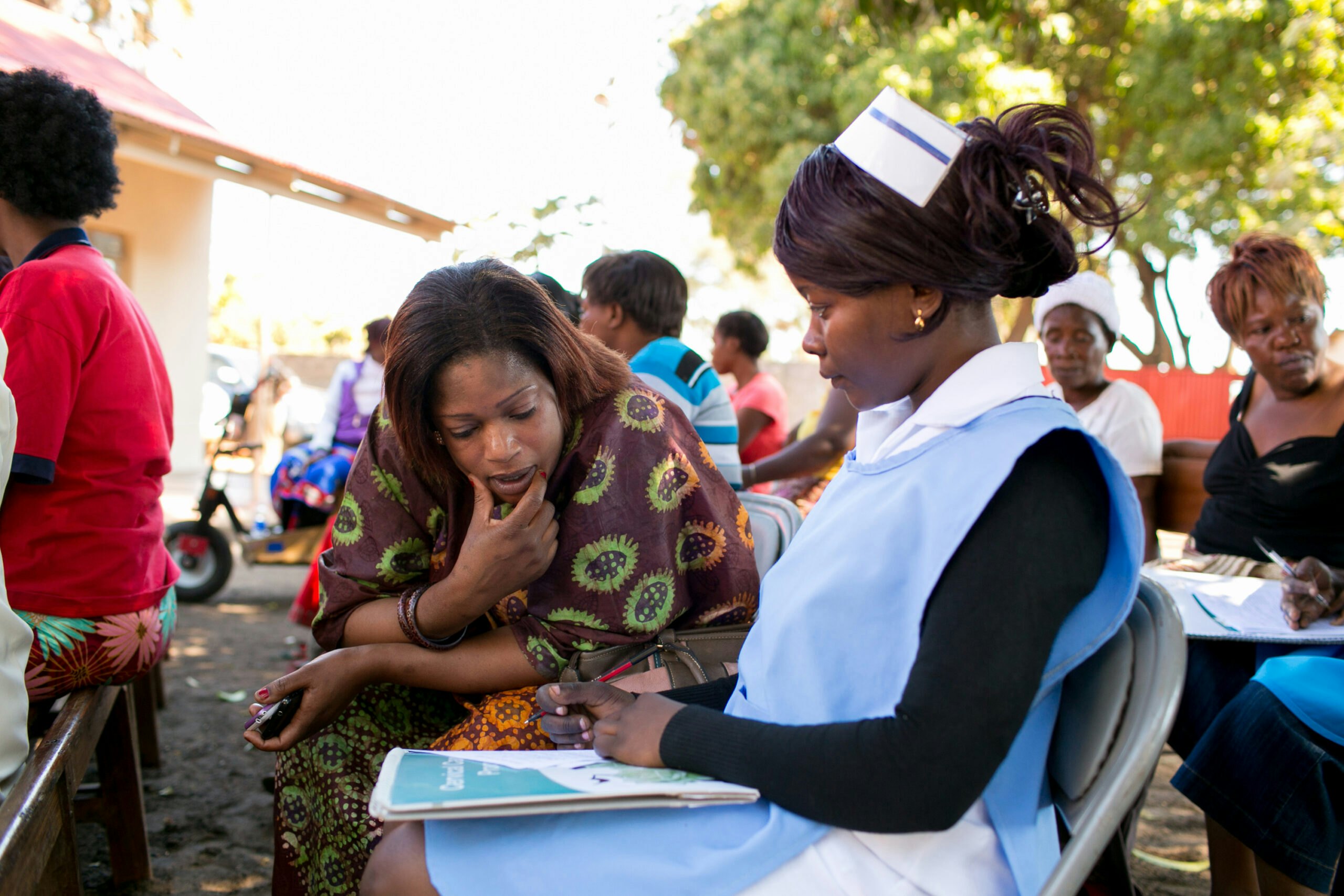
For more than two decades, programs like PEPFAR, the President’s Malaria Initiative, and the Global Fund have shown what is possible when American resources are paired with strong partnerships, clear goals, and rigorous accountability. These investments have saved lives, strengthened health systems, accelerated economic prosperity, influenced national stability, and helped countries move closer to greater ownership of their health programs.
Successful implementation of the America First Global Health Strategy depends on the timely and transparent delivery of resources. Policymakers must ensure that congressional appropriations and bilateral commitments translate into the medicines, diagnostics, health workers, data systems, and services that communities need. Delays or redirected resources weaken lifesaving programs, disrupt trusted partnerships, and undermine the measurable results that make U.S. global health leadership effective.
America First Global Health Strategy Updates
Last week, the U.S. finalized a bilateral health agreement with the Zambian government after the two countries resolved differences over data-sharing and related trade provisions. Under the deal, the U.S. will provide $1.5 billion in health funding over five years, while Zambia has committed $2.1 billion in domestic health spending. Since the administration launched the strategy last fall, the U.S. has entered into 36 bilateral MOUs with countries that have committed to increase domestic health spending by more than $10 billion.
However, the transition to implementation has faced challenges. Although the bilateral MOUs were due to take effect on Oct. 1, partner countries had until Oct. 2 to submit final fiscal year 2027 budget allocations, organizational charts, and commodity procurement plans. Because this deadline fell after the start of the U.S. fiscal year, the State Department could not begin disbursing funds under the agreements on Oct. 1, delaying funding distribution to partner countries. The State Department previously provided bridge financing through Sept. 30 after the MOUs’ original April 1 implementation date was delayed, and another bridge financing arrangement is expected to cover the latest funding gap.
There are encouraging signs that CDC technical support will remain central to implementation. The State Department says countries have selected CDC services that will keep overseas support “at or higher than prior years,” adding that the new model will “help save lives and prevent the spread of infectious diseases globally.” Only Kenya and Rwanda are expected to see “slightly lower” CDC support levels because their governments agreed to assume a greater share of health costs. However, CDC offices in Angola and South Sudan closed on Oct. 1, while the Zimbabwe office is expected to close at the end of the year. Angola and South Sudan have signed bilateral health agreements with the U.S., while Zimbabwe rejected a proposed agreement earlier this year over concerns about sharing sensitive health data.
Figure of the Week
$2.5 billion in global health and development finance
The State Department has moved $2.5 billion in funding previously designated for global health and development resources into a miscellaneous, non-expiring account as the U.S. fiscal year ended, reports AVAC. AVAC also notes that the administration sought to cancel $810 million in other congressionally appropriated funds through a “pocket rescission.” The Government Accountability Office has determined such funds cannot be withheld beyond the fiscal year without congressional approval.
Ally Updates
The Global Fund to Fight AIDS, Tuberculosis and Malaria has announced five finalists for its next Executive Director: former Global Fund Executive Director and U.S. Global AIDS Coordinator Mark Dybul; outgoing Coalition for Epidemic Preparedness Innovations CEO Richard Hatchett; Novartis President of Global Health Lutz Hegemann; former United Nations humanitarian and development leader Joyce Msuya; and Save the Children U.S. President and CEO Janti Soeripto. The candidates bring experience across disease response, health security, humanitarian assistance, and private-sector innovation.
The selection process now moves to the Global Fund Board, with finalists meeting Board members and engaging with constituencies before the Board makes its appointment at its next meeting. The incoming Executive Director is expected to take office in the first quarter of 2027.
In the News
- The Government Accountability Office found that the State Department lacks complete data and documented guidance to support its expanded role managing U.S. foreign assistance programs. GAO recommended that State improve the accuracy of information on foreign assistance grants and agreements, ensure it can produce comprehensive workforce data, and develop agencywide standards for aligning foreign assistance decisions with U.S. foreign policy priorities. The State Department agreed with all three recommendations. Clear guidance and reliable data will be important for congressional oversight and for ensuring U.S. foreign assistance remains accountable and focused on measurable results.
- The U.S. Department of State and U.S. Chamber of Commerce marked the first year of the America First Global Health Strategy with a dialogue following the U.N. General Assembly in New York. The event convened senior government officials, health ministers, and private sector leaders to assess the strategy’s progress and next steps. The dialogue focused on the strategy’s major progress so far and looked ahead at the critical policy and financing actions needed to keep the strategy moving forward.
- Senate Appropriations Committee Chair Susan Collins has urged the administration to preserve approximately $1.3 billion in remaining fiscal year 2025 Global Health Programs funding for “lifesaving programs that protect maternal and child health and counter infectious diseases, such as HIV/AIDS, malaria, and tuberculosis.” Her letter called for funds to be obligated before they expire or transferred to the State Department through an interagency agreement.
- Health Policy Watch reports that the Accra Reset released a new blueprint calling for major changes to the global health architecture, including the potential closure or restructuring of some international health bodies. The plan argues that many institutions were built around transferring money, commodities, and technical support to countries, rather than strengthening country-led systems and long-term health sovereignty. The effort has drawn support from partners including Gavi, the Global Fund, and the Gates Foundation. Ghanaian President John Mahama said, “A national reset without a global reset leaves us building on shifting sand,” while Global Fund Executive Director Peter Sands cautioned that health sovereignty should not mean walking away from global solidarity. The proposal reflects growing pressure to reform global health institutions while ensuring country ownership does not come at the expense of lifesaving services.
- CNN reports that health workers in Tanzania say disruptions to U.S.-supported HIV programs have affected services that prevent mother-to-child transmission of HIV, including community follow-up, appointment support, and education on how HIV can be transmitted to babies. PEPFAR has helped nearly 8 million babies be born HIV-free since its creation in 2003, but a July 2026 survey by amfAR and Johns Hopkins University cited by CNN found that 63% of participating PEPFAR-funded organizations reported disruptions to services that prevent mother-to-child HIV transmission due to funding cuts experienced in 2025. The State Department told CNN that the administration is strengthening PEPFAR by promoting greater country ownership and focusing on measurable health outcomes. As PEPFAR evolves, preventing new pediatric HIV infections will require reliable financing, trusted community health workers, and continuity of care for mothers and babies.
- The National Institutes of Health released its FY 2026-2030 Strategic Plan for HIV and HIV-Related Research, the first NIH HIV research strategic plan developed under Geri R. Donenberg, Ph.D., Director of the Office of AIDS Research. The plan focuses on advancing HIV science, strengthening research capacity and infrastructure, and managing the NIH HIV research investment effectively. It also emphasizes implementation science as a central priority so that advances in prevention, care, and treatment reach the people who need them most. Continued research and rapid translation of discoveries into practice will be essential to ending HIV/AIDS as a public health threat.
- The process to select the World Health Organization’s next Director-General is underway, with six candidates publicly identified following the Sept. 24 nomination deadline, Health Policy Watch reports. WHO is expected to formally announce candidates on or after Oct. 29, with the first candidates’ forum beginning Nov. 18 and the final appointment scheduled for the World Health Assembly in May 2027. The next Director-General will take office as WHO navigates significant financing constraints and broader discussions about the roles of countries, regional institutions, and multilateral organizations in the global health system.
- The State Department has extended a malaria procurement contract through November 2027 to help prevent potential shortages of antimalarial medicines and insecticide-treated bed nets, journalist and author Emily Bass writes. About $305 million remains available under the existing contract, and the extension does not provide additional funding. Bass cites a Sept. 28 State Department memo saying three commodity orders are on hold and another 23 are at risk following delays in establishing a new procurement mechanism. Reliable commodity supply chains will remain important as countries take on greater responsibility for malaria programs while ensuring patients continue to receive lifesaving prevention and treatment.
- The Ebola outbreak in the Democratic Republic of Congo has now killed more than 4,000 people among 8,300 reported cases, according to Health Ministry figures reported by the Associated Press. Although weekly confirmed cases declined from about 850 in mid-July to an average of 490 in September, Africa CDC cautioned that ongoing conflict and difficulties reaching some communities may partly explain the decrease. The response is also facing operational challenges, including unpaid health workers and the destruction of a displacement camp that housed an Ebola transit center and forced 19,000 people to flee. The outbreak demonstrates how effective disease response depends on vaccines, diagnostics, trusted local engagement, a supported health workforce, and the ability to sustain services during conflict and displacement.