Name: Albert Sachs
Country: Apartheid South Africa
Apartheid South Africa was a monument to injustice that finally collapsed with the election of Nelson Mandela, the country’s first Black president, in 1994.
For nearly 50 years prior, though, Apartheid overtly empowered South Africa’s White minority while legalizing brutal discrimination against its non-White majority. Defeating this evil system took the bravery, sacrifice, and commitment of many anti-Apartheid activists – Black and White – who believed that a free and just society was possible.
Albert “Albie” Sachs was one such person. He was born in 1935 to Jewish immigrants who had fled persecution in their native Lithuania. As a lawyer, Sachs opposed Apartheid’s injustice and committed to its downfall.
As he described during his 2013 Freedom Collection interview with the George W. Bush Institute, “It was a grossly unequal, unjust, unfair society and the unfairness was written in to the very laws justified on the grounds in those days that the Whites were civilized, were superior, that come to bring enlightenment to Africa … If a Black person and White person fell in love, they were in serious danger. If they were caught kissing, they could go to jail.” they could go to jail.”
Sachs was a key player in the democratic transition that followed and building a South Africa, where all people were protected equally under the law.
After Apartheid, he was among the founding judges of the new Constitutional Court. As he reminisced, “It’s been a great privilege and honor and intellectual delight for me to have been on the first Constitutional Court established in 1994 after the first democratic elections. To ensure that the constitution, this document we’d invested our lives in creating, would be meaningful in protecting the institutions of our new democracy.”
Sachs’ career as a freedom advocate began at 17, when as a second-year law student at the University of Cape Town, he was involved in nonviolent, anti-Apartheid protests.
He went on to practice law and defended people charged under racial statutes and repressive security laws. Sachs’ opposition to the government got him arrested, and he was even placed in solitary confinement without trial.
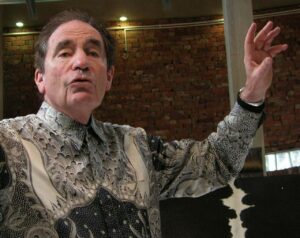
In 1966, he went into exile and spent time teaching in both England and Mozambique. Even then, he remained a target. In 1988, Sachs survived a car bomb assassination attempt but lost an arm and sight in one eye. That didn’t deter him from returning to South Africa, however, to help put the final nails in Apartheid’s coffin.
Reflecting on that victory, he said, “But what it boils down to is that the achievement of constitutional democracy goes well beyond simply destroying the institutions of racist power. They have to be replaced by democratic institutions that work in a way that’s fundamentally fair and allow for freedom for the people who are protected by the constitution.”