This summer, America told its story.
A story about Americans. Of small towns and parades, of barbecue, tacos, and seafood boils. A story of diversity and joy.
As a nation, we welcomed over one million visitors to celebrate the World Cup, and to mark America’s 250th birthday. We showcased America at our best – from the way Boston, Massachusetts; Lawrence, Kansas; and Dallas, Texas, opened their doors to soccer fans to the thousands of towns which hosted fireworks, dog parades, and readings of the Declaration of Independence.
In my former role as a U.S. diplomat, I spent decades considering American soft power – how to generate it, how to identify audiences, how to leverage that ephemeral good will. Hours fiddling with speeches and social media posts, dissecting strategic messaging campaigns. Sometimes we were successful, but most of the time, that highly structured, resolutely controlled planning just fell flat.
This summer, once again, showed why. Soft power, real soft power, can’t be manufactured.
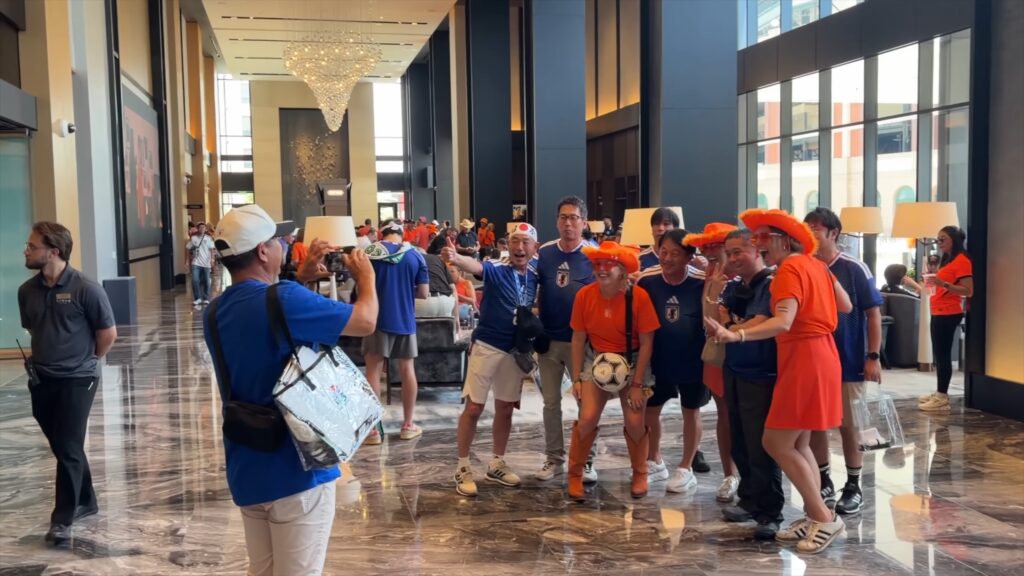
For many World Cup visitors, the United States they encountered was very different from the caricature of politicians and social media. They found America, in all our exuberance and goofiness. They saw volunteers helping fans navigate unfamiliar cities, they visited neighborhoods shaped by generations of immigration, and Americans almost too eager to recommend a regional delicacy or explain a local landmark. They saw us in our generous, complicated, sometimes excessive and frequently surprising selves.
I went to college in Lawrence, Kansas, about 40 miles from Kansas City, which served as the base camp for the Algerian team for the tournament. I watched videos online (and sent some to my father – also a KU alum!) of the hundreds of people who greeted the Algerians as they arrived, restaurants expanded halal offerings, the university marching band played the Algerian national anthem. Residents flocked to the open practices and filled watch parties.
The welcome wasn’t manufactured by a national campaign or elaborate strategy and wasn’t calculated to win a trade deal or alliance. It grew from the absolute joy of a college town that understood it had been given a chance to host the world.
This is how soft power works. Lawrence didn’t try to persuade Algerians to think differently about the United States. It gave them an experience they could judge for themselves.
This happened across America during the tournament. Visitors wondered why a gas station needed dozens of fuel pumps, a barbecue station, and acres of snacks. And America answered – city officials added shuttle service to Buc-ee’s so people could experience it for themselves – not because Buc-ee’s is a polished or carefully edited version of America, but because it is unmistakably itself and unmistakably American. Visitors shared it because it felt real.
America 250 demonstrated another side of soft power: the success of a national story told locally. Of course, such a momentous anniversary was marked by large national events, concerts, and commemorations, but the most revealing moments took place far from Washington.
Gaitlinburg, Tennessee, prides itself on its annual Fourth of July midnight parade, and this year was no different. Billed as the “First Independence Day Celebration in the Nation,” this small-town spectacular reflected America in all its uniqueness. Giant balloons of the U.S. Constitution, a huge cake, people dressed as the Founding Fathers, high school bands, veterans and families. On Bainbridge Island in Washington state, the Fourth was marked by pie-eating contests, volunteer bands and floats, rollerskating, classic cars, and a community-wide festival that lasted all day.
These celebrations, and thousands more across our nation, succeeded because America 250 offered a national frame without requiring every community to tell exactly the same story.
Because, as Americans, every community does have its own story. The American story is shaped by states, towns, schools, tribes, civic organizations, faith-based communities, businesses and families.
It is shaped by us, in all our diversity and with all our differences. And that’s our strength.
A town parade may not look like an instrument of national influence, but it says exactly what is important about our country: Americans still come together, still volunteer, still build memories and traditions, and still understand national identity through the places we call home.
As we tell the story to the world about America, and who we are as a people, we aren’t simply receiving and echoing a narrative. We are writing it, and making it ours, in all of our glorious difference. This is what connects Lawrence, Buc-ee’s and the joy that marked the parades and concerts celebrating America’s birthday in Bainbridge and Gaitlinsburg: None of these depended on an official message delivered from the top.
America has a new challenge ahead, and another chance to show the world who we are: the Olympic Games in Los Angeles in July 2028.
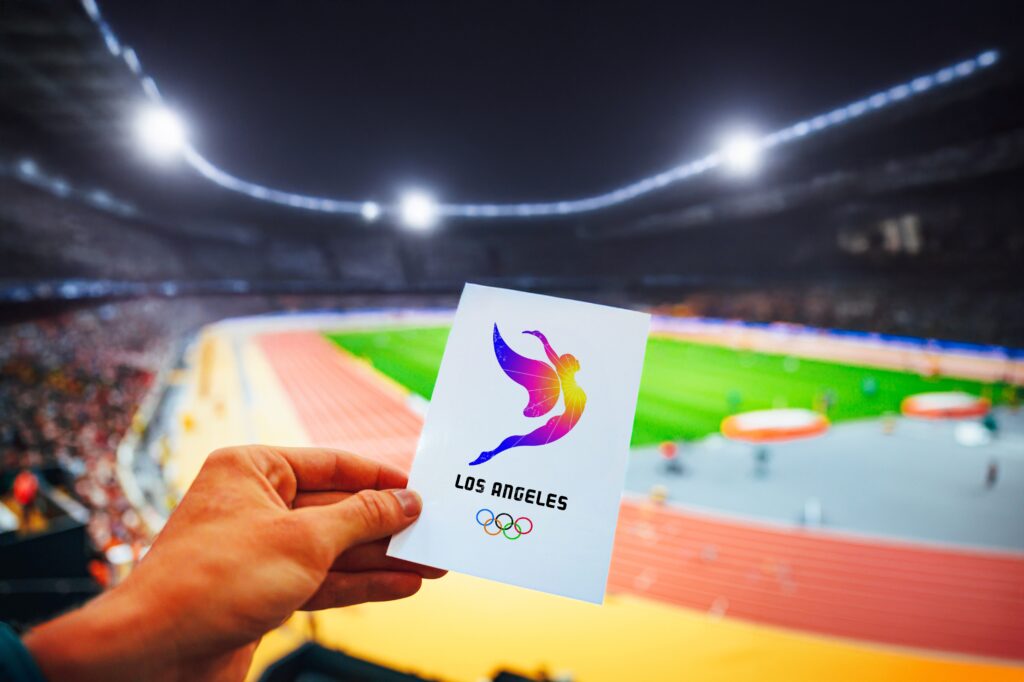
We can learn from our success this summer and, again, tell the world who we are.
First, let’s anchor our story in people. America’s strongest ambassadors won’t be national officials or famous athletes but the child hoisting the flag of a country she just learned about. America will be the volunteer welcoming visitors at the airport and the cop helping someone find the right train. Kindness, generosity, decency, curiosity – our visitors will see American values first-hand.
Next, let’s really showcase America in all its complexity.
We fail when we try to offer visitors a scrubbed or overly polished version of the country. Our visitors have heard of our political divisions, our sometimes-overheated rhetoric, our uneven wealth, and occasional excesses. The Olympics, just like the World Cup and America 250, will also give us a platform to showcase America’s creativity, openness, diversity, humor, and gift for reinvention. Our goal shouldn’t be to pretend that America is perfect, but that we are a nation of 342 million individuals and that we are proud of that.
Third, think and focus locally. The World Cup showed us the power of mayors, universities, tribal leaders, and local businesses. Lawrence succeeded because it welcomed Algeria as Lawrence, Kansas, not as a smaller version of Washington. Gaitlinburg celebrated America through the unique traditions of Tennessee. Our identities simply lend credence to the fabric of our national story.
Finally, the national focus for the Olympics should be on engagement, not requirements. Of course, as in hosting any international event, there will be mandated logo rules and talking points, themes, and approval processes. As a former diplomat, I know some of that is necessary, but to really leverage the magic of soft power, national planners shouldn’t mistake consistency for impact.
The magic happens not when every participant uses the approved talking points, but when our guests will meet Americans, go on road trips from LA, explore our traditions, and leave with stories they want to tell.
America’s hometown 250, as well as the World Cup, showed what happens when visitors experience the United States without the usual filter. We don’t need to invent a new identity for the Olympics, or bluster or posture on our greatness. We just need to open the door to the country that already exists and invite the world to celebrate with us.