AIDS 2026, the 26th International AIDS Conference in Rio de Janeiro, Brazil, showcased promising scientific progress in HIV/AIDS prevention and treatment. Researchers highlighted twice-yearly injectable lenacapavir for PrEP and a potential once-weekly oral HIV treatment. Additionally, Merck announced plans to expand access to alimatravir, an investigational once-monthly oral HIV prevention pill.
There was also welcome news from Washington. The U.S. Department of State announced nearly $2 billion in new partnerships with faith-based and community organizations, including $1.4 billion for integrated health services in more than 20 countries. The Department also confirmed that it will provide the $600 million appropriated by Congress to Gavi, the Vaccine Alliance.
The world is closer than ever to ending HIV/AIDS as a public health threat. As countries assume greater ownership of health programs, success will depend on ensuring new tools and innovations reach the people who need them most through trusted local partners, reliable financing, and strong health systems.
Bush Institute Insights
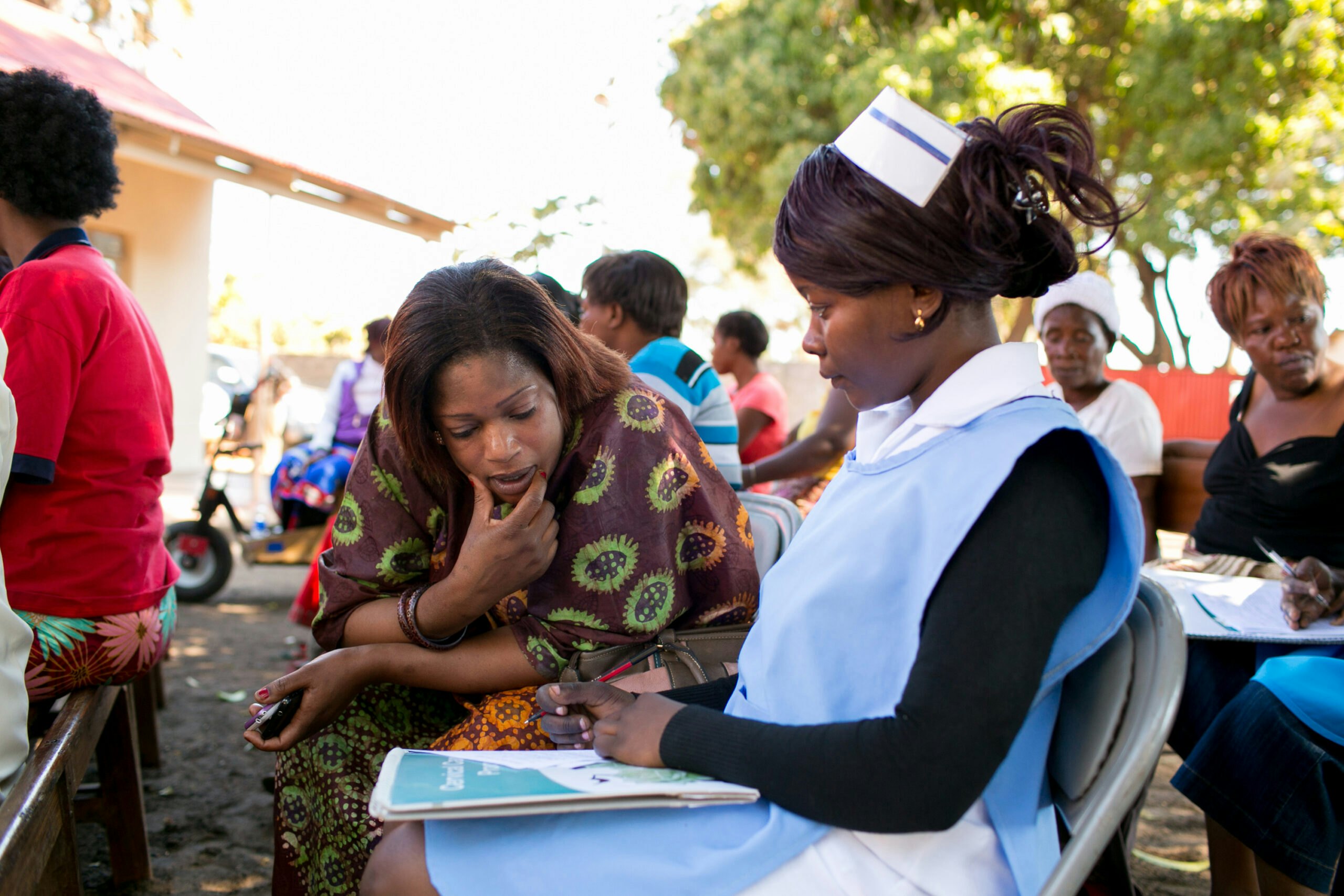
The U.S. has made an additional commitment of $2 billion for partnerships with faith-based and community organizations to provide global health and humanitarian assistance around the world. Rapid and effective Implementation of this investment will be crucial, and many local faith-based organizations (FBOs) have been valuable partners for more than a decade. Implementing programming through historically successful FBO implementing partners will allow the U.S. to support rigorous oversight, transparent reporting, and accountability to maintain high-quality services and ensure that the State Department’s target to dedicate 80% of funds to frontline healthcare workers is met.
At the same time, U.S.-based partners who have already received a portion of this funding must ensure that they develop and strengthen relationships with local partners on the ground, such as Christian heath associations, Islamic faith missions, and other faith-based groups.
I recently told DevEx that PEPFAR offers a roadmap for ensuring these partnerships successfully distribute resources for frontline health services.
As the George W. Bush Institute outlined in our PEPFAR and Communities report, sustainable country ownership depends on returning to supporting local organizations, including faith-based groups, that have earned community trust and can help deliver high-quality services where they are needed most. To build on PEPFAR’s original vision of supporting a truly locally-led response to end the HIV/AIDS pandemic, the Global AIDS Coordinator set a goal in 2016 for 70% of the portfolios of the Centers for Disease Control and Prevention (CDC) and United States Agency for International Development (USAID) to transition to local partners by the end of the implementation period of PEPFAR’s 2020 Country Operational Plans (COPs). PEPFAR also developed metrics and standards to judge whether an organization is local.
These changes allowed PEPFAR to meet their goal in 2020 and by 2023, 60% of bilateral PEPFAR funds went to local organizations.
America First Global Health Strategy Updates
- The State Department will soon transfer the $600 million Congress appropriated to Gavi, the Vaccine Alliance, for fiscal years 2025 and 2026. The funding will support Gavi’s delivery of vaccines for 20 diseases across more than 50 low-income countries; the bulk of the U.S. money will expand access to vaccines against malaria. Since its creation, Gavi estimates that it has vaccinated more than 1.2 billion children and helped prevent more than 20.6 million deaths. Highlighting the broader security benefits of these investments, Senate Appropriations Committee Chair Susan Collins, R-Maine, said Gavi “plays a critical role in averting the spread of preventable diseases globally and stopping outbreaks before they reach U.S. borders.”
- A new State Department-sponsored report from the National Academies of Sciences, Engineering, and Medicine outlines an evidence-based approach to transitioning disease-specific programs toward integrated, country-led health systems. Experts emphasize that transitions should be gradual and tailored to each country’s readiness, with adequate financing, strong data systems, community engagement, workforce support, and safeguards to protect services for HIV, tuberculosis, malaria, and other priority diseases. The report also recommends monitoring outcomes and using clear indicators to adjust transitions when quality or access declines. “The measure of success will not be how quickly programs transition, but whether countries sustain and improve health outcomes,” said Chris Collins, president and CEO of Friends of the Global Fight.
Figure of the Week
18% decline in international HIV financing
UNAIDS released a special report finding that total international resources available for the HIV response fell from $8.8 billion in 2024 to $7.3 billion in 2025, an 18% decrease that left financing at its lowest level in nearly two decades. Increased domestic spending partially offset this decline, but total resources for the HIV response still fell 6% year over year, putting targeted prevention and community-led services at particular risk.
A KFF-UNAIDS analysis focused specifically on donor government disbursements for HIV shows an even steeper decline in support. These disbursements fell 25%, from $8.3 billion in 2024 to $6.2 billion in 2025, the lowest level since 2007. The decrease was driven by a $2.1 billion drop in U.S. disbursements, even though Congress has continued to appropriate international HIV funding at steady levels. Financing from other donors remained flat in 2025. Additional, unobilgated financing remains in the State Department’s pipeline that could be spent in the future.
Ally Updates:
In a piece for DevEx, Bill Steiger, CEO of Malaria No More, discusses the critical relationship between malaria and the Ebola outbreak in the Democratic Republic of Congo (DRC). Because of its terrain and environment, DRC has high rates of malaria, which shares similar early symptoms with Ebola such as high fever, muscle and joint pain, and nausea. One disease masks the other, so some people with fever who think they have malaria delay or forgo testing for Ebola, while other people who do have malaria overwhelm Ebola treatment centers.
To achieve better case-finding, testing, and treatment results, that are necessary to control Ebola, Steiger calls for mass administration of antimalarial drugs in Ebola-affected health zones. This approach helped identify Ebola patients during the 2014 outbreak in West Africa by sharply reducing malaria cases. The Global Fund’s $4.6 million in emergency financing to support a small-scale malaria campaign in Eastern DRC is a welcome start, according to Steiger. He urges the U.S. government and the Global Fund to direct already appropriated malaria and humanitarian funds toward expanding campaigns against malaria in the remaining hot zones, which should work through trusted local partners, and CDC’s expertise.
In the News
- China and Russia are expanding their global health work in South Africa as part of broader diplomatic and geopolitical efforts. In an opinion piece from The Hill, Foundation for Defense of Democracies researchers Ivana Stradner and Mark Montgomery argue that a quick PEPFAR transition risks weakening a longstanding source of U.S. influence. PEPFAR has invested more than $8 billion in South Africa’s HIV/AIDS response since 2003. As U.S. support shifts, China has already committed new funding for HIV services, and Russia is increasing health engagement on the continent. The authors note that continued U.S. health engagement can help preserve relationships and influence built through more than two decades of HIV programming.
- Clear targets, adequate financing, and regular monitoring will be critical as countries assume greater responsibility for HIV/AIDS, tuberculosis, and malaria programs under the America First Global Health Strategy. In Think Global Health, Friends of the Global Fight leaders Chris Collins and Jeffrey Sturchio and former PEPFAR Chief of Staff Jirair Ratevosian draw on lessons from the private sector to emphasize measurable outcomes, public implementation plans, and continuity of services. Early warning signs such as treatment disruptions, health worker attrition, or gaps in data reporting can help identify where transitions are faltering before progress is lost.
- Africa’s growing influence extends far beyond the 2026 World Cup, with the continent poised to play a larger role in global markets and U.S. foreign policy. George W. Bush Institute Director of Global Policy Natalie Gonnella-Platts and ONE Campaign North America Executive Director Elizabeth Hoffman point to Texas as a model for stronger engagement, with $13.1 billion in exports to Africa in 2025 and deep ties supported by diaspora communities, educational exchanges, and security partnerships. To strengthen U.S.-Africa engagement, the U.S. should build on proven tools such as PEPFAR, the Millennium Challenge Corporation, and U.S. trade policies.
- Pharmaceutical company Merck announced plans to prepare for broad access to alimatravir, an investigational once-monthly oral HIV prevention pill currently in Phase 3 trials. The company has signed royalty-free licensing agreements with seven generic manufacturers covering 129 low- and middle-income countries and is supporting regional manufacturing in Africa and Latin America. If approved, alimatravir could provide one month of HIV protection in a single pill, offering a potential new PrEP option to expand access and reduce new HIV infections.
- Three in four surveyed U.S. voters support restoring U.S. disease prevention aid to help contain the Ebola outbreak in the Democratic Republic of the Congo, according to a Rockefeller Foundation-commissioned poll. The survey additionally found that 72% of voters support restoring some or all global health funding as cases rise, with support for Ebola-specific aid crossing party lines.
- U.S. congressional staff joined a recent briefing on “Where the World’s Children Stand,” hosted by the Elizabeth Glaser Pediatric AIDS Foundation with Malaria No More, World Vision, and the RESULTS Educational Fund. Speakers highlighted declines in child mortality, remaining gaps, and Congress’s role in sustaining progress. The briefing also focused on integration and sustainability, emphasizing the need to protect recent gains and accelerate progress in child health.
- More than 100 U.S. ambassadorial posts remain vacant worldwide, including key positions in Saudi Arabia, the United Arab Emirates, Qatar, Kuwait, and Iraq, Semafor reports. Senate-confirmed ambassadors play a critical role in coordinating America’s diplomatic, military, international assistance, intelligence, and economic tools, U.S. Global Leadership Coalition President and CEO Liz Schrayer emphasized. With those posts unfilled, the administration has relied more on special envoys for direct engagement in the Middle East, with experienced career diplomats continuing to lead U.S. embassies. Former diplomats warn that the vacancies can complicate communication with allies.