For the United States, South Africa isn’t simply another bilateral relationship. It is the continent’s most industrialized economy, a diplomatic heavyweight across Africa, a leading voice among nonaligned powers and a country whose future will shape the global order for decades to come.
And despite policy differences with the United States, South Africa is a dynamic, independent power whose partnership advances American interests. This engagement doesn’t require agreement on every issue, but a joint recognition that both countries can benefit through engagement.
Our adversaries understand this: China and Russia aren’t shy in their wooing of South Africa. But for the United States, the good news is that our relationship doesn’t need to be built from scratch. The foundation already exists, built over decades of trade, health cooperation and investment, educational exchange and people-to-people ties.
The United States’ job now is to approach our bilateral relationship with South Africa with respect for the country’s independent foreign policy, acknowledging that no relationship between democracies is ever perfect, but that the benefits of partnership are profoundly worthwhile.
The United States and South Africa have diverged before. During South Africa’s dark Apartheid era, the United States viewed the White minority government as a strategic ally against communism in Africa and was slow to impose sanctions until the 1986 Comprehensive Anti-Apartheid Act. With the election of President Nelson Mandela in 1994 following South Africa’s transition to democracy, our nations built a solid bilateral relationship, anchoring a strategic partnership in health, security, and trade.
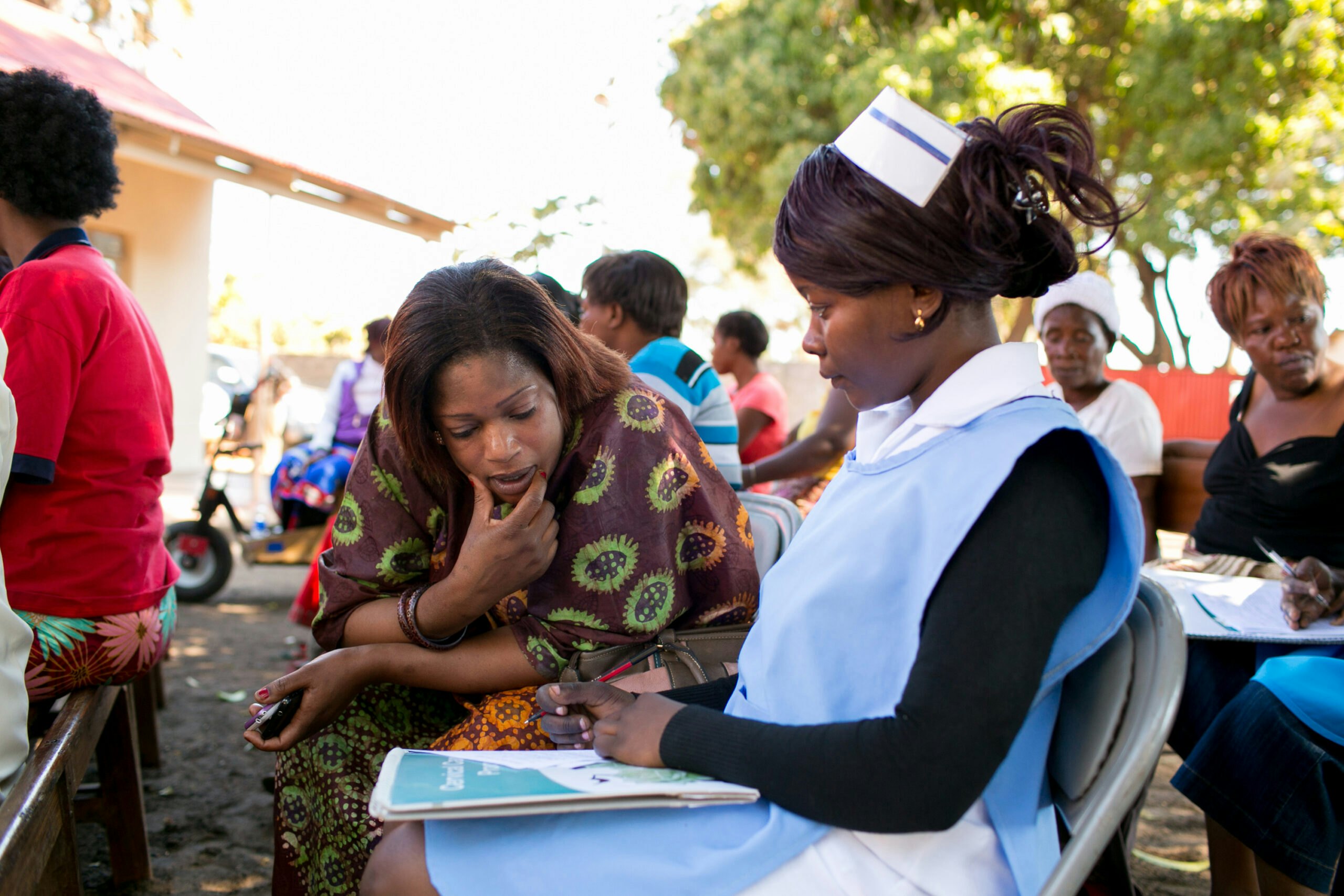
The U.S.-South African partnership in health has traditionally been a model of innovation and cooperation, saving lives and creating a blueprint for other nations to follow. South Africa became a leader in the President’s Emergency Plan for AIDS Relief (PEPFAR), launched by President Bush in 2003. Working in an integrated partnership with the United States, South Africa developed and hosted the world’s largest HIV treatment program and now funds approximately 80% of its own HIV programs.
South Africa developed data-driven strategies to identify HIV hotspots, focusing on high-burden regions and populations for targeted interventions. It integrated tuberculosis screening and other services, a model that the United States currently seeks to replicate across its global health-supported programs. As the United States shifts its foreign assistance priorities, South Africa is accelerating full ownership of its programs, leveraging its deep expertise and world-class talent in health management.
In trade, too, South Africa and the United States have common goals.
Our countries are economic partners, with two-way trade in goods exceeding $26 billion in 2024, driven by the African Growth and Opportunity Act (AGOA). South Africa is a major beneficiary of AGOA, with preferential access for exports including agricultural products such as wine and citrus as well as automobiles and other manufactured outputs.
More than 600 American companies operate in South Africa, reflecting its status as a regional hub with developed logistics and transportation sectors and a talented workforce. Right now, the United States is considering updates to AFOA, reframing the agreement as more “reciprocal” and eliminating African trade barriers to the importation of U.S. goods before the authorization expires on Dec. 31.
And while policy disagreements do exist – on U.S. immigration priorities, on the Middle East and South Africa’s closeness with autocracies like Russia and China – our countries also have a lot in common. Our citizens share democratic values, a love of family, faith, sport, independence, and entrepreneurship. South Africans are citizens of the world, wildly creative and innovative, building businesses and forging global networks. Despite our respective domestic challenges, the United States and South Africa can reinvest in a mature partnership that can withstand disagreement and benefit all our citizens.
Three recommendations can take us along this path.
First, the United States should anchor the bilateral relationship in economic partnership and shared growth. Expanding investment in innovation, including energy infrastructure, digital innovation, critical minerals, and manufacturing, would demonstrate that the United States is prepared to invest seriously in this partnership and South Africa’s future.
South Africa would benefit from reliable investment, new job creation and a partner in developing technology, while the United States could gain access to critical minerals, investment in strategic industries and resilient supply chains. The United States should modernize AGOA, providing benefits for both countries but, most importantly, the longer-term certainty that will foster the confidence for businesses to invest.
Secondly, Washington should support and partner with South Africa in its role as a traditional strategic interlocutor across the continent and the broader Global South.
South Africa has influence and credibility with both African institutions and among emerging powers precisely because it is viewed as independent. In many areas – conflict mediation, peacebuilding, crisis management – South Africa and the United States have the same goals. South Africa prides itself on this role, and the United States has traditionally turned to the country as a partner in mediation.
Finally, as the United States seeks to both streamline and modernize its global health support, through government-to-government agreements, South Africa’s innovation, expertise and leadership – as evidenced by its past success in implementing PEPFAR – could position the country as a model for other nations as they assume more ownership for their own citizens’ health.
As conflicts continue to flare across the continent, South Africa can play a credible and powerful role in calming tensions and shaping resolution with U.S. support.
Africa will shape the global economy and geopolitical balance of the 21st century. Countries that invest in genuine relationships now will have influence later.