
We the People:
Pluralism in Real Life


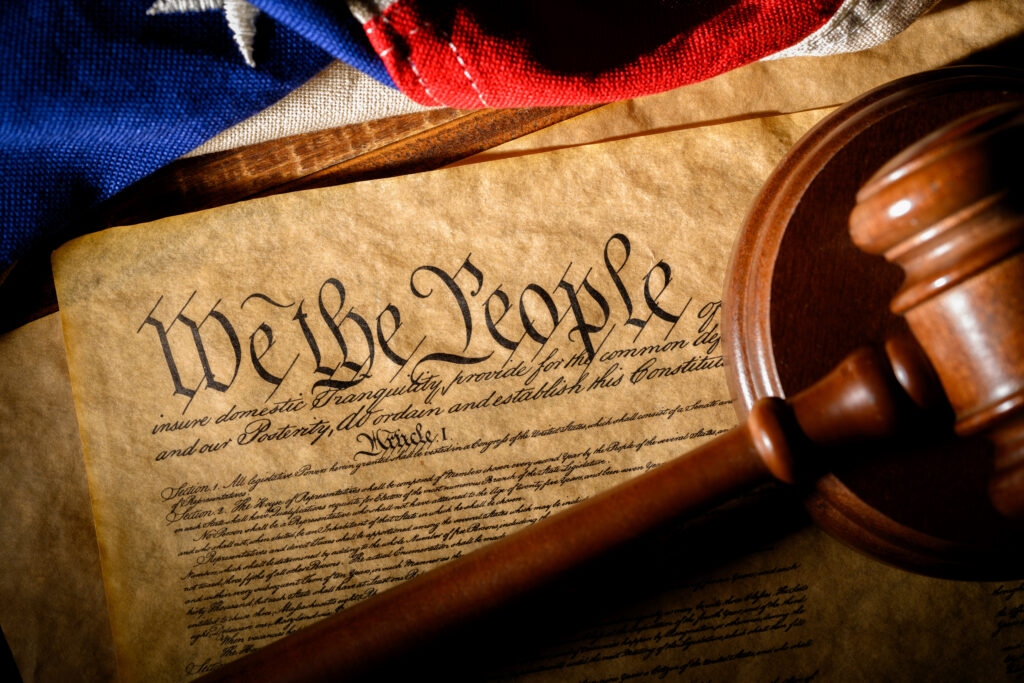
Have you ever wondered whether a diverse, complex society can hold together when it feels like so many forces are pulling it apart? Pluralism says that it can.
Download the Full Toolkit (PDF)
We define pluralism as the commitment of people – of varying beliefs and backgrounds – to respect each other as equal citizens in a democracy. This guide is designed to help American leaders appreciate that meaning and implement it.
“It is the American story – a story of flawed and fallible people, united across the generations by grand and enduring ideals. The grandest of these ideals is an unfolding American promise that everyone belongs, that everyone deserves a chance, that no insignificant person was ever born.”
– George W. Bush
Forty-third President of the United States,
January 20, 2001, Inaugural Address
Inspired by the examples of President and Mrs. Bush, as well as alumni of the George W. Bush Institute’s leadership programs, we wrote this to be a pragmatic, plain-spoken resource for leaders across the country of various sectors and missions. We believe it will help you to work with fellow citizens of different stripes on building a more perfect union.
The contents are taken from a series of interviews, facilitated group conversations, and analyses that we conducted across various segments of American society – local and national government, faith organizations, university campuses, media, private sector leaders, nonprofits, and rural schools. Many were featured in the Bush Institute’s Pluralism Challenge project.
We identified nine actions that can amplify American pluralism:
- Build a foundation for respectful engagement.
- Establish a shared mission, goal, or challenge.
- Create better dialogue through better disagreement.
- Avoid a conversion mindset.
- Model pluralism as a leader.
- Incorporate pluralism into decision-making.
- Make pluralism a duty of citizenship.
- Question your own assumptions.
- Enjoy pluralism’s lighter side.
We recommend that leaders commit to these nine practices with their teams, organizations, and communities. It won’t be easy, but it does get better with practice. And while this may not be an exhaustive list of habits, we believe they’ll help all of us become stronger pluralists – and, as a result, strengthen America.
1
HOW DO WE EXPERIENCE PLURALISM?
The United States is a country of 340 million people. Pluralism allows us to coexist by reconciling profound differences with shared democratic values and freedoms. A leader must understand this tension between appreciating stark differences and maintaining cohesion to be a successful pluralist.
Many of us directly experience pluralism in daily life through different – sometimes competing – examples of expression, worship, and association. We believe in fostering strong cultures of free expression that line up with the First Amendment. Public debate over contentious issues is a fundamental component of pluralism in a free society.
Think of a political or interest group to which you’re passionately opposed. Consider that pluralism protects its right to exist and engage within society.
In his “Plea for Freedom of Speech in Boston,” abolitionist Frederick Douglass brilliantly articulated how pluralistic expression is a cornerstone of liberal democratic societies.
While it’s difficult for the modern mind to comprehend, the evils of slavery were not as universally reviled in Douglass’ day. In fact, many saw abolitionist views as radical, disruptive, and out of step with prevailing social norms. Thankfully, the country’s commitment to pluralism allowed Americans to express antislavery arguments and debate them publicly.
Douglass explained the right to speak one’s mind as “the great moral renovator of society and government.” In Douglass’ view, “liberty is meaningless where the right to utter one’s thoughts and opinions has ceased to exist.”
His words bring a hard but essential truth to life – that pluralism goes beyond mild, inconsequential disagreement. Pluralism makes room for debate over ideas and positions that make your blood boil. Sometimes, this charges pluralists with the uncomfortable or painful responsibility of defending the liberties of individuals or groups with objectionable, absurd, and unpopular viewpoints. In doing so, they aim to defend others’ ability to support or practice the causes for which they care deeply, even if the majority would oppose them.
Still, individuals or groups aren’t given carte blanche to attack or threaten others under the shield of “pluralism.” America’s commitment to pluralism maintains that such beliefs and practices should not violate the Bill of Rights or other basic legal protections. Nor should they be imposed upon the unwilling without any recourse.
The U.S. Constitution also enshrines the liberties of private organizations and individuals to be more discerning or even exclusive. They don’t necessarily have to incorporate or affirm groups or causes that you might or might not support.
Private universities, faith-based communities, businesses, and other nongovernmental organizations or associations can make restrictive rules or decisions for their spaces. This might include rules of conduct that narrow expression or even participation around controversial topics like Israel-Palestine, racial justice, and gender identity. What’s acceptable in one place might be prohibited in another. One example is traditional religious groups that don’t allow female clergy.
In a healthy democracy committed to pluralism, public disagreement will exist over all sorts of ideas, policies, and practices. Sometimes that discourse will inspire change, and, other times, it won’t. That’s pluralism in action.

2
WHY DOES A FREE SOCIETY OF 340 MILLION PEOPLE NEED PLURALISM?
Pluralism contributes to the unprecedented levels of prosperity enjoyed by a broad swath of modern Americans:
- It provides the cohesion necessary for relative social peace and stability. People generally live how they wish, and grievances or disputes are resolved through political, judicial, and community institutions – not violence or vigilantism.
- It gives civil liberties and self-government their potency. If we were all identical or thought the same, cherished freedoms of expression, religion, and association, as well as political structures like federalism and local government, wouldn’t be necessary.
- It promotes opportunity and innovation by allowing us to fully engage in commerce and obtain critical services from fellow Americans despite conflicting beliefs and backgrounds. As legendary basketball player Michael Jordan once quipped when he chose not to publicly endorse a Democratic U.S. Senate candidate, “Republicans buy sneakers too.” And while Jordan later explained his offhand comment was made jokingly, it accurately captures a mindset that our relationships with others often go beyond a single issue or identity.
It’s also worth asking what the alternatives to pluralism would be. When we narrow society’s pluralistic guardrails, what are the risks?
Founding Father James Madison observed that free people will create opposing factions around any issue. He argued in Federalist 10 that the only “solutions” for this are to either extinguish liberty (which he likened to eliminating oxygen to prevent destructive fires) or impose conformity. The alternatives to liberty, he suggests, are tyranny and violence. Seeing these as unacceptable options, Madison argued for different factions to have the space to operate, for a system that allows for majority rule and minority protection, and for checks and balances on undue consolidation of power. Ultimately, these pluralistic structures and ideals would be the antidote to tyranny and violence.
“As long as the reason of man continues fallible, and he is at liberty to exercise it, different opinions will be formed.”
– James Madison
Fourth President of the United States
Federalist 10
Like Madison, we choose pluralism as the best path for navigating differences. Governor Spencer Cox of Utah has put it bluntly, saying, “We’re kind of screwed as a country if we don’t do it.”
3
PRACTICING PLURALISM
We’ve identified nine actions for effective pluralists to use. While these steps are not exhaustive, we believe they’ll help you strengthen the practice of pluralism in your space:
a. BUILD A FOUNDATION FOR RESPECTFUL ENGAGEMENT
We believe that all humans have inherent dignity that makes them worthy of respect.
The recognition of human dignity in others – particularly those we dislike or with whom we disagree – must be the foundation upon which engagement is built.
No matter what others do to upset or provoke, we ultimately control only our personal actions. And we must choose to recognize the human dignity of fellow Americans regardless of their positions, backgrounds, or beliefs.
Doing so doesn’t mean we’re immune from frustration and anger, or that we betray our beliefs. It simply acknowledges that others have value by virtue of being human beings – even when they enrage or annoy us. Anything less feeds what Harvard social scientist Arthur Brooks has called our “culture of contempt.” He defines this as viewing others as worthless and deserving of scorn.
Once someone is viewed with contempt, we give ourselves or others permission to treat them as less than human. From that point, a variety of dangerous actions and responses can seem justified. One example is to label the person – not just their ideas – as “evil.”
“We don’t see each other as humans now. We see each other as representatives of an issue. We have to move the issue to the side and unpack the humanity that we all enter these conversations with. That will ultimately lead to civil discourse.”
– Frederick Riley
Weave: The Social Fabric Project,
2021 Interview for the George W. Bush Institute’s “Democracy Talks”
Such mindsets warp reality and threaten our ability to engage, or even coexist, with diverse groups. If we frame the person as evil, then any engagement on any issue means we are compromising with evil. That will certainly kill dialogue or negotiation before it starts. And it will even make us believe that silencing or eliminating that group is a worthy goal.
Recognizing the dignity and equal rights of fellow Americans short-circuits that thinking. It forces us to consider why they hold certain views instead of instantly demonizing them. We might think they’re “wrong,” which is perfectly fine, but not “evil,” which will make coexistence virtually impossible.
Without that foundation of human dignity, engagement could collapse or become contemptuous.
b. ESTABLISH A SHARED MISSION, GOAL, OR CHALLENGE
“But when they look through that old Declaration of Independence, they find that those old men say that we hold these truths to be self-evident, that all men are created equal, and then they feel that moral sentiment taught in that day evidences their relations to those men. That it is the father of all moral principles in them and that they have a right to claim it as though they were blood of the blood and flesh of the flesh of the men who wrote that Declaration. And so they are.”
– Abraham Lincoln
Sixteenth President of the United States
July 10, 1858, Speech at Chicago, Illinois
We call our country the United States of America. Despite comprising people of vastly different backgrounds and beliefs, we are united around foundational democratic values and documents and a shared journey as Americans. President Abraham Lincoln beautifully described this linkage among “We the People” as “mystic chords of memory, stretching from every battlefield and patriot grave, to every living heart and hearthstone, all over this broad land…” [sic].
Finding the “mystic chords” that tie disparate groups is the charge of any pluralist. It could be a common goal, struggle, or challenge. Shared identity can be a mystic chord, as long as it’s pluralistic and not hegemonic. . Essentially, it answers the question of why we are working together or coexisting despite profound differences that might otherwise divide or spark violent conflict. The answer to that question should serve as the North Star to guide us in practicing pluralism.
Within this noble and grand purpose, there are plenty of smaller and more personal ways that we can come together. It could be something silly like rallying others who believe a hot dog is a sandwich (or don’t). It could be more community-focused like petitioning the local government to put that stop sign in your neighborhood. Or it could be an ambitious global project like the President’s Emergency Plan for AIDS Relief (PEPFAR), which has saved 26 million lives over the past two decades. These are examples in which different actors (who might not agree on other issues) can bridge differences based on an idea, a need, an action, or a shared problem.
Think about how your favorite sports team or a military unit functions. People of different backgrounds form enduring interpersonal bonds around overcoming shared adversity or having a driving purpose – like winning a championship or protecting their country.
Or consider health care. Eboo Patel, founder of Interfaith America, believes that American hospitals are pluralistic miracles. A patient may be treated by a Muslim doctor, a Jewish anesthetist, a Catholic nurse, a Hindu orderly, a Buddhist administrator, and an atheist. They all share a goal of improving the patient’s health.
Unifying factors might also change to facilitate the formation of new or different coalitions – sometimes thrusting people who were previously aligned into opposing camps and vice versa. In fact, many of us already engage in daily life this way.
Consider how commerce works. Generally, business relationships develop among people of vastly different traditions and backgrounds. This allows us to see other people in more complex ways as relational dynamics can change once people start buying goods and services from each other. They don’t necessarily see the person with whom they are engaged in a transaction as “the other.” Rather, they see someone from whom they can purchase a needed product or as a customer to whom they can sell their own product. Even then, business interests change, or the service isn’t what they hoped, and the relationships shift elsewhere.
“America properly understood is an argument – between liberty and equality, strong national government and local control, colorblind and color-conscious approaches to law, the pluribus and the unum.”
– American Academy of Arts and Sciences
Habits of Heart and Mind: How to Fortify Civic Culture 2024
The point being, there are few limits for framing a shared mission, goal, or challenge that fosters pluralistic collaboration. It’s important to take the action of formally articulating that vision in ways that others can rally around.

c. CREATE BETTER DIALOGUE THROUGH BETTER DISAGREEMENT
Disagreement can be uncomfortable. Many of us avoid it whenever possible. It’s worth reflecting on our democracy, though, as being more about disagreement than agreement. It provides us with the system, values, and freedoms by which we can resolve disputes – short- and long-term – through arguments and structured ways to express our opinions, like elections. These outlets provide our society with alternatives to resolving conflict through violence.
“But you can’t have a contest of ideas if I refuse to listen to you, if I refuse to take your views into consideration, if I refuse to refute your views in a civil way …”
– Dr. Condoleezza Rice
Sixty-sixth Secretary of State
2024 Interview with the Bill of Rights Institute
So, what are some rules for respectful engagement? Different groups practicing pluralism have similar ways to promote productive conversation, dialogue, argument, or disagreement. To help you get started, we drew the following guidelines from the campus-based organization BridgeUSA – what their founder Manu Meel calls the holy grail for respectful disagreement – and journalist Amanda Ripley’s book, High Conflict:
- Listen to understand rather than fixate on how you’ll respond. It’s easy to focus on your rebuttal rather than to truly listen to another’s point of view, but mastering this skill typically unlocks insight and connection.
- Respectful discourse means minimizing interruptions and side conversations.
- Ensure that the point of conflict is clear to everyone around the table so that misunderstanding doesn’t compound the disagreement. Repeating back what you think you heard often helps to create clarity.
- Embrace the messy middle instead of reducing things to us vs. them. The world is most often seen in shades of gray, not black and white.
- Remember that a person simply represents themselves, not a broader demographic or group.
- Be curious, not judgmental. Ted Lasso had it right – being curious keeps us honest in conflict.
- Finally, when disagreeing, critique the argument and its substance, not the person or others making the argument.
While it may seem trite, it’s worth determining and agreeing upon these types of rules at the onset of any engagement.
For example, the bipartisan Presidential Leadership Scholars (PLS) program and the George W. Bush Institute’s Stand-To Veteran Leadership Program (VLP) exemplify encouraging civil discourse and finding areas for cooperation. Both programs develop leaders by bringing together diverse professionals from across the country to address pressing challenges in their communities, states, the nation, and around the globe.
In both programs, Scholars set ground rules for respectful engagement and develop habits for better listening. As suggested above, participants practice engaging across difference by repeating back what they heard and allowing opportunities to confirm or clarify meaning.
We observed a session of the Veteran Leadership Program in which Scholars had conversations requiring them to take opposing positions on a controversial political topic like gun rights. It was interesting to observe how defining terms and explaining what one meant by “gun rights” facilitated points of understanding and even some agreement. Defining or clarifying terms also made it harder for either side to misrepresent or misunderstand the other’s position.
Based on her Presidential Leadership Scholars experience, alumna Danielle Rugoff created what she calls the Purple Lexicon. This tool is designed to do two things. First, it helps leaders recognize how the language they use can unintentionally signal political ideology or policy positions, potentially limiting their ability to engage effectively with politically diverse audiences. It then offers politically neutral (“purple”) alternatives where available or equips leaders to strategically incorporate trusted language from both sides of the aisle. This approach empowers leaders to communicate across ideological divides, foster dialogue, and create the conditions for cross partisan problem-solving and meaningful civic impact.
Engaging in higher-quality dialogue better equips us to preserve social peace and find solutions to common issues by forcing us to consider, even empathize with, different perspectives. It’s harder to hate someone with whom you build connections, even while continuing to disagree.
And through respectful disagreement, opposing views can sharpen our own thinking or actions. They force us to articulate perspectives and confront any potential shortcomings in them. This also can infuse us with humility.
At the very least, such disagreements provide opportunities to improve our personal temperament by practicing patience and compassion. Don’t shy away from them, but ensure there is a structure for engaging productively.
d. AVOID A CONVERSION MINDSET
This can be tricky, so it’s worth some serious reflection. We first heard the idea of a “conversion mindset” in our conversations with various religious leaders, though it’s also applicable to other engagements.
A conversion mindset is the idea that you’re trying to win someone over to your point of view while insisting that they reject their views. In this conversion mode, you’re supremely confident of your “rightness” and their “wrongness.” And it’s not enough that you “win” but that your opponent submits in total agreement.
Don’t misunderstand – avoiding a conversion mindset doesn’t mean abandoning disagreement or persuasion. Democracy requires that we debate the issues of the day, engage with those who don’t share our perspective, and even use civil disobedience as a tool against injustice. If we’re serious about building consensus for our preferred policies and projects, we’d be wise to follow the advice of Madeleine Albright who said, “We should use our opinions to start discussions, not to end them. It means that we should always leave a little room in our brains for ideas that we have not thought about before.”
“And if you want to persuade them — which should be your goal — remember that no one has ever been insulted into agreement. You can only persuade with love.”
— Arthur C. Brooks
Harvard Kennedy School
February 6, 2020, National Prayer Breakfast Keynote Speech
As Pastor Bob Roberts, co-founder of the Multi-Faith Neighbors Network, shared with us, if conversion is your only goal and there is no evidence of authentic care for the other person or genuine interest in their beliefs and practices, you will sabotage the conversation. It’s Roberts’ experience that many people won’t engage if they perceive that the cost of doing so is compromising their beliefs or values. It’s essential to dissuade people from that notion.
“Suspicion of each other will only harm both communities. Therefore, it is very important to live in harmony and analyze where the opinion of the other lies. The best way to do this is to engage in dialogue, dialogue, and dialogue.”
– The Fourteenth Dalai Lama
August 25, 2005, Address to the International Association for Religious Freedom
Instead of trying to win the argument, demonstrate genuine curiosity about the other side’s view. Ask them to explain their reasoning or how they arrived at certain positions. In doing so, you can explain why you see things differently.
You may conclude an engagement without bringing others around to your position. You haven’t failed. They’re not evil or bad people for not seeing things your way. And while you don’t have to like it, you accept that the disagreement isn’t resolved and may never be. That’s perfectly OK!
If you depart in good humor with the relationship intact, there is room for the conversation to continue another day. You may even find that you’ve planted seeds for collaboration.
e. MODEL PLURALISM AS A LEADER
Leadership matters. Leaders should model the values, traits, and behaviors they want others to follow. Pluralism is no exception.
Making pluralism work depends upon leaders who strive to create a common narrative around their various constituents’ shared values. Their communities may elect or respect them for their civic engagement. Either way, their pragmatic idealism drives them, they sidestep the overly simplified answers that extremists offer, and they consider their opponents well-intentioned adversaries, not mortal enemies.
In doing so, pluralistic leaders demonstrate the courage to inspire others and guide them in directions they may not want to go. This can even mean telling followers difficult truths that might be unpopular or poorly received. As Arthur Brooks observed, the “mark of moral courage, the mark of character, is not to stand up against people with whom you disagree; it’s to stand up against people with whom you agree on behalf of those with whom you disagree.”
Through such behaviors, pluralistic leaders raise the bar of conduct for others who follow them to similarly engage with opposing groups. They are also capable of building social capital that fosters trust through outreach to various stakeholders, respectful engagement, and establishment of fair processes for acting.
“Mayors live the American experiment like no one else. Running a city demands constant action and results. And so, every day, mayors guide our residents through these democratic processes, respecting pluralism, seeking compromise, and using the art of persuasion.”
– United States Conference of Mayors
2025 Oklahoma City Declaration
Ultimately, leaders must turn their energy and goodwill into policies or actions that benefit their organization or community.
f. INCORPORATE PLURALISM IN DECISION-MAKING
In 2017, Dallas Mayor Mike Rawlings tackled the thorny prospect of removing a statue honoring Confederate General Robert E. Lee from a Dallas park. This came at a moment of heightened national tension in the wake of violent rallies in Charlottesville, Virginia.
“Sometimes my team wins and your team loses … the bill passes or it doesn’t … people – mostly, usually – are okay losing if they felt like it was fair. It’s when they feel like it’s not fair, that they didn’t have a chance to be heard. That’s when you lose trust.”
– Spencer Cox
Eighteenth Governor of Utah
2024 The Art of Disagreeing Better, event at the George W. Bush Presidential Center
To address the issue, he set up a commission that recommended how the city might proceed. Each of Dallas’ 14 council members named a representative to the body. There certainly were disparate viewpoints, but the process allowed residents of various backgrounds to voice their opinions. Ultimately, the panel recommended removing Confederate markers across the city, including the Lee statue.
Rawlings suggested that the commission also include experts who can offer timely analysis, historical context, and the pros and cons around any proposals.
And he incorporated a sponsoring body to lend credibility to the process – in our example, that was the office of the mayor, but it could also be a local college, faith organization, or a civic organization. These bodies can become important champions for showcasing the process through the media (if necessary), communicating to the public or relevant stakeholders what they hope to accomplish, and demonstrating that someone is in charge. That kind of support and visibility can help the process address concerns and build consensus in the community.
Of course, any process must be perceived as (and actually is) fair to all its participants. It should include a wide representation of views to help decisionmakers understand risks and perspectives beyond their own. The guidelines or rules must be clear, agreed upon, and followed. A strong and fair process fueled by a wide range of perspectives and governed by a clear decision-maker results in choices that have greater legitimacy among stakeholders.
g. MAKE PLURALISM A DUTY OF CITIZENSHIP
“This is the core tension of human life: the love of others and the love of self.… Community, democracy, civilization [are] not a forgone conclusion. And they’re fragile,” Alexandra Hudson, author of The Soul of Civility, shared on the Bush Institute’s The Strategerist podcast. “The moment you put it on autopilot and expect it to just continue in perpetuity, that’s the beginning of the end.”
Citizens have a duty to rise above love of self; to exercise civility; and to dedicate themselves to the values of freedom, justice, equality, and compassion that make our country exceptional. Pluralism is a primary vehicle through which one can achieve these responsibilities of citizenship.
“Citizens are not enemies. Our options are not war or truce. We are meant to argue with each other precisely because we do share a future in common. We are arguing about that future and what it ought to be.”
– Yuval Levin
American Enterprise Institute
2024 American Covenant Book Event at the American Enterprise Institute
This charge creates a sense of obligation between opposing sides to enter the public arena or private institutions as equals. When we treat others as equals, it’s easier to have differences while remaining respectful.
As the American Enterprise Institute’s Yuval Levin argues, citizens are able to act together as “We the People” even as they think differently. This is a good way to think about practicing pluralism in our democracy, institutions, businesses, and everyday life. It could take various forms including finding national or local service projects to tackle common problems; good-faith arguments over issues; negotiating political and other outcomes that mutually satisfy competing stakeholders; or even accepting political or other losses with the understanding that there will be future opportunities to refine and pursue preferred policies or projects.
“One way to think about the U.S. Constitution is as a rulebook for practicing pluralism. So you get a Bill of Rights that allows us to think, and speak, and worship, and assemble, and vote on an equal basis, free from government coercion. And with that freedom, we can voice our beliefs and try to persuade others and form coalitions, compete for support, and elect representatives …”
– Barack Obama
Forty-Fourth President of the United States
December 5, 2024, Remarks to the Obama Foundation’s Democracy Forum
In fact, Levin reminds us that the U.S. Constitution – one of those foundational documents which binds us as Americans – provides the framework for us to do all these things together despite divisions. Indeed, the Constitution’s example should inspire us to engage with fellow citizens and competing institutions as “We the People” who find ways to work and disagree together.
h. QUESTION YOUR OWN ASSUMPTIONS
Commit to practicing pluralism within your team or tribe.
To be clear, team unity has important purposes and benefits for completing missions, achieving goals, building camaraderie, and creating efficiencies. Teams generally strengthen pluralism, but it’s possible to have too much of a good thing. In fact, assuming that our chosen teams must constantly be in lockstep on every issue can be dangerous.
“If you live in a truly pluralistic society, you can disagree and still have a society at the end of it. Fundamentally, I think unity is the wrong endpoint for any project because it’s like the pot of gold at the end of the rainbow … you wouldn’t have to worry about pluralism if everybody thought the same.”
– Manu Meel
BridgeUSA
2023 Appearance on the George W. Bush Institute’s “The Strategerist” Podcast
The mutual reinforcement of the same beliefs can lead to what Harvard professor Cass Sunstein describes as his Law of Group Polarization. Through this phenomenon, groups of people who believe the same thing without having their ideas challenged become more zealously devoted to their views. This has the potential to become toxic, leaving no room for discussion, dissent, or growth.
Alternatively, encourage a healthy tension within your team. While there should be clarity on where your institutional or personal guardrails are (meaning where there’s flexibility for debate and revision, and where there’s not), build a culture in which people feel comfortable offering their perspectives. Genuinely invite constructive criticism of ideas or practices through public, private, and anonymous channels. And ensure members of your group or tribe know that there isn’t an ideological purity test for belonging.
i. ENJOY PLURALISM’S LIGHTER SIDE
Personal politics shouldn’t dominate every moment of our lives or dictate whom we spend time with. Sometimes, we can simply enjoy good company without making things contentious.
Big issues should be hashed out, of course, but it’s not the requirement of every waking moment. It’s OK to put politics or other contentious matters away periodically and have fun – even with people who don’t share our views.
We look to the example of Montana’s Jon Bennion, a 2018 Presidential Leadership Scholars alum. Bennion uses the literal process of making sausage to help ease tensions and build relationships among incoming members of the Montana Legislature.
Bennion has important ground rules for participants to follow, however: “We’re not here to talk about your bill. We’re not here to talk about policy. We’re here to make tasty sausage.”
Braver Angels Music – a program that brings together people of different persuasions through the arts and entertainment – is another example of how to build connections around a common experience. If we can put divisive issues aside to build trust through a jam session or community theater, then we’re positioned to respectfully disagree or debate tough issues later because of that personal connection.
“If people are going to have enduring differences, how do we live together? That’s a tough question that hasn’t been answered all that well in human history. But the answer is pluralism and classical liberalism. They provide the ability to form distinct communities that enjoy distinct liberties and can thrive according to their distinct values.”
– David French
The New York Times
2021 Interview for the George W. Bush Institute’s “Democracy Talks”
Pluralism isn’t all about taking your medicine. It can also be the spoonful of sugar that makes American democracy and your institution work.
4
CONCLUSION
When it comes to pluralism, the stakes for America are existential. That’s not an exaggeration. Our nation – as a free, democratic society – cannot continue without it.
A commitment to pluralism makes us the heirs of the Continental Congress, where our Founders argued over the foundational documents and structures that would transform 13 British colonies into the United States of America from 1774 to 1781. We the people continue their argument through the exercise of pluralism in our never-ending quest to form a more perfect union. That inheritance charges each citizen with protecting individual rights, maintaining civic institutions, and improving and preserving a culture of liberty that perpetuates the American experiment. Without that commitment, our democracy will fail.
We wouldn’t blame you for feeling discouraged. Hyperpolarization can feel oppressive and omnipresent. And there’s no question that Americans are losing faith in their institutions and one another. Making matters worse, the specter of political violence has many Americans anxious that the country teeters on the brink. These are all things to be taken seriously.
But if you scratch beneath the gloom and doom narrative, you’ll find Americans are not as divided as one would think. They share many of the same values, despite profound differences. And people across this great nation are taking action to build friendships with those different from themselves. They’re promoting hope and solving challenges both big and small. There’s also opportunity to increase goodwill. Studies by More in Common, a nonprofit research organization, reveal that most Americans find value in connecting across differences; they want more opportunities for making connections; and the experience of connecting across differences increases their interest in making future connections.
“Sometimes in life we are called to do great things. But as a saint of our times has said, every day we are called to do small things with great love. The most important tasks of a democracy are done by everyone.”
— George W. Bush
Forty-third President of the United States
January 20, 2001, Inaugural Address
But we cannot be complacent and believe that things will magically work out. Nor should we rely on others to act. You are a leader in your community. How will you respond to this moment that calls responsible citizens to champion pluralism?
Our nine actions offer a place to start.
Use them in your daily life – leading at work and in your community. Be the leader that models a different and better way. When tension and despair threaten to divide our country further, your leadership will matter and those around you will pay attention.
This is a moment for courageous pluralism. Answer the call.
5
RESOURCES
Braver Angels hosts structured forums where citizens across political divides commit to civility and facilitated dialogue, showcasing public commitment to respectful engagement across partisan lines. They offer workshops on a variety of skill-building topics ranging in topic from disagreeing better to families and politics to public policy and race. They also offer a number of eCourses on similar topics, as well as several guides that provide opportunities to practice discussing politics with others in a one-on-one conversation.
Braver Angels eCourse Offerings
Practice a One-On-One Conversation
BridgeUSA operates chapters on college campuses across the country with the goal of equipping students with organized facilitation rubrics, guides, and skill building workshops to foster open dialogue among peers from across the political spectrum. All facilitated discussions follow a set of established norms: listen to listen, not to respond; don’t interrupt or have side conversations; address the statement, not the person; participants represent only themselves and not the groups they belong to.
Common Ground USA seeks to bridge divides by turning conflict into community and collaboration. They currently lead two resilient state projects in Texas and Pennsylvania that seek to decrease political polarization and reduce the risk of political violence. Nationally, the organization offers what they call Love Anyway Common Ground Gatherings, which provide a way for anyone to organize a meetup for their community over a meal to have meaningful conversations and find shared values.
Host a Common Ground Gathering
Dialogue Vanderbilt, a university program, promotes civil discourse and free expression on campus through diverse speaker panels, student-led workshops, and its Open Dialogue Visiting Fellows Program. Additionally, students are able to put debate and civil dialogue into practice through the Vanderbilt Civil Discourse Lab, which provides constructive conversations on critical issues. This work is driven by an active student advisory board that includes university students alongside faculty and staff.
Disagree Better Initiative was created as a bipartisan effort led by governors from both parties under the National Governors Association with the goal of showing Americans that leaders with opposing views can engage with each other in a respectful and genuine manner. Today, this nonprofit provides toolkits, videos, exercises, and other resources that help showcase what respectful disagreement looks like and empower all of us to practice and do the same.
The Enemies Project brings together people with strongly opposing ideological views in conversation together. Their goal with these conversations is to humanize one another and emphasize our opponents are not evil or less than human. Through online episodes and storytelling resources, they provide practical tools for showing that people across divides can be understood.
FixUS conducts research and produces publications aimed to discuss societal polarization and recommend solutions to addressing today’s most pressing challenges as it relates to bridging divides. They host a Democracy Reformers Breakfast Group, which provides networking and convening opportunities for leaders and organizations to discuss democracy reform across a range of issues.
Democracy Reformers Breakfast Group
Interfaith America equips leaders and institutions across sectors with trainings and frameworks to foster religious pluralism. Their “Pluralism Framework” guides organizations in nurturing respectful interfaith collaboration anchored on three core tenants: Respect for diverse identities; Mutually inspiring relationships; Cooperation for the common good.
Interfaith America’s Pluralism Framework
Listen First Project serves as a national umbrella for over 500 local partner organizations that are actively seeking to bridge divides and strengthen trust. They lead large-scale campaigns and provide research and thought leadership for partner organizations to put listening first into practice. Their platform, Conversation.us, provides a database skill building resources that anyone can access to take action and practice bridging divides.
More in Common conducts nationwide research on societal division and polarization and collaborates across sector to pilot evidence-based initiatives to support bridge building efforts. Their research and publications, such as the “The Connection Opportunity” study, include not only key insights and data highlighting the power of connection to bridge our divides, but also includes examples of communities putting this into practice across this country.
More Perfect is a bipartisan coalition anchored on five “Democracy Goals” including civic education, national service, responsive governance, trusted news, and dialogue initiatives. The organization serves as a partnership between all of our nation’s Presidential Centers, the American Academy of Arts and Sciences, the Corporation for Public Broadcasting, among many others. More Perfect also supports the Declaration Book Club which seeks to drive discussion around our country’s past, present and future.
+More Perfect Union organizes local chapters of service-minded individuals, called “Brickyards,” to engage neighbors through community service, local meetups, and civic gatherings. Their initiative, called the “Coffee + Courage Challenge” challenges everyday individuals host pluralistic conversations over coffee in their hometowns.
Multi-Faith Neighbors Network engages faith leaders across traditions to promote dialogue, trust, and engagement with each other through a variety of retreats that include lectures, conversations and structured commitments. Their goal is to model how faith leaders can come together despite their differences of beliefs and ultimately better serve their communities and congregations.
New Pluralists is a philanthropic collaboration investing over $30 million in grassroots and national efforts that are practicing pluralism in action. The five principles they anchor themselves on are: honor human dignity, take responsibility for repair, widen the circle, find strength in difference, and strive for greater sum. They support a variety of practitioners, storytellers, and researchers.
Stand Together Foundation supports leaders and initiatives across sectors in solving some of our most pressing challenges facing society today, including a focus around communities and the importance of bridging divides. Through a nationwide network of community-based organizations, business leaders, philanthropists, educators, and grassroots activists, Stand Together provides access to funding as well as a sophisticated network of leaders committed to change. They also support the Pluralism Accelerator Fund, funding and scaling organizations that are committed to pluralist practices through local projects.
Stand Together Foundation Communities Initiative
Urban Rural Action builds local hubs to unite urban and rural citizens around shared problems to boost civic participation and strengthen local institutions. Through workshops and toolkits, they train local citizens in collaborative dialogue, culminating in community-led action. They organize Uniting for Action Programs, which offer communities an opportunity to address a local challenge in partnership with their local institutions.
The Village Square, located in Tallahassee, Florida, brings together people of diverse political and faith perspectives to encourage disagreement and foster dialogue. They have a variety of programming, including God Squad, a Dinner Series, and Reel Freedom, each respectively promoting discussion around topics like religion, politics, and race. They also have a podcast and newsletter featuring event recordings and additional perspectives.
United States Conference of Mayors is the official non-partisan organization of cities with populations of 30,000 or more. There are over 1,400 such cities in the country today. Each city is represented in the Conference by its chief elected official, the mayor. The Conference continues to be the leading voice of cities in our nation’s capital and is a nonpartisan forum where mayors engage directly with the President and Congress on the most pressing issues of the day. In 2025, they released the Oklahoma City Declaration that reaffirms mayors’ commitment to American values of pluralism, compromise, truth, and civility.
6
INTERVIEWS
a. CONVERSATION WITH MARIANNE VIRAY OF DISAGREE BETTER
Conversation on pluralism with Marianne Viray, Executive Director, Disagree Better and Chris Walsh, Director of Freedom and Democracy, George W. Bush Institute
b. CONVERSATION WITH KARISSA RASKIN, OF LISTEN FIRST PROJECT
Conversation on pluralism with Karissa Raskin, CEO, Listen First Project and Michael Bailey, Deputy Director of Leadership Programs, George W. Bush Institute
c. CONVERSATION WITH RYAN ROSE, STUDENT AT VANDERBILT UNIVERSITY
Conversation on pluralism with Ryan Rose, Student, Vanderbilt University and Alexis Yelvington, Program Manager of Opportunity, George W. Bush Institute
d. CONVERSATION WITH BECCA KEARL, OF LIVING ROOM CONVERSATIONS
Conversation on pluralism with Becca Kearl, Executive Director, Living Room Conversations and Alexis Yelvington, Program Manager of Opportunity, George W. Bush Institute
e. CONVERSATION WITH SARAH IGO, ANDREW JACKSON PROFESSOR OF HISTORY OF VANDERBILT UNIVERSITY
Conversation on pluralism with Sarah Igo, Andrew Jackson Professor of History, Vanderbilt University and Chris Walsh, Director of Freedom and Democracy, George W. Bush Institute
f. CONVERSATION WITH MICHAEL JEROME PLUNKETT OF LITERATURE OF WAR FOUNDATION
Conversation on pluralism with Michael Jerome Plunkett, Author and Executive Director, Literature of War Foundation and Michael Bailey, Deputy Director of Leadership Programs, George W. Bush Institute
g. CONVERSATION WITH RANDELL TRAMMELL OF THE GEORGIA CENTER FOR CIVIC ENGAGEMENT
Conversation on pluralism with Randell Trammell, President and CEO of the Georgia Center for Civic Engagement and Georgia Commissioner on Civic Education and Casey Rodriguez, Senior Program Manager of Leadership Programs, George W. Bush Institute
h. CONVERSATION WITH SARA ROBERTS MCCARLEY OF THE RANDY ROBERTS FOUNDATION
Conversation on pluralism with Sara Roberts McCarley, Founder of the Randy Roberts Foundation and City Commissioner for Lakeland, Florida, and Casey Rodriguez, Senior Program Manager of Leadership Programs, George W. Bush Institute