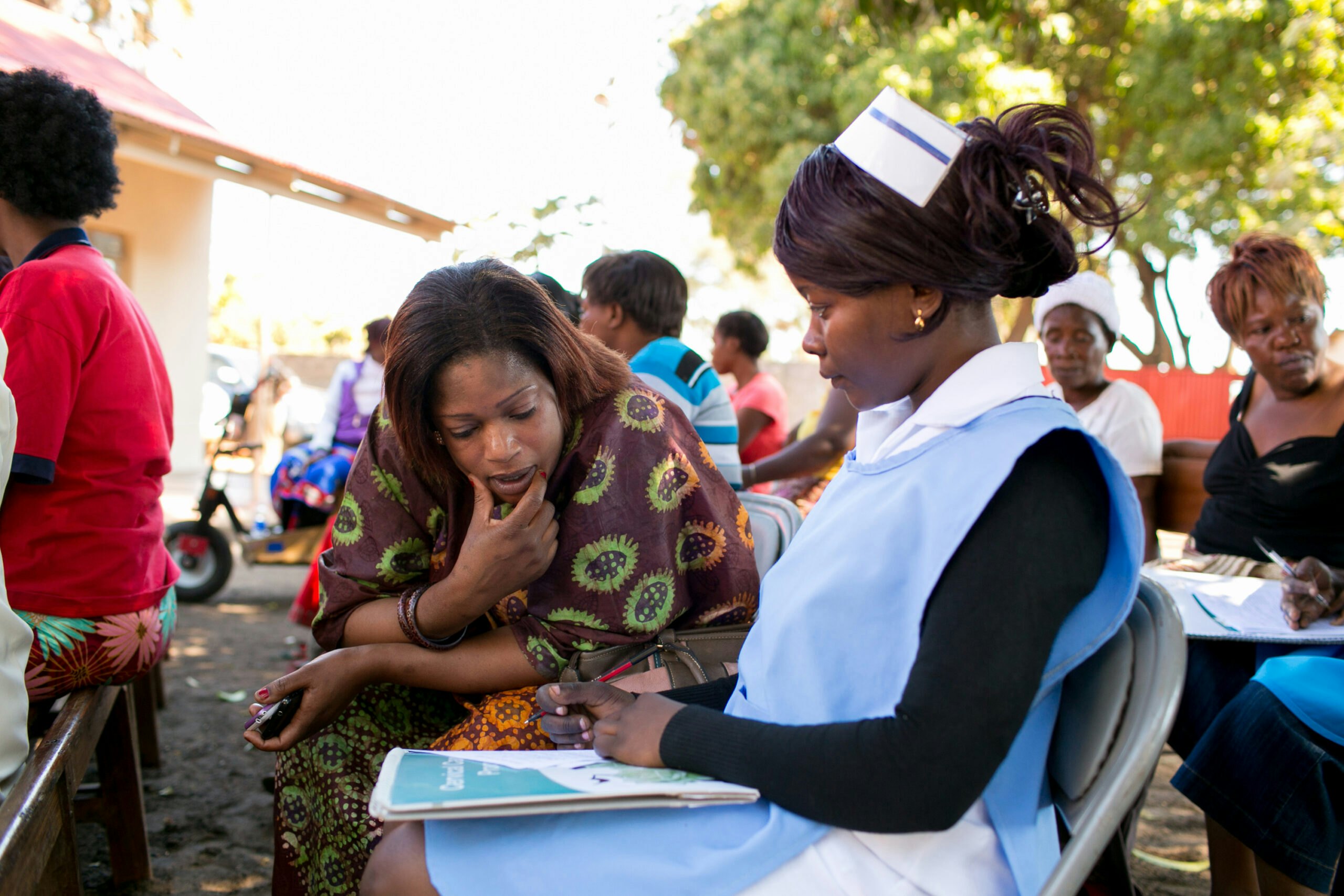
As Americans mark the 250th anniversary of our nation’s founding this summer, we are reminded of the values that have shaped our country at its best: faith, compassion, freedom, and dignity for all. Few programs reflect those values more clearly than the President’s Emergency Plan for AIDS Relief (PEPFAR).
Launched by President George W. Bush in 2003, PEPFAR has saved more than 26 million lives and helped nearly 8 million babies be born HIV-free. The program’s legacy is seen in mothers who are alive to raise their children, in young people born HIV-free who are now pursuing careers, and in communities that have been transformed by the chance to live healthy, productive lives.
The world is closer than ever to ending AIDS as a public health threat. The U.S. should continue strengthening burden-sharing, increasing country ownership, and holding global partners accountable for measurable results. At the same time, it should carry forward the moral clarity and compassion that has made PEPFAR one of the most successful foreign policy initiatives in American history.
Bush Institute Insights
In honor of America’s 250th anniversary last week, the George W. Bush Institute launched America 250: Through the world’s eyes, a series of essays on America’s founding ideals from leading voices from outside the United States in just 250 words each.
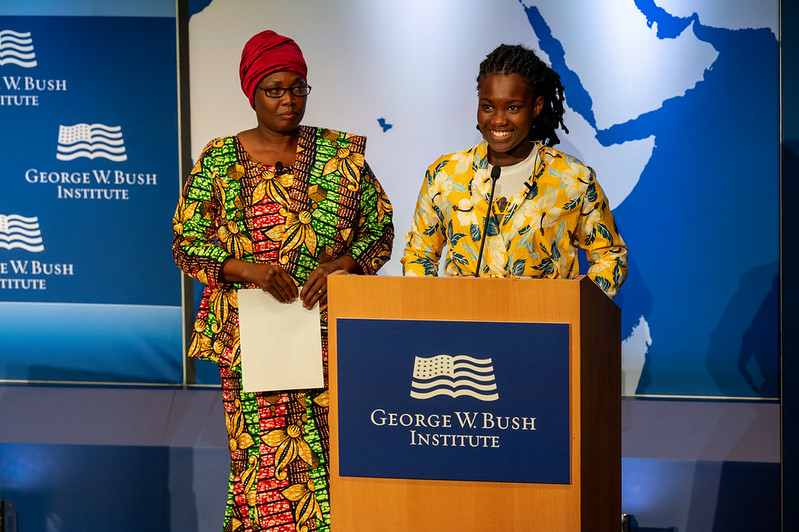
Faith Mang’ehe, an Elizabeth Glaser Pediatric AIDS Foundation (EGPAF) ambassador from Tanzania, shares how PEPFAR changed the course of her family’s life and shaped her future.
Born HIV-free, Mang’ehe has been a member of the fight for an AIDS-free generation from the day she was born. In 2008, Faith attended President Bush’s State of the Union address with her mother, Tatu Msangi, showcasing the impact of PEPFAR.
Her mother was diagnosed with HIV, but because of PEPFAR, she is alive today and working as a public health nurse. Faith was born HIV-free and is now studying to become a pharmacist. As she writes,
“I am a typical young woman, attending college, planning my career, and having fun with friends. But I also know that my life is extraordinary because I would not be here today if it were not for PEPFAR, an initiative of the United States that has transformed my generation in Tanzania.
“The United States gave me and my mother the freedom to live and pass that freedom on to others.”
America First Global Health Strategy Updates
A series of reports required under the FY 26 National Security, Department of State, and Related Programs Appropriations Act, were made public last week. Five reports concerning the Bureau for Global Health Security and Diplomacy were included in the release. Most notably, a multi-year transition plan for PEPFAR programs and an overview of global health compacts and bilateral agreements under the America First Global Health Strategy, were included.
Both reports provide a brief overview of the mechanisms for transition and financial commitments rather than program-wide outcome targets such as treatment retention and lives saved. As countries move toward transition, these targets become even more critical and ensure alignment and mutually agreed-upon goals across State Department bureaus and embassies, other U.S. government agencies, and partner countries. Congress must continue to engage in conversations with the State Department to ensure critical elements of global health programming are not lost, including credible data collection and reporting.
Meanwhile, the U.S. Department of State signed a three-year bilateral health agreement with South Sudan on June 23, committing more than $146 million to help prevent the spread of infectious diseases. South Sudan will invest nearly $20 million in its own health systems. The State Department also signed a five-year agreement with the Republic of Tanzania, committing more than $1.3 billion, while Tanzania intends to increase its domestic expenditures by $1.8 billion over the same period. The agreements bring total new health funding under the America First Global Health Strategy to $24 billion, including more than $14.3 billion in U.S. investment and $9.6 billion in partner-country co-investment.
Both countries are vastly different in terms of political will and progress to end HIV/AIDS as a public health threat by 2030. As Dr. William Steiger, CEO of Malaria No More, and I have explained, countries such as South Sudan facing violence and hardship may not be able to immediately assume full responsibility for HIV/AIDS efforts and will require a more gradual approach to winding down PEPFAR.
Jeffrey Graham, senior official for the State Department’s Bureau of Global Health Security and Diplomacy and acting U.S. Global AIDS Coordinator, recently shared new details about bilateral health agreements at the SID-US annual conference. Graham addressed concerns that U.S. bilateral health agreements were connected to U.S. access to critical minerals. He also explained the decision not to publicly release all agreements while negotiations remain underway, saying partner countries can make their MOUs public whenever they choose.
Graham also noted that U.S. requests for health data are consistent with, or even less demanding than, past programs. He praised co-investment requirements, saying that partner governments need “skin in the game” to move toward self-sustaining health programs.
For details on the MOUs signed to date, you can view the KFF tracker.
Figure of the Week
90% cervical cancer treatment target met in Zambia
Population-based HIV Impact Assessment Surveys conducted in 2015-2017 and 2020-2023 found that cervical cancer screening coverage increased by more than 50% among women ages 30-49 in Malawi, Tanzania, Zambia, and Zimbabwe. All four countries have participated in the Go Further partnership.
Women living with HIV are six times more likely to develop cervical cancer. Launched in 2018, Go Further is a public-private partnership among the Bush Institute, PEPFAR, and UNAIDS to address this challenge by integrating cervical cancer screening and treatment into the PEPFAR system to ensure that women who survive HIV don’t succumb to a preventable disease.
The study found that in all four countries, screening coverage and gains were higher among women living with HIV than among HIV-negative women, underscoring the value of integrating cervical cancer services into HIV programs. Still, all four countries remain far from the WHO 70% screening target. Among women who screened positive, those who reported receiving treatment ranged from 75.2% in Malawi to 93.6% in Zambia, the only country to meet the WHO 90% treatment target. Sustained commitment from national cancer control programs and public health partners will be critical to eliminating cervical cancer.
Ally Updates:
The Elizabeth Glaser Pediatric AIDS Foundation (EGPAF) released a new brief, Common Ground for Global Health Policy Brief: Pediatric HIV, that provides a framework for U.S. policymakers to improve HIV prevention, diagnosis, and treatment efforts for children and adolescents.
Globally, children have progressed more slowly than adults across all 95-95-95 targets, at 63%-87%-86% compared to 87%-89%-94%. The brief offers several recommendations to ensure an HIV-free generation – an outcome that will save lives, protect families, and strengthen communities and economies. They include:
- Expanding funding for early infant HIV diagnosis technologies
- Investing in the development and distribution of child-friendly ART formulations
- Funding integrated maternal and child health service delivery models in high-prevalence regions
- Increasing investment in, and distribution of, long-acting injectable PrEP for pregnant and breastfeeding women, and for adolescents at risk of acquiring HIV
- Addressing additional barriers to adolescent HIV prevention through targeted research and programming
In the News
- Dr. Anand Parekh, former deputy assistant secretary of health at the U.S. Department of Health and Human Services, and former Senate Majority Leaders Tom Daschle and Bill Frist called for Congress to embrace the use of global health engagement to advance America’s national interests as the U.S. responds to the recent hantavirus outbreak and evolving Ebola crisis. Drawing on lessons from PEPFAR, they urged Congress to assess U.S. readiness for global health threats, refine the America First Global Health Strategy’s implementation, and protect global health investments through the appropriations process. They also emphasized that transparent, locally informed U.S. global health leadership can make Americans safer and more prosperous.
- At a United Nations General Assembly meeting on HIV/AIDS, Rwanda’s ambassador to the United Nations, Martin Ngoga, reaffirmed the country’s commitment to ending AIDS as a public health threat by 2030. Rwanda has surpassed the UNAIDS 95-95-95 targets and decades of sustained investment in community-based healthcare, widespread testing, and universal access to treatment have helped reduce new HIV infections by more than 80% and AIDS-related deaths by nearly 86%. International partners, including PEPFAR and the Global Fund, should continue to invest in Rwanda’s HIV response as the country focuses on long-term domestic sustainability.
- As of July 5, the Democratic Republic of Congo had confirmed 1,624 Ebola cases and 521 deaths. The Centers for Disease Control and Prevention (CDC) recently raised its Ebola response to Level 1 as the outbreak spread across Congo and Uganda. Notably, on June 24, France confirmed the first case outside Africa linked to the current outbreak. Amid these developments, The Wall Street Journal highlighted how Uganda’s quick response to the outbreak, including contact tracing, isolation, hygiene measures, and border surveillance, has contributed to the country’s success in slowing the spread.
- Global health experts Dr. Lynne Mofenson, Dr. Jorge Pinto, and Dr. Angela Mushavi warn in the latest issue of the Journal of the International AIDS Society that progress toward ending pediatric HIV has stalled, even though the tools to prevent vertical transmission are available. More than one in 10 HIV-exposed infants acquired HIV in 2024, and just over half of children living with HIV were receiving antiretroviral therapy. Sustaining progress will require protecting PEPFAR gains and integrating HIV services into maternal and child health systems.
- South African Health Minister Dr. Aaron Motsoaledi said that the country is moving toward greater ownership of domestic health systems as the U.S. began to wind down PEPFAR programming. Since its founding under President George W. Bush, PEPFAR has invested over $8 billion in HIV/AIDS prevention in South Africa. With about 8 million people living with HIV, South Africa allocated about $45 million in 2025 to keep clinics open, protect HIV/AIDS treatment, and revive clinical research trials. South Africa has financed the bulk of its HIV response, including antiretroviral treatment for nearly 6.2 million people, while PEPFAR has helped fill gaps in outreach, prevention, and research.
Upcoming Events
- The Bush Center will commemorate the 25th anniversary of September 11, 2001, with two programs in Dallas. On September 9, A Legacy of Service: America at the 25th Anniversary of 9/11 will feature President George W. Bush and former U.S. Secretary of State Dr. Condoleezza Rice, who will share their reflections on the legacy and meaning of 9/11 – how the day changed the country, how it continues to shape American life, and how the call to serve remains as urgent as ever.
- The Bush Center will also host a moment of remembrance on September 11 to honor those who lost their lives and the service and sacrifice that followed.