

The George W. Bush Institute’s Veteran Wellness Alliance is a coalition of veteran peer-to-peer networks and best-in-class mental and brain health care providers who connect veterans, service members, their families, caretakers, and survivors to high-quality care for their invisible wounds.
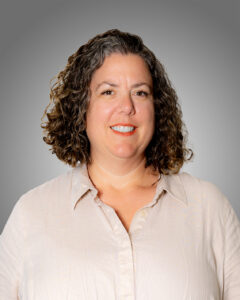
Q&A with Stacy Hawkins, managing director for Research and Evaluation at the D’Aniello Institute for Veterans and Military Families (IVMF)
What is the D’Aniello Institute for Veterans and Military Families’ mission, and how does your work impact veterans?
The IVMF’s mission is to empower service members, veterans, and their families through actionable research, innovative programs, and insightful analytics. This mission is at the core of everything we do at IVMF – from the entrepreneurship and career preparation programs we offer, to the applied research we conduct, to the hands-on support we provide to organizations that work with military-connected individuals. Our programs offer the most direct impact to transitioning service members, veterans, and family members: providing training, skills, mentorship, and opportunities to develop and grow career networks. What’s more, we evaluate each of our programs to help ensure that we continue to positively impact our participants. Our impact on military-connected individuals doesn’t end there.
We also lead a national community of practice for veteran serving organizations (VSOs) who coordinate services and care, to help ensure that they learn and share best practices, raising the standard of care for veterans. Toward the same goal, we have also partnered with several regional and state organizations to identify veterans’ needs in their communities and develop action plans to fill gaps, reduce barriers, and better support veterans. These are just some of the ways that IVMF is able to make a meaningful difference and empower our nation’s service members, veterans, and family members to thrive.
What role does the IVMF play in the Veteran Wellness Alliance?
The IVMF is proud to be the evaluation partner for the Veteran Wellness Alliance’s Check-In program, which allows veterans, service members, caregivers, survivors, and their families experiencing difficulties in daily life or in distress to connect with an advocate and find a licensed mental health professional who can help. Check-In has always operated as a collaborative, so in order to be successful, it needs several different key components: peer networks and clinical providers who actively participate, a trusted connector in the middle, a technology platform, and operational management to ensure everything runs smoothly. Since 2019, our team’s role has been to provide ongoing monitoring and process support. We measure what is happening and reflect back to the collaborative what we see.

We also conduct periodic analyses that enable the Alliance to better understand how well Check-In is doing over time. For example, we try to understand whether Check-In is achieving its goal to make it quick and easy for veterans to access high-quality clinical care. We also explore where and when Check-In is working best and where there are opportunities for improvement. We have really enjoyed being part of an effort that has a meaningful impact on the lives of veterans, and as the program continues to evolve and grow, we are excited to help shape its future by providing evidence that can help inform decisions.
How does IVMF utilize extensive research to shape the resources you provide for veterans?
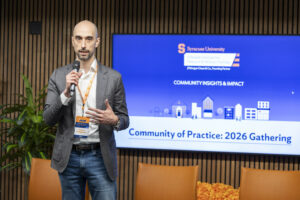
The IVMF’s Applied Research team works alongside and in coordination with our program staff, Evaluation team, and Community Insights and Impacts teams. The research team helps translate and apply broad research findings to inform the programs we conduct, the policies we advocate for, and the approaches we take in supporting the broader veteran and military family ecosystem. We are able to synthesize scientific literature, review key data sets like the American Community Survey or the Bureau of Labor Statistics, and even collect our own data to investigate key research questions that can speak to veteran and military family employment, financial stability, and well-being. IVMF is uniquely structured so that our applied research findings can speak directly to our entrepreneurship and career preparation program planning. Results may highlight key program strengths or indicate new directions that programs should consider.
We are uniquely positioned to integrate applied research findings with evaluation evidence from our programs. We have an internal evaluation team that collects and provides evidence about the programs that we offer, which gives program staff and leadership an opportunity to make informed decisions about program activities. Together, research evidence from the broader field, coupled with evaluation evidence from our program participants, build a solid foundation for the resources that IVMF provides to service members, veterans, and their families.
How does your background in research and evaluation influence the way you seek to serve veterans and military families?
From early in my career, I knew that I wanted to help improve the lives and experiences of families. But I also knew that I wanted to do so in a way that was informed by evidence and data. In fact, a critical component to my background and expertise is applying theory and research evidence to relevant social issues, bringing science to inform policy, programs, and practices that could help improve the lives and experiences of real families.

This has been most clear in my interest and passion for program evaluation as a way to demonstrate the value and impact of services – and to ensure that programs invest their limited resources in activities and engagements that have the best chance to help their intended audiences. Additionally, in my research work, a key focus has always been how to translate findings into actionable recommendations for program staff, policymakers, and funders.
My commitment to using research and evaluation for action has informed every step of my career, and is part of why I’m at the IVMF now. One of my favorite things about the IVMF is our dedication to evidence, not just for the sake of evidence itself, but for the purpose of improving our resources and enhancing the lives of military-connected individuals.
As you look back on your work in this space, what gives you hope about the future of providing resources for service members and their families?
There are many challenges for those of us working on behalf of veterans and military families: government organizations require significant effort and evidence to make changes, policy and programmatic shifts take time to build and roll out, and funding is never as robust as our veterans and military families deserve. Yet, there are so many signals that we are taking steps in the right direction and that hope is on the horizon. First, I have seen firsthand the growing focus and demand for evidence to support decisions. Ensuring that policies and programs are grounded in evidence as they are developed and are evaluated after they are implemented to demonstrate their success strengthens the ecosystem of support available to service members, veterans, and their families. Sponsors, government organizations, and military- and veteran- serving organizations can all be strengthened by identifying the strategies and activities that have demonstrated meaningful impacts!
Another area that I am glad to see is the greater focus on comprehensive approaches to preventing harmful behaviors and problems among military-connected individuals. Research clearly demonstrates that a host of factors across each of our lives can impact our behaviors and issues. For instance, aspects like family support, financial stability, and having a meaningful career can contribute to well-being and can help reduce risk of suicide, depression, and other significant challenges. Opening the aperture on how we define and consider prevention can help us more broadly tackle these issues and find creative and effective strategies to help improve the lives of service members, veterans, and their families.


