Earlier this month Dana Perino returned to the Bush Center this spring to record a sold‑out, standing‑room‑only episode of The Strategerist podcast, where she discussed her fiction debut, Purple State, with the same clarity, humor, and discipline that have defined her career. Before becoming a bestselling author and co‑anchor on Fox News, Perino served in several key roles across the Bush Administration — including at the Department of Justice, on the White House Council on Environmental Quality staff, and ultimately in the White House press office, where she served as President Bush’s press secretary from 2007-09. Her new novel draws on a lifetime of public service, mentorship, and storytelling, offering a fresh, heartfelt look at ambition, friendship, and the unexpected ways love shapes a life. In this edition of “Five Questions With…,” Perino reflects on the creative leap into fiction, the real‑world experiences that informed her characters, and the political landscape ahead.
Q: As a successful author of multiple New York Times bestsellers, what drew you to write a novel? 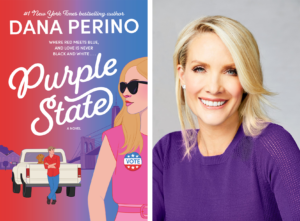
I’ve been a voracious reader of fiction my entire life. In the first grade, I wanted to be an author. But as the years and the career went by, I went into a very fact-based direction. The idea for Purple State had been bouncing around in my head for a while, but I saw it as a much bigger story or even a reality show. I credit Andrew Graff, author of Raft of Stars and True North, for pulling the switch that turned on the light bulb over my head that I could write the story having the entire election come down to one gerrymandered district in Ohio. From there, it became an intense hobby, even a passion, to get it done. And I love how it turned out.
Q: Purple State weaves a politically charged love story into its plot. What appealed to you about exploring romance in this setting, and how did you think about balancing heart, humor, and the realities of modern politics?
One of my great joys has been mentoring young people, especially young women, when they seek my advice. I have noticed they often have the same questions – or variations on a theme – about seeking a promotion, making a career pivot, or navigating motherhood and work. However, they also ask about finding love and making a commitment to someone. I was fortunate to meet Peter on an airplane nearly 29 years ago – it was “love at first flight” – and I had to make a gigantic leap of faith to leave my job, move across the pond, and start a life with him.
At the time, I thought my career was going to be stifled because of that choice. But I stress in all my mentoring and in Purple State that love is not a career limiting decision. And so, I took the lessons of Everything Will Be Okay and hid them in a story about three young women coming of age and opening their minds and their hearts to others. There’s little politics in the book— it’s heavier on the love story. But it was also number one in clean and wholesome romance (one of my colleagues told me if I’d written explicit scenes, I never would have lived it down!).
Q: Did you draw on any observations or experiences from your years in Washington—either from the West Wing or your time on Capitol Hill — as you built the world and characters of the novel?
It’s really true what they say about creating a story — you should write what you know. I depended on my background not only in Washington, but also in big public relations firms and the family farm (ranch, in my case). I was also asked by a Fox News colleague if any of the characters were about one of the young women that worked with us, and I said, “It’s about all of them.” I suppose Dot Clark is most like me – at the beginning of the book she’s working in high tech PR and doesn’t see that as her future — she wishes she’d gone into politics but believes that ship has sailed. It all turns around when she takes a chance to work for a Super PAC in Wisconsin, and she convinces her two girlfriends to go with her as their last big adventure before real adulthood. It took all my life experiences to put together the story.
Q: Your schedule is famously full—two shows a day on Fox News Channel, plus podcasting, writing and speaking. What did your creative process look like for this book, and how did you carve out the time and space to write fiction?
One of the best things I learned from President Bush is that discipline is key to success. And I found there was freedom in being super disciplined when I wrote Purple State. I took notes on my phone through the week, organized them on Friday evening before dinner, and then wrote on Saturdays from 11 a.m. to 4 p.m. I had to turn down invitations for boat rides and walks, but knowing I had a deadline and limited time to actually write, I used my time wisely. And even after I wrote THE END, I still thought about my characters all the time. I love them. I wish they were real. Another key for me was having such support from Peter. He understood that I’d be away for several hours and he’d bring me a seltzer or send Percy up to give me a kiss before they went for a walk. Then he read every draft and really learned a lot about women’s fashion (ha!). He was my best reader.
Q: Let’s shift gears to politics. Looking ahead to the 2026 midterms, what dynamics are you watching most closely? What trends or voter sentiments feel most consequential at this stage?
Campaigns never end now — as annoying and exhausting as that is, it’s also very unproductive. Every single decision is weighed against how it will affect the next election. It’s so paralyzing policy-wise. So, I don’t expect any big policy discussions or actions between now and the midterms. I am disappointed there are only about 17 seats that my co-anchor, Bill Hemmer, will be focused on when we put up the “Bill Board” on election night. All the redistricting is disappointing, because we need competitive elections to help us get moving on important issues. In particular, I’m watching how the DSA are on the march. Mayor Mamdani’s politics are coming to a city near you. The DSA folks are organized and building communities for people — gathering once a week, working on elocution and campaign tactics — and they’re winning. Beyond that, I am living for the 2028 showdown!