
George W. Bush Institute and Center for the Study of Democracy
Russia's Strategic Corruption: Targeting European Politics

About the series
This three-part series details Russia’s strategic corruption in Europe and provides recommendations for European policymakers to stop Moscow’s harmful practices that seek to destabilize the West.
Policy Recommendations:
- European policymakers and parliaments should instill requirements and demand accountability for political parties in member states to disclose the origin of their political donations and funding.
- The European Commission should establish an independent oversight committee to conduct audits of the financial disclosure forms submitted by political parties.
- European anti-corruption, illicit finance, and governance experts should thoroughly vet donations with foreign nexus.
- The EU should mandate – and enforce – that countries publicize financial disclosure documents detailing donations and expenditures by domestic political parties.
1
INTRODUCTION
One of the primary objectives of strategic corruption by countries is to undermine the political integrity of targeted nations. By aiming at the bureaucracy of foreign governments, countries that export corruption can sabotage or, in the worst cases, capture the institutions and processes through which public policy is made for their own self-interest.
Authoritarian figures meaning to corrupt countries near them can advance interference campaigns targeting foreign legislatures. To undermine the political integrity of the European Union, Russia has resorted to using two principal methods. The first is buying the loyalty of friendly government officials to influence the crafting of laws in a manner that favors Moscow. This strategy can extend beyond the legislative processes of a certain country and into multilateral cooperatives, averting decisions that would otherwise conflict with Russia’s ambitions.
A second method seeks to support political parties that share the Kremlin’s beliefs. This takes the shape of favorable trade agreements, financial support (often through opaque channels), and assistance in developing policies that keep political parties in power, effectively undermining any checks and balances. By targeting pro-Kremlin political parties and figures, Moscow is able to successfully influence some of the EU’s 27 member states, weakening European resolve and strengthening the Kremlin’s position.
Due to the collaborative nature of the European Union, many policy decisions require unanimity among all member states to take effect, something the Kremlin has exploited. Furthermore, by fostering relationships with political parties sympathetic to Moscow, the Kremlin can cultivate dependencies and alliances with key figures that undermine European security.
Pro-Russian camps in Europe have consistently advanced the Kremlin’s strategic interests. By promoting ostensibly “balanced” dialogue and framing calls for engagement with Moscow as peace-oriented or pragmatic, they have helped legitimize Russia’s narratives within the EU policy space. Russian-aligned politicians have failed to condemn and, in some instances, even sympathized with Moscow’s military ambitions that undermine European security. This has blurred the moral and political clarity of Europe’s response to Russian aggression, from the annexation of Crimea in 2014 to the full-scale invasion of Ukraine in 2022, including every attempt to engage in peace negotiations. This is designed to sow division among member states and between them and the United States.
Russian proxies and state-owned enterprises act at the behest of the Kremlin. Moscow’s state-businesses and private sector relations are entangled in a state capture model, facilitating the coercion of European security services and rampant public procurement corruption. Working to cater to the favor of European elites, Russian oligarchs, companies, and state agencies use illicit financial flows and concessions to develop leverage in the European political arena, including most recently to dampen sanctions enforcement.
As a result, Europe faces a surge in extremist, nonsystemic politics. Parties espousing these ideologies are often Moscow’s political target due to the empathy they have toward Kremlin ideals about ethno- and religious nationalism. Although many of Russia’s targets align with far-right politics, not all far-right parties are open to partnering with Russia. Many understand the existential threat Moscow poses to European security and therefore remain staunch in their opposition to Russian influence across the continent.
The use of financial and concessional incentives to string European leaders into Russia’s orbit reached $300 million between 2014 and 2022, according to a cable released by the U.S. State Department. Yet, this is only a fraction of the documented, and hence official, number of corruptive resources. It does not come anywhere close to the total number of Kremlin-controlled interests which can and have been used for nefarious purposes.
Western intelligence reports suggest that there are almost no countries in Europe unscathed from Russian meddling, yet some of Europe’s more vulnerable members in the east have become victims of Russian large-scale political interference, such as Albania, Bosnia and Herzegovina, and Montenegro.
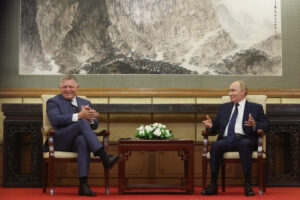
Simultaneously, Russia has capitalized on its historic trade ties with the European energy sector, which have often amounted to monopoly power, to deliver favor or punishment for dependent countries. Countries that continue to view Russia as a reliable source of energy, namely Hungary and Slovakia, provide Russia with the political and economic capital to sustain its military campaign in Ukraine. Crude oil and pipeline gas have become goods of convenience for Russia, using attractive commodity prices for the two European countries to create friction in the EU in taking decisive policy decisions.
Slovakia’s Prime Minister, Robert Fico, has gone so far as to call for the normalization of ties between the two countries, thanking Russian President Vladimir Putin “for the safe and regular gas supplies that we receive through TurkStream,” a Gazprom pipeline that runs from Russia to Turkey and which remains unsanctioned by the EU.
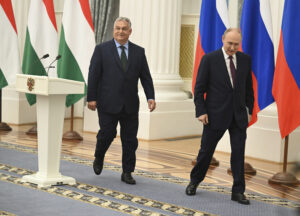
Meanwhile, Hungarian Prime Minister Viktor Orbán met with U.S. President Donald Trump to request an exemption from U.S. sanctions following the administration’s decision to target Russian energy companies Rosneft and Lukoil. Shortly following the meeting, A waiver was granted for Hungary by the U.S. government to purchase Russian oil. Russia has used its energy muscle to pressure and court Bulgaria for its support for Ukraine; keep Serbia and Bosnia and Herzegovina in its political orbit; lure Turkey into strategic ambiguity; and even manipulate Germany into complicity.
Without adequately addressing the lapses in European political financing, economic security, democratic resilience, governance, and defense, Russia will continue to be able to manipulate the dynamics of European politics. Addressing these lapses will require enhancing existing policies to transform European matters that are vulnerable to exploitation by foreign actors into proper controls that protect the integrity of European politics.
Currently, EU member states can develop policies that are exclusive to their nation, and each country is responsible for enforcing common EU policies, like anti-corruption, anti-money laundering, investment screening, sanctions, counterintelligence, etc. The fragmented structure of political and financial laws makes some member states more prone to illicit influence operations. This leaves those member states to deal with a much stronger adversary on behalf of the whole EU, which enables Russia to orchestrate dangerous political backlash and social disruption. A new strategy focusing on enhancing anti-corruption mechanisms across the bloc is necessary to address this challenge, including by empowering EU-wide enforcement capabilities through the European Public Prosecutor’s Office (EPPO), the European anti-fraud authority (OLAF), and the European Anti-Money Laundering Authority (AMLA). In addition, member states must address the present gaps that make member countries vulnerable.
This includes closing all loopholes that allow opaque donations, promoting greater transparency in financial disclosure through open audits by the European Council, enhancing scrutiny of donations from foreign companies, and establishing an independent oversight committee to enforce campaign laws in European elections.
2
OPAQUE FINANCIAL SUPPORT
Over EUR 660 million in political donations of unknown origin entered the European Union between 2019 and 2022, according to an investigation by the nonprofit organization Follow the Money. Approximately 71% of the total comes from discrete donors, the research found.
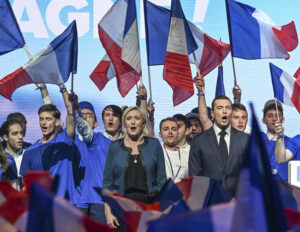
Member states of the bloc are responsible for establishing their own policies and procedures in campaign and political financing. Consequently, policing opaque funds falls within the jurisdictions of individual states rather than the entire bloc. France and Germany harbor most of the opaque political funding and are also seeing a surge in pro-Russian positions via the National Rally and AfD parties.
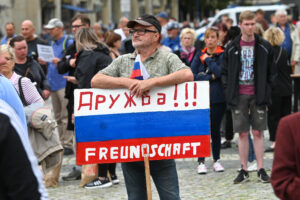
Images)
But there have been reports of political parties connected to Russia across the continent, including in far-flung and unlikely places such as Spain and Belgium. Though the funds cannot be directly linked to pro-Russian political parties across the bloc, the opportunity for influence peddling through financial support remains open.
Several connections between European parties and Russian affiliates also exemplify the danger present in the region. In 2014, for example, the National Rally party received EUR 11 million in Russian loans, with EUR 9 million coming from First Czech Russian Bank, a small bank with ties to Russia. Similarly, Germany’s AfD is embroiled in several controversies, including receiving financial incentives from the Kremlin. This has led to allegations of monetary compensation for members of the European Parliament and sponsored trips to Moscow for other members.
In 2024, an investigation by EU intelligence agencies revealed that Voice of Europe, a Russia-backed eurosceptic media outlet with ties to Ukrainian oligarch Viktor Medvedchuk, who named Putin as the godfather to his daughter, was behind a series of payments to European Parliament members. The investigation’s findings state that the list of target countries included Belgium, France, Germany, Hungary, the Netherlands, and Poland.
Payments were facilitated through cash and cryptocurrency exchanges, with meetings held in Prague, Czechia. The network was part of a larger system designed to entice European politicians to undermine Ukraine’s territorial integrity and independence.
The corrupt nature of Russia’s foreign policy strategy creates the difficulty in tracking the illicit financial support for Russia’s political supporters. While the
funds may have links that tie them back to the Kremlin’s network of proxies, they
fall within the gray area between licit and illicit funds, with strict illegality very
difficult to prove in a court of law. Yet the influence risk is substantial and well-documented.
Financial support tied to Russian companies and sympathizers consists of illegally gathered funds in some cases, but, in others, the financial flows are legalized within Russian legislative channels. This permits loyalists to obtain corrupt funds with impunity. Russian parties and businesses have continued claiming to be engaged in business as usual across the continent, while the Kremlin has frequently weaponized each and every opportunity to inflict costs on Europe. This includes denouncing decade-long policies, laws, and contracts, and officially designating EU countries as “unfriendly”.
By obscuring the legality of the funds, financial flows that serve a commercial and geopolitical purpose can flow freely into neighboring jurisdictions, even if the ultimate objective is nefarious. The facilitation may have distant links to the Kremlin. However, it is directly managed by oligarchs, loyalists, and business elites who can operate as agents of the state while simultaneously serving their personal
interests. Therefore, the “illicit” factor is tied to the intent behind the funds – to undermine the sovereignty of countries – rather than the origin of the money.
Due to the misalignment in what constitutes illicit funds from Russia, European nations often overlook the political and security risk they expose themselves to by opening their jurisdictions to donations from private companies that conceal the operators behind them. Simultaneously, Russian business interests can establish relationships with sympathizers in political circles who are willing to accept financial incentives or support for their campaigns in exchange for public backing. Russia has also intensified its offensive across all international organizations to which it or Russian citizens have access.
While the AfD and National Rally parties are among the most well-documented parties agreeable to Moscow and receiving its financial support, many other parties have been caught in cases that demonstrate Moscow’s manipulation of European political dynamics. The list includes Austria’s Freedom Party (FPÖ), the Dutch Freedom Party, and Italy’s Liga party, to name a few. This showcases Russia’s common tactic of supporting European political parties to subvert democracies across the region.
3
DEPENDENCE WEAPONIZATION
Part of Putin’s expansionism includes the widespread practice of buying influence from political figures through bribery and illegal kickbacks.
In a 2018 scheme orchestrated by Moscow, Russian officials reached an agreement with Eni, Italy’s state-owned oil company, on a deal that would sell oil to the company at a 4% discount and utilize a Russian company linked to sanctioned oligarch Konstantin Malofeev. According to investigative reports, the proceeds from the scheme would then be redistributed to members of Italy’s Liga Party.
Russia’s tactics vary, ranging from schemes similar to Gazprom’s agreement with Eni (also used in Hungary, Bulgaria, Romania, and Lithuania) to cases of patronage and direct financing for Kremlin-leaning political parties. Here, Russia’s state-owned companies play a vital role.
In several instances, former European officials have been awarded lucrative positions in Russian businesses. While these individuals do not necessarily hold official positions within their respective governments, many retain significant influence, which is used to lobby on behalf of Russian companies and publicly display their alignment with Moscow. These displays of alignment or neutrality sometimes undermine European responses to Russian aggression and threats.
Arguably, the most famous case of this form of activity is that of former German Chancellor Gerhard Schröder. During his chancellorship, Schröder, a champion of the Nord Stream pipeline, signed a $6 billion deal with Gazprom two weeks before leaving his position in 2005. The deal, which received international criticism for importing Russian strategic corruption, was shortly followed by an announcement from Schröder declaring his acceptance of a nomination as chairman of the Gazprom subsidiary responsible for the pipeline deal. Schröder expanded his boardroom responsibilities for Russian businesses, eventually becoming a lobbyist for the Nord Stream company and Rosneft, Russia’s state-controlled oil company. Following the 2022 invasion of Ukraine, Schröder announced his intention to remain employed with the Russian companies.
While Schröder’s case demonstrates how Russia utilizes bribery and patronage to undermine European foreign policy and cohesion, his relationship with Rosneft is not an isolated incident. However, following the political risks associated with supporting Russian businesses after the full-scale invasion of Ukraine, much of the support and linkages that Russia’s energy sector had built throughout Europe has crumbled and/or has been whitewashed through deals. The most recent example was the attempted fire sale of the foreign assets of the Russian oil major Lukoil after the U.S. Treasury levied sanctions on the company. Several ties persist between Russia and European governments, though. Some countries still kowtow to Moscow in exchange for favorable trade benefits, including access to Russian oil and gas.
Among the most notable are Hungary and Slovakia.
Following the 2022 invasion of Ukraine, both countries, as well as Czechia, were granted exemptions to the EU’s sanctions on Russian crude oil to avoid market blowback while they look for new sources of the commodity. With all countries reliant on Russia for oil imports before the invasion, only Czechia took the exemption as an opportunity to become completely independent of Moscow. Meanwhile, Hungary and Slovakia have continued to infringe on EU policy by refusing to find alternative suppliers, taking advantage of the exemption to maximize benefits.
Since the invasion began, the two central European countries have expanded their ties to Russia. An analysis conducted by the Centre for Research on Energy and Clean Air (CREA), in collaboration with the Center for the Study of Democracy, found that in 2024, imports of crude oil and natural gas exceeded the levels seen in 2021. Furthermore, CREA determined that in August 2025, both countries paid approximately EUR 200 million for crude oil imports.
While the inability to cut off their ties to Russian energy demonstrates a failure to garner the political will to do so, much of Hungary and Slovakia’s reliance ties back to kleptocratic networks established by the Kremlin. Normeston Trading SA, an intermediary responsible for transporting Russian oil, has a history of operating in partnerships with Russian oil companies and allies of Hungarian Prime Minister Orbán. The company has also been the primary entity funneling transportation between Russia and Slovakia and Hungary since the 2010s.
Ownership of Normeston traces back to Imre Fazakas, a Soviet-educated oil tradesman with ties to the former Russian oil company Yukos. Fazakas is primarily responsible for building the Hungary-Russia trade partnership, utilizing his relationships with Lukoil, Bashneft, and Rosneft to expand the ties. Other ties to Moscow include László Csoke, a Russian-educated businessman who held positions at Hungarian state-owned entities.
Hungarian and Slovak resistance to pressure over their purchases of Russian energy persists. Meanwhile, both states continue to block efforts to advance EU sanctions against Russia, advocate for lifting existing restrictions on oligarchs and Russian elites, remain against supplying Ukraine with military aid, criticize Ukraine along the lines of Kremlin talking points, and maintain close ties to the Kremlin.
4
RECOMMENDATIONS
Political financing laws in Europe are administered at the national level, leaving the application and interpretation of legislation open to members. While this grants EU countries independence in how to govern their states, it creates lapses in oversight that leave nations – but also common EU political institutions, such as the European Parliament – vulnerable to inefficiencies and susceptible to manipulation by rogue actors. Addressing the political financing system requires an approach involving support from the European Parliament, civil society, security institutions, and the anti-corruption community. Such an approach would mitigate risks associated with exploitable practices by entities eager to undermine the sovereignty of European democracies. Without adequate regulation and monitoring systems, the integrity of European politics will remain vulnerable to heightened risk.
European policymakers and parliaments should instill requirements and demand accountability for political parties in member states to disclose the origin of their political donations and funding.
No mandate requires political parties in the EU to disclose the names of their political donors. Instead, EU members can structure party and campaign financing laws at their own discretion, specifically for domestic political parties. While this structure grants states independence in how they govern their political systems, it permits the creation of an impressionable state of affairs. In particular, countries such as Cyprus, Malta, and Denmark, to name a few, permit anonymous donations as long as the amount falls below a certain threshold. Such policies have created political ecosystems that lack clarity on who the financiers are, as seen in Malta, where 99% of political donations are unattributable.
The European Union should prohibit any policies that permit anonymous donations to political parties or their representatives. Furthermore, member states should partner with EU auditors to promote transparency in domestic political financing standards. Doing so will remove a critical loophole that persists in several countries allowing financiers to manipulate the political order.
The European Commission should establish an independent oversight committee to conduct audits of the financial disclosure forms submitted by political parties.
The Authority for European Political Parties and European Political Foundations (APPF) currently oversees compliance with EU political financing laws, but it only has jurisdiction over pan-European political parties, leaving domestic ones to the authority of the state. This exempts parties from the authority of an independent entity with no bias in domestic affairs.
To address the policy gap, the EU should establish an entity responsible for collaborating with domestic authorities to ensure that parties uphold the standards of ethical financing laws in compliance with EU law. The APPF is currently the best-equipped entity to assume this responsibility. However, doing so will require additional financial, administrative, and logistical support.
Along with more substantial investment in the APPF, the EU should include collaborative measures to investigate cases of corruption and foreign penetration of political circles within member states. One option could involve working with entities such as the European Public Prosecutor’s Office (EPPO) and the EU’s Anti-Fraud Office (OLAF), which currently investigate cases of corruption and fraud against the EU budget. Since entities like EPPO and OLAF work exclusively on EU-appropriated funds, legislative authority should be expanded to permit them to collaborate with domestic authorities in investigating and prosecuting cases of illicit political financing. Doing so will enhance transparency and anti-interference measures in European affairs.
European anti-corruption, illicit finance, and governance experts should thoroughly vet donations with foreign nexus.
Entities with a foreign nexus – either through direct or indirect ownership of companies by individuals outside of the EU – are permitted to donate to political parties. The practice of using front and shell companies and foundations to support pro-Russian political parties is a revered tactic of the Kremlin to prop up its sympathizers. The challenge in identifying the political donors behind these entities is amplified because there is no pan-European policy regarding the disclosure and access to beneficial ownership details for EU companies.
Through a task force that brings together anti-corruption, governance, illicit finance, and law enforcement experts, the EU can effectively address the threat of foreign entities’ financing political parties on behalf of adverse actors. Such an organization could be a component of a larger organization, such as the APPF, to create a more cohesive approach to enforcing political financing standards across the bloc.
The EU should mandate – and enforce – that countries publicize financial disclosure documents detailing donations and expenditures by domestic political parties.
Several countries in the EU have requirements for political parties to disclose their financial affairs in detail. However, timeliness and enforcement are not up to par in many of them. Furthermore, many countries do not require that disclosure forms be submitted promptly.
To address the lapse, the EU should require domestic political parties to submit financial disclosure forms at the end of every fiscal year, ensuring that recent cases of financial malpractice are addressed quickly. Forms should also meet technological standards to create a more efficient pace of audits and disclosure review, allowing the EU to incorporate up-to-date technology into the process.
About the authors
Albert Torres is a corruption and kleptocracy expert. He focuses on global issues that involve illicit financial practices and corruption in the public sector and most recently served as senior program manager of global policy at the George W. Bush Institute.
Ruslan Stefanov is the program director at the Center for the Study of Democracy (CSD), where he leads initiatives on economic security, anti-corruption, and geoeconomics across Europe and the Black Sea region. He is co-author of The Kremlin Playbook series and advises the EU and U.S. on countering state capture, sanctions evasion, and malign foreign influence.
Martin Vladimirov is director of the Geoeconomics and Energy Security Program at the Center for the Study of Democracy (CSD), focusing on the geopolitics of energy, sanctions enforcement, and Europe’s decoupling from Russian energy dependence. As co-author of The Kremlin Playbook series, his analysis shapes transatlantic policy responses to energy coercion, illicit financial flows, and hybrid economic threats.
About the George W. Bush Institute
The George W. Bush Institute is a solution-oriented nonpartisan policy organization focused on ensuring opportunity for all, strengthening democracy, and advancing free societies. Housed within the George W. Bush Presidential Center, the Bush Institute is rooted in compassionate conservative values and committed to creating positive, meaningful, and lasting change at home and abroad. We utilize our unique platform and convening power to advance solutions to national and global issues of the day. Learn more at bushcenter.org.
About the Center for the Study of Democracy
The Center for the Study of Democracy (CSD) is a European public policy institute dedicated to advancing democracy, freedom, and inclusive prosperity through evidence-based research, actionable policy solutions, and strategic dialogue. Founded in 1989 in Sofia, Bulgaria, CSD has grown to become one of the most influential think tanks in Europe, working to bridge the gap between analysis and policymaking in good governance, economic and energy security, the rule of law, information integrity, and social resilience. CSD is internationally recognized for its groundbreaking Kremlin Playbook series, which exposed the mechanisms of Russian economic influence and state capture across the globe. Learn more at csd.eu.