Introduction
March is Women’s History Month in the United States, a time to honor the contributions of women to history, society, and culture worldwide. It is also an opportunity to celebrate the progress that has been made toward women’s advancement while recognizing the work that still needs to be done to achieve true equality.
History shows us that when women hold equal and active roles in communities, society thrives. Not only that, but supporting women’s rights is one of the most powerful tools we have to promote peace and combat the global rise of authoritarianism, extremism, and violence.
Worldwide, women’s rights activists continue to face significant challenges. Gender-based violence, unequal access to economic, political and educational participation, antiquated gender norms, and limited access to comprehensive health care are notable issues that continue to prevent women and girls from full participation in societies.
Advancing the status of female citizens everywhere is vital to strengthening democracies and uplifting communities. When women are respected and protected as equal and active members of societies, we all benefit. For example, as women’s education increases so does economic productivity. This Women’s History Month, we shine a spotlight on the advocates who are continuing the fight for freedom and gender equality in their countries.
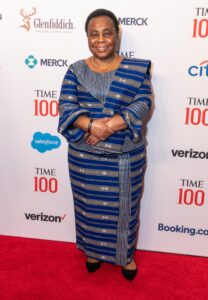
Struggle for freedom spotlight: Julienne’s spotlight
Name: Julienne Lusenge
Country: Democratic Republic of Congo (DRC)
Julienne Lusenge has fought for the rights of women and girls in the Democratic Republic of Congo (DRC) for decades, particularly around the issue of gender-based violence. The world has rightfully recognized her courage. She was the 2023 UN Human Rights Prize winner and was listed as one of TIME magazine’s most influential people in the world in 2024.
Lusenge began her activism journey as a journalist during the 1998 civil war in the DRC, where she documented the atrocities of the conflict and worked to amplify the voices of women whose suffering continued to be disregarded. She said in an interview, “I became engaged the day I realized that silence kills twice — first at the moment of violence, and again when society demands the victim’s silence.”
Gender-based violence in the DRC has been a longstanding issue that has only escalated as conflict in the region has intensified. For example, from 2021-2022 there was a 91 percent rise in reports of gender-based violence and in 2023 those numbers increased yet again.
In 2007, Lusenge founded Congolese Women’s Fund (FFC), which focuses on financing women’s initiatives in the DRC that otherwise could not access funding. Since its inception, the FFC has raised over $3 million dollars, awarded more than 700 grants, and supported 255 women-led organizations. She also currently leads Female Solidarity for Integrated Peace and Development (SOFEPADI), an organization that provides medical, psychological, legal, and economic support to survivors of sexual and gender-based violence. Through its endeavors, SOFEPADI has supported 7,500+ survivors in their healing and become leaders in their communities. Lusenge’s tireless work has also had a major impact on the international stage. Through her advocacy, perpetrators of gender-based violence in the DRC, such as Bosco Ntaganda, have been brought to justice before the International Criminal Court and convicted.
Her continued commitment to fighting for the rights of women and children in the DRC has played a major role in obtaining convictions like Ntaganda’s.
In 2015, Lusenge spoke at the UN Security Council’s Open Debate on Women, Peace and Security, saying “Women are the first victims of war, but only they hold the unique key to peace”.
Read more about the women continuing the fight for their rights in The Struggle for Freedom.