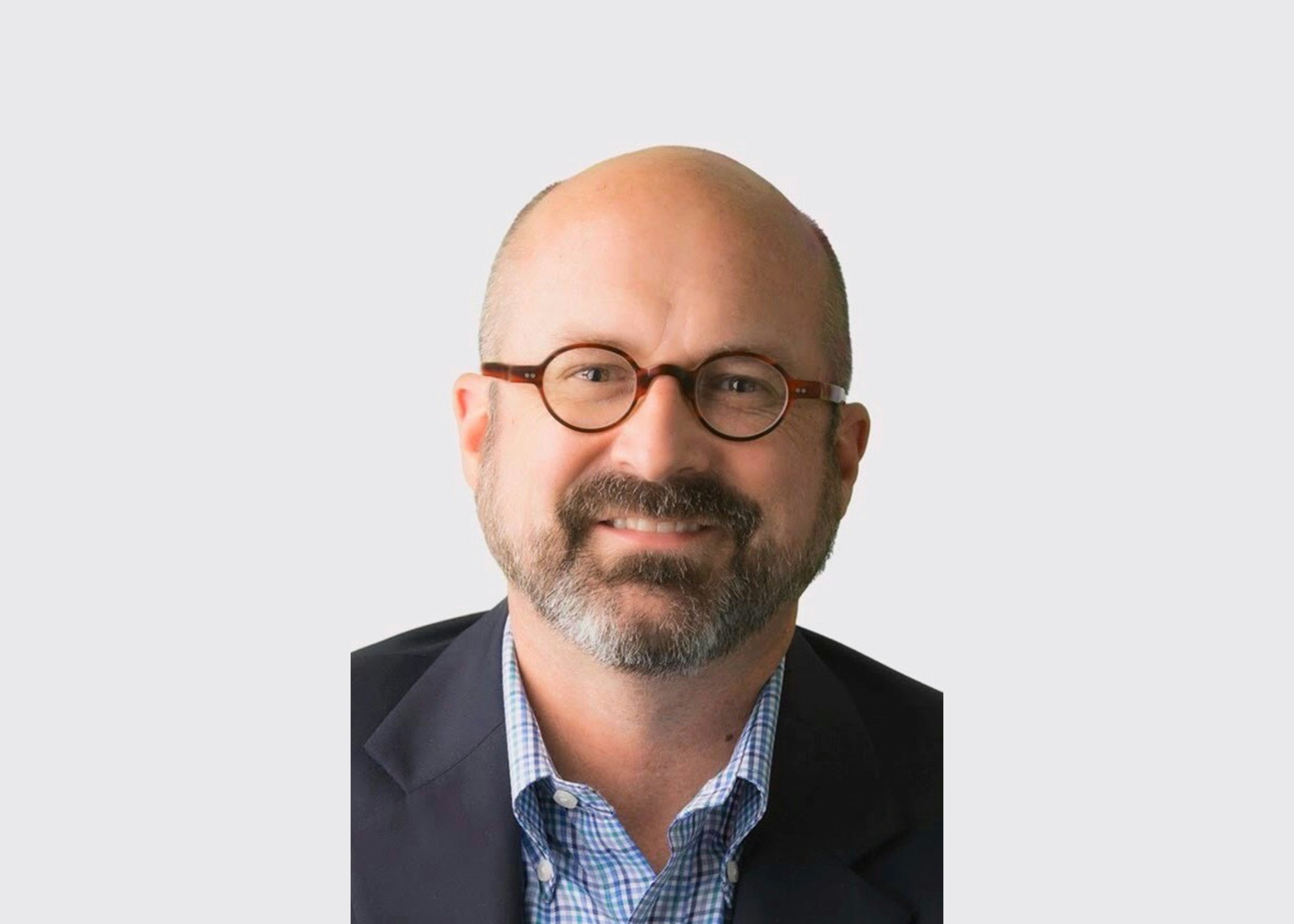
John Bridgeland has spent his career at the intersection of service, citizenship, and national purpose – a commitment shaped by his years in the Bush Administration, where he served as Director of the White House Domestic Policy Council and later as Director of USA Freedom Corps. Today he is the Founder and CEO of More Perfect, a bipartisan initiative uniting 43 Presidential Centers, including the Bush Center, alongside the National Archives Foundation and more than 100 partners to strengthen American democracy, launch initiatives for the 250th anniversary of the birth of the nation, and bring Americans together to solve public challenges.
As Executive Chairman of the Office of American Possibilities, he also leads a “civic moonshot factory” tackling challenges from malaria to refugee resettlement to the high school dropout crisis. Bridge has carried forward the spirit he honed in the Administration. We’re pleased to have him join us this month to reflect on America’s 250th anniversary, the work of strengthening democracy, and the leadership lessons that continue to guide him.
Q: America will soon mark its 250th anniversary. From your vantage point leading More Perfect (which you run with fellow BCAer Gary Edson), why is this milestone such an important moment not just for reflection, but for action?
The 250th anniversary of the birth of our nation reminds us of a founding generation that had the radical idea to put its faith in people at a time when there were Kings in Europe, a Sultan in Constantinople, a Shogun in Japan, and an Empress in Russia. Democracy is a demanding form of government in which citizen – not President, Governor, or Senator – is the highest office in the land. We have to remind Americans they have tremendous agency to make a difference and be active in addressing public problems. I can’t think of a more important time in my lifetime to get more Americans to work together across our real and perceived differences to solve public challenges.
Q: More Perfect brings together all 44 Presidential Centers, the National Archives Foundation, and partners across the civic landscape. What gives you the most hope as you see these institutions working together toward your Democracy Goals?
What gives me hope is how an alignment of effort among extraordinary institutions can generate significant results. When we used to brief President Bush in the Oval Office, he often had a framework for his questioning: 1) What’s the goal? 2) What’s the evidence this initiative or program will work? 3) How will this initiative be implemented with quality? and 4) How will we be accountable to the American people for results?
More Perfect has adopted that approach and aligned top leaders and institutions around five clear Democracy Goals, targets in the short, mid and longer terms, and plans of action to meet them. Within each of our five Democracy Goals, the alliance is making significant progress even in this difficult environment. To take one example, just in the last few years, more than $500 million have been raised to support sustainable local news outlets with 41 local news chapters across 38 states. Local news has been called “democracy’s immune system” that holds local officials accountable, provides vital information on emergencies, and knits communities together in common purpose.
President Bush and David Kramer hosted our recent local news initiative in Texas to support the expansion of the Texas Tribune and Fort Worth Report to other areas of the state. The Texas Tribune is trusted by more than 90 percent of Republicans, Democrats and Independents and they have the secret sauce for building trust by not editorializing, having reporters on the ground seeking multiple perspectives, and even monitoring terms they use that can be misinterpreted. Other Presidential Centers are following President Bush’s leadership to build support for local news in their states. We are seeing similar energy in advancing civic learning, expanding national service opportunities within states, building trust in elections, and bringing Americans from different backgrounds, beliefs, and political parties to work together to solve public problems.
Q: Your Substack, In Pursuit, recently featured an essay by President Bush on George Washington (and Mrs. Bush’s essay on Lady Bird Johnson will be published later this year). You and Anita McBride co-chair the effort. What kind of response did you hear from readers, and what do you think resonated most about President Bush’s reflections on our first president?
President Bush kicked off our entire series with his essay on George Washington with the powerful, counterintuitive lesson – “For leaders, humility is the ultimate strength.” His essay and the In Pursuit series generated significant media coverage in the New York Times, USA Today, Morning Joe, PBS News Hour, and outlets across the country and world. Many readers found the lesson itself to be an unexpected and compelling insight relevant to their own leadership development. They particularly liked the reference to the fact that when King George III learned that Washington would surrender his military commission and step down from power, King George said that, “If He did, He would be the greatest man in the world.”
Readers were also struck by President Bush’s reflections on how he found great comfort and inspiration from other Presidents when he was in office – “Abraham Lincoln’s resolve, Harry Truman’s decisiveness, and Ronald Reagan’s optimism,” but that it was Washington’s humility that inspired him the most. Readers also noted President Bush’s own humility in his essay, where he stated, “By most historian accounts, one of the reasons Washington achieved all of this was by admitting he might not be up to the task. He summoned experts and let debates play out in front of him. For me, that lesson meant recognizing what I didn’t know as President, surrounding myself with advisors who did know what I didn’t know, and listening to them.”
Many readers reposted and shared the essay and highlighted President Bush’s final paragraph: “I often say that the office of the president is more important than the occupant; that the institution of the presidency gives ballast to our ship of state. For that stability we are indebted to the wisdom of our founding fathers’ governing charter and the humility of our nation’s first president. It has guided us for 250 years, and it will strengthen us for our next 250 years.”
Q: You’ve spent two decades launching civic moonshots — from malaria to national service to the high school dropout crisis. What through‑line connects these efforts, and where do you see the next frontier of civic possibility?
This work prompted us to do a review of more than 100 initiatives across U.S. history to see if there were any common elements to bold initiatives that transcended politics, sectors, and administrations and had remarkable results. We identified six common elements and have been working to apply them to modern “moonshots” – not pie in the sky efforts, but very concrete initiatives that move the needle over time. One of the six elements is landing upon an insight that makes an intractable problem seem fixable.
On the high school dropout challenge, for example, we discovered that while the nation had been measuring high school graduation rates since 1870, no one had ever listened to the customer to understand why they actually left school. When we did in 25 cities, towns, and rural areas across the country, the perspectives of students who had dropped out showed that most of these former students could have made it and pointed the way toward evidence-based solutions that made the problem seem fixable. The second insight was that 50 percent of the nation’s dropouts were found in just 15 percent of high schools, enabling a targeted response. With clear goals, a civic Marshall Plan of action to meet them, and a coalition of educators, administrators, parents, students, nonprofit and business leaders, and policymakers, the effort over 20 years resulted in more than 5 million more students graduating from high school rather than dropping out, and with leadership from the Lumina Foundation resulted in increases in the percentage of students entering and graduating from college. The leadership of President and Mrs. Bush and Secretary Margaret Spellings on No Child Left Behind that ushered in Graduation Rate Accountability, and General Colin and Mrs. Powell’s leadership of Grad Nation were key factors in the progress.
On the fully preventable and treatable disease called malaria that was needlessly killing 1.2 million mostly pregnant women and children under five in Sub-Saharan Africa every year, one insight was that the individual citizen could buy a 10-dollar bed net and save two lives. With the President’s Malaria Initiative and the White House Summit on Malaria that launched Malaria No More, America and other nations mobilized to provide a bed net for every family in Africa who needed one. As a result of these and other interventions, and the support of the President’s Malaria Initiative and U.S. support for the Global Fund, more than 14 million lives have been saved.
On the next frontier of possibility, More Perfect is working to launch other civic moonshots, starting with the “Right to Start” – working with the nation’s Governors and Mayors to reduce the barriers for entrepreneurs who want to start their own businesses. Our surveys show that while 62 percent of Americans want to start their own business, less than 7 percent do so because of overregulation and other barriers. America was a startup nation. So, fueling entrepreneurship – which creates the most net new jobs, lifts people out of poverty, helps close the affordability gap, and knits communities together – is a powerful way to celebrate America’s 250th birthday.
Q: You served in the Bush Administration during a time of enormous national challenge and unity. What is one leadership lesson from those years that still shapes how you approach your work today?
Leadership means igniting the civic spark in others. After 9/11, I saw again and again that Americans wanted to be lifted out of their ordinary lives to do extraordinary things. I remember the White House operator connecting me by phone to restaurant owners from Seattle who were driving 3,000 miles across the country to set up shop to feed the first responders at Ground Zero in New York City and wanted The White House to know! People want to be inspired, to be called to serve, and given opportunities to do so. I know the Constitution prohibits titles of nobility in the U.S., but William F. Buckley handed me his book Gratitude, which made the case for large-scale national service and highlighted this quote: “Materialistic democracy beckons every man to make himself a king; republican citizenship incites every man to be a knight.” We all want to be knights. President Bush said it best in his 2002 State of the Union when he launched the Freedom Corps, “Through the gathering momentum of millions of acts of service and decency and kindness, I know we can overcome evil with greater good” as he went on to nearly double the Peace Corps, increase VISTA, AmeriCorps and Senior Corps to historic levels, and create new opportunities for Americans to serve in response to disasters of all kinds. President and Mrs. Bush lit many civic sparks and provided concrete opportunities for Americans to serve neighbor and nation. That’s the kind of leadership we need today. Americans are desperate for it.
BONUS QUESTION: Can you leave us with a favorite memory or story from your time in the Administration that still makes you smile or reminds you why this work matters?
There are so many: Josh Bolten telling the President he will get a nonprofit to change its name after the President and the rest of us bungled their name; Karl Rove and the rest of us screaming to “put your Kilty on” after we met Sean Connery in his kilt; Mitch Daniels quoting the St. Crispin’s Day speech from Henry V upon his departure to run for Governor; Don Evans ensuring we stopped for a bag of corn nuts before we briefed the President at the ranch for debate prep; Dan Bartlett recounting Don’s inspiring campaign speech; Karen Hughes and I discussing the need for the President to visit a mosque after 9/11; Condi Rice and Steve Hadley’s depth of knowledge and stabilizing presence in all things; Margaret Spellings’ laser-like focus and sense of humor even in our darkest hours; Nick Calio and David Hobbs’ wizardry on Capitol Hill; Mike Gerson’s compassion for the vulnerable and brilliance with words; John DiIulio’s putting faith in the public square; Ari Fleischer marshalling amazing answers to tough questions; Mrs. Bush and Anita McBride’s leadership on the WH Summit on Malaria; Gary Edson’s innovative policymaking across so many areas; Clay Johnson and Dina Powell tapping great talent; Alberto Gonzalez keeping us on the up and up; Harriet Miers and Brett Kavanaugh making our memos to the President look better than they were; Joe Hagin keeping the ships running and afloat; Andy Card’s mentorship of us all; and President Bush dancing on stage with African leaders on World Malaria Day. I could go on and on, but the sense of humor, mutual respect, and strong relationships are what I remember and value the most, particularly after 9/11.