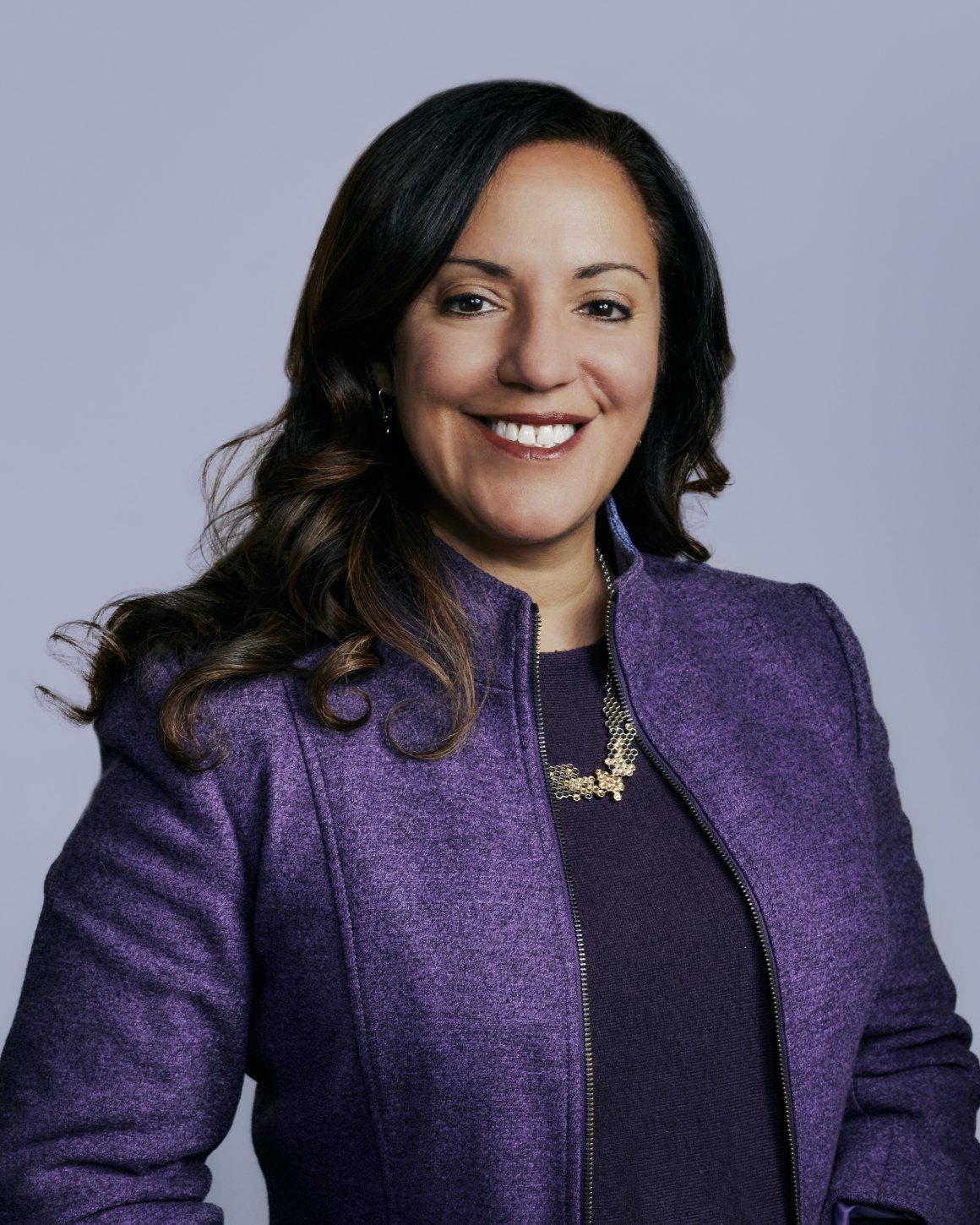
For more than two decades, Gretchen (Hamel) Reiter has been the steady hand behind some of the most complex communications challenges in business, government, and the nonprofit world. Following four years in communications roles on the Hill, Reiter served as Deputy Assistant U.S. Trade Representative for Media and Public Affairs from 2006-09. She has built a career defined by clarity, grit, and an uncanny ability to help leaders navigate both opportunity and challenges.
After years leading in‑house teams, she recently returned to contract and consulting work through her firm, Positioned, a strategic communications firm where she advises CEOs, boards, and mission‑driven organizations across the country. Reiter offers sharp (and entertaining) commentary on all things communications and media at Well Positioned, her Substack newsletter.
We caught up with her to talk about her latest chapter, the art of becoming a trusted advisor, lessons from her Bush Administration years, and how she bridges her two worlds — global strategy and rural roots.
Q: You recently made the decision to return to contract and consulting work, supporting multiple clients at once. What drew you back to this model, and how has it reshaped the way you think about your impact as a communicator and strategist?
Since my time in the Bush Administration, I’ve intentionally alternated between being embedded inside organizations and working as a consultant. I think of it as crop rotation. Each shift has been purposeful and designed to grow my skills, expand my network, and broaden the scope of issues I work on. That variety has consistently strengthened the value I bring to clients and deepened my overall contribution.
Last year, I was approached to support an investor and philanthropist in establishing their public position and advancing their work at the intersection of business, policy and women’s health. That experience reminded me how much I enjoy working across a range of issues and challenges and how effective I can be when I’m brought in at inflection points that require clarity, judgment, and forward motion. It ultimately reaffirmed that this is where I do my best work.
And let’s be honest. We’re not the spring chickens we once were in our Bush Administration years, and that’s a strength. At this stage of my career, I’m much more intentional about where I invest my time and energy. I’m focused on contributing where my experience has the greatest leverage, and on partnering with leaders who are doing work that genuinely excites me and aligns with my values. This model allows for true partnership working alongside leaders who see communications not as a service, but as a strategic asset to help advance their mission, strengthen their leadership, and increase their impact.
Q: You’ve earned trusted-advisor status with CEOs across sectors — from Fortune 500 companies to national nonprofits. What does it take to build that level of confidence and credibility, and does your approach shift when you’re working with nonprofit leaders versus corporate executives?
For the past 25 years, my work has sat at the intersection of policy, politics, business, and philanthropy. Much of what I’ve learned about navigating that intersection can be traced back to growing up on a farm and ranch — specifically, cleaning out barns. At the end of the day, work is work. What changes is the barn you are working in, the size of your shovel and what you are shoveling.
No matter the organizational structure, trust is built the same way everywhere: through connection, listening, straight talk and delivering results. Leaders don’t need more noise. They need someone who understands the landscape, tells the truth, recommends a clear direction, and executes with confidence.
There are small disciplines we all learned in our Bush Administration days – be on time (meaning 5 minutes early), come prepared, have a pencil and a notepad. But confidence is earned through how you show up over time: being prepared, calm under pressure, and principled in your work. Those qualities matter just as much in a nonprofit boardroom as they do in a corporate one.
Q: Looking back on your time in the Bush Administration, what is one leadership lesson that has stayed with you and continues to guide your work today?
One enduring lesson was the importance of decisiveness grounded in principles and humility. It was often said that you never wondered where President Bush stood on an issue — he didn’t put his finger in the wind. He made decisions rooted in conviction.
That experience continues to shape how I advise leaders today. In complex or high-pressure environments, clarity and steadiness rooted in principles matter more than perfection. I often encourage leaders to speak only on issues that are clearly connected to their work and their principles. When commentary isn’t anchored in either, it can dilute credibility rather than build it. This discipline creates consistency in reputation and clarity in how leaders are understood.
Growing up in rural America reinforced that lesson early on, but my time in government showed me how rare and valuable it is at scale. Leaders who act with principle and humility, who are willing to decide, own the outcome, and adjust when necessary, become dependable. That steadiness is what clients look for, and it’s the standard I hold myself to in my work.
Q: You’ve led teams through crises, built high-performing communications departments, and managed multimillion-dollar strategies. When you think about the next generation of communicators, what skills or mindsets do you believe matter most?
Tools, platforms, and the media landscape will continue to change. What won’t change is the need for sound judgment, integrity, and strong relationships. The ability to read the landscape, see around corners, and discern what truly matters is far more important than mastering any single tool.
The best communicators are students of people, systems, and context. They know how to adapt, simplify complexity, and point leaders toward clarity. And they have the courage to speak truth to power — to advocate clearly for a strategy and a path forward.
Communications isn’t always about having all the answers. Often, it’s about building trust by being honest about what’s known, what’s not, and how you’re moving forward.
Q: You grew up in Oklahoma and now live with your family on a farm in North Texas. What have been the keys to blending your rural roots with a career spent advising national leaders — and how has that combination shaped your voice and perspective?
My roots have been an asset that set me apart. Growing up on a farm and ranch teaches you the value of hard work, straight talk, and community but also that no job is beneath anyone. If something needs to be done, you do it. That is true in work but also in service to the community.
Today, I’m the only member of my family whose livelihood doesn’t solely depend on agriculture, and living in Texas gives me a perspective many in my field don’t have. That combination has shaped both my voice and my work. It allows me to think big picture while staying grounded in the everyday realities of how decisions affect real people. That perspective has been invaluable in advising national leaders and it continues to guide how I show up, lead, and communicate.