
George W. Bush Institute
A Republic of Readers

Rooted in a belief that reading opens every door, this book charts a path toward stronger literacy outcomes nationwide. Inside, you’ll find the insights, partnerships, and strategies guiding the Governors Forum on Reading and the movement it represents.
1
INTRODUCTION & OVERVIEW
Reading is the foundation of all learning. From the earliest years of school to higher education, job training, and beyond, the ability to read with ease and understanding is the key that unlocks every subject – math, science, history, and the arts. Strong reading skills are also directly linked to higher graduation rates, workforce readiness, and lifelong success.
When students can read well, they are positioned not only to excel academically, but also to thrive as informed, engaged citizens. Young people are growing up in a world completely transformed by rapid technological advances that demand discernment and intellectual athleticism in response. That capacity is fueled by the ability to read and comprehend.
Yet, across the country, far too many students are not meeting grade-level expectations in reading. This challenge begins early and compounds over time. Research shows that students who are not proficient readers by the end of third grade are significantly more likely to struggle in later grades, drop out of high school, and face limited opportunities in adulthood. The stakes are high, and the consequences of inaction ripple far beyond the classroom, affecting the long-term economic health of states and the nation.
To meet this challenge, reading policy and classroom practice must be firmly grounded in the science of reading – a large body of research from cognitive science, psychology, linguistics, and education that explains how children learn to read. Decades of evidence show that explicit instruction in phonics, vocabulary, fluency, and comprehension is essential for student success. When states align teacher preparation and training, instructional materials, screenings, and interventions to these evidence-based principles, students are far more likely to achieve strong reading outcomes. Without such alignment, well-intentioned policies often fall short of meaningful impact.
Decades of evidence show that explicit instruction in phonics, vocabulary, fluency, and comprehension is essential for student success.
Governors are uniquely positioned to set a vision, direct resources, align legislation, convene stakeholders, and hold systems accountable for ensuring every child learns to read. This briefing pack provides the policy framework, data, strategies, and examples to help you lead on reading in your state with urgency and clarity. By championing evidence-based strategies, supporting educators, focusing on measurable outcomes, and continuously improving, governors can have transformative impact.
Strengthening reading outcomes today creates the foundation for America’s future success – opening doors of opportunity for children, building more informed and engaged citizens, and fueling the long-term success of states and our nation.
a. PACKET OVERVIEW
This briefing packet was created specifically for state leaders as part of the Governors Forum on Reading, hosted by President and Mrs. Bush, at the George W. Bush Institute on December 8, 2025.
This packet provides an overview of strong reading policy and implementation alongside examples of best practices from across the country based on data, research, and expert interviews as of August 2025.
It is structured as follows:
- Background: A call to action with background information on the science of reading and the Bush Institute state reading framework.
- Your state’s policy snapshot: An overview of the reading framework organized around four categories for state policy and implementation best practices:
- Educator Preparation
- High-Quality Professional Learning and Development
- High-Quality Instructional Materials
- Screening and Intervening
- Your state’s data snapshot: A current picture of reading outcomes using nationally comparable data like the National Assessment of Educational Progress (NAEP) and state-based outcome data.
- Examples of governors actions: How governors across the country have used their positions to advance strong reading policy and implementation.
- Best practice category descriptions: Additional information about the elements of each policy area paired with state examples to allow your team to dive more deeply into ideas of interest.
b. WHAT IS THE SCIENCE OF READING?
The science of reading refers to rigorous research that tells us how children learn to read, which has been developed over the last 50 years or more. Based on this research, we now know that effective reading instruction should include a focus on each of the elements listed below:
- Phonemic awareness: The ability to identify and manipulate individual sounds in spoken words.
- Phonics: The ability to understand how letters and groups of letters link to sounds.
- Fluency: The ability to read words, phrases, sentences, and stories correctly, with the appropriate speed and expression.
- Vocabulary: The ability to know what words mean and how to say and use them correctly.
- Comprehension: The ability to understand what you are reading.
Source: National Center on Improving Literacy
A note on reading versus literacy: Across various sources, reading and literacy are often used interchangeably. However, reading refers to the act of decoding and understanding written words. Literacy is a much broader term that refers to writing and communication skills like speaking and listening. This packet focuses on policies that specifically address improving students’ ability to read. Notably, it uses the term literacy where appropriate when naming resources, organizations, and initiatives.
2
POLICY AND IMPLEMENTATION SNAPSHOT
This section offers an overview of the Bush Institute Reading Framework, which is based on nationally recognized best practices in four categories of policy and implementation:
- A. Educator Preparation: Ensure new teachers learn how to teach reading correctly.
- B. High-Quality Professional Learning and Development: Ensure that sitting educators understand the science of reading and receive ongoing coaching and support.
- C. High-Quality Instructional Materials: Ensure that educators have access to instructional materials that align with the science of reading.
- D. Screening and Intervening: Ensure that educators use screeners and interventions that align with the science of reading to help identify and support struggling readers.
Improving reading outcomes in a state requires policy that addresses each of these key components. While focusing on one or two may drive some improvement, we recommend that governors and state leaders consider all four as they think through policy and implementation solutions for their specific state. Each of the components is explored in greater detail in Section 4.
a. EDUCATOR PREPARATION
State best practices:
- The state has established comprehensive reading standards that educator preparation programs are required to implement.
- The state holds sole authority to approve and renew educator preparation programs.
- Educator preparation programs are required to use a Structured Literacy framework, encompassing explicit instruction in phonemic awareness, phonics, fluency, vocabulary, and comprehension.
- Educator preparation programs provide explicit instruction on meeting the needs of English learners and struggling readers.
- State licensure requirements for elementary teachers include a reading assessment aligned with the science of reading.
- Educator preparation programs publicly report licensure exam pass rates – both first attempt and best attempt – and this data is made available by the state education agency.
Also investigate:
- Do standards clearly specify the skills teacher candidates must master, explain the role of each skill in reading development, define instructional objectives, and outline methods for assessing candidate proficiency?
- Do educator preparation programs include structured practice opportunities for teacher candidates to apply and demonstrate their understanding of evidence-based reading instruction and how to use high-quality instructional materials?
- Is licensure exam data systematically analyzed and used to inform continuous improvement of educator preparation programs?
b. HIGH-QUALITY PROFESSIONAL LEARNING AND DEVELOPMENT
State best practices:
- All elementary teachers are required to complete training in evidence-based reading instruction aligned with the science of reading.
- Middle-grade teachers are required to complete training in the science of reading, particularly as it applies to adolescent literacy and content-area instruction.
- The state reviews and identifies high-quality professional learning programs in reading instruction and either mandates or recommends their adoption by school districts.
Also investigate:
- Do districts establish partnerships with third-party providers – including professional associations, regional service agencies, and curriculum developers – to deliver high-quality, evidence-based professional learning in reading instruction?
- Do the state and districts systematically track teacher participation in state-approved or evidence-based professional learning programs?
- Do the state and districts regularly review professional learning participation data alongside instructional or student outcome metrics to evaluate effectiveness and inform future planning?
c. HIGH-QUALITY INSTRUCTIONAL MATERIALS
State best practices:
- The state promotes curriculum quality by reviewing materials – or endorsing third-party reviews – for alignment with the science of reading and state standards, and either recommends, incentivizes, or mandates the adoption of vetted programs by districts.
- The state provides districts with tools and guidance to support curriculum selection, such as evaluation rubrics aligned to state standards and criteria for assessing the quality of support for English learners and struggling readers.
- The state collects and publicly reports district-level data on adopted reading curricula or requires districts to publish this information.
Also investigate:
- Does the state provide grants or negotiate publisher agreements for districts adopting state-vetted programs?
- In areas with low adoption, do state leaders directly engage district officials to understand barriers and gather suggestions for improvement?
- Does the state analyze curricula effectiveness based on student reading outcomes and use these findings to continuously improve state policy, guidance, and professional learning efforts?
d. SCREENING AND INTERVENING
State best practices:
- Students are assessed using a universal reading screener three times per year in grades K-3 and in higher grades for struggling readers.
- The state requires schools to notify parents if their child has been identified as at risk of having a reading difficulty.
- Students who have been identified as having a reading difficulty receive an individual reading plan from their school, which provides them with access to supplemental support
such as tutoring.
Also investigate:
- Are schools required to regularly monitor reading progress in grades 3-8 to identify students who are below grade level or at risk of falling behind?
- Does the state publish disaggregated student achievement data for all federally required subgroups in a timely, accessible format for parents and policymakers?
- Does the state align school improvement strategies and direct funding to support students and schools struggling with reading outcomes?
3
READING DATA SNAPSHOT
This section draws on several publicly available data sources to provide an overview of current and historical reading outcomes, while also identifying key trends. The data includes:
National Assessment of Educational Progress (NAEP)
Often referred to as the Nation’s Report Card, NAEP offers the only reading assessment data that is comparable across all states. It is administered by the National Center for Education Statistics and overseen by the National Assessment Governing Board.
The Honesty Gap
Published by the Collaborative for Student Success, this metric highlights the discrepancy between the state’s reading scores and corresponding NAEP results, offering insight into how state-reported proficiency compares to national benchmarks.
Parent Perceptions of Grade-Level Proficiency
Provided by 50CAN, this data captures parents’ beliefs about their child’s reading proficiency and helps gauge public awareness of grade-level achievement gaps, as well as the perceived urgency for educational initiatives.
a. NATIONAL ASSESSMENT OF EDUCATIONAL PROGRESS
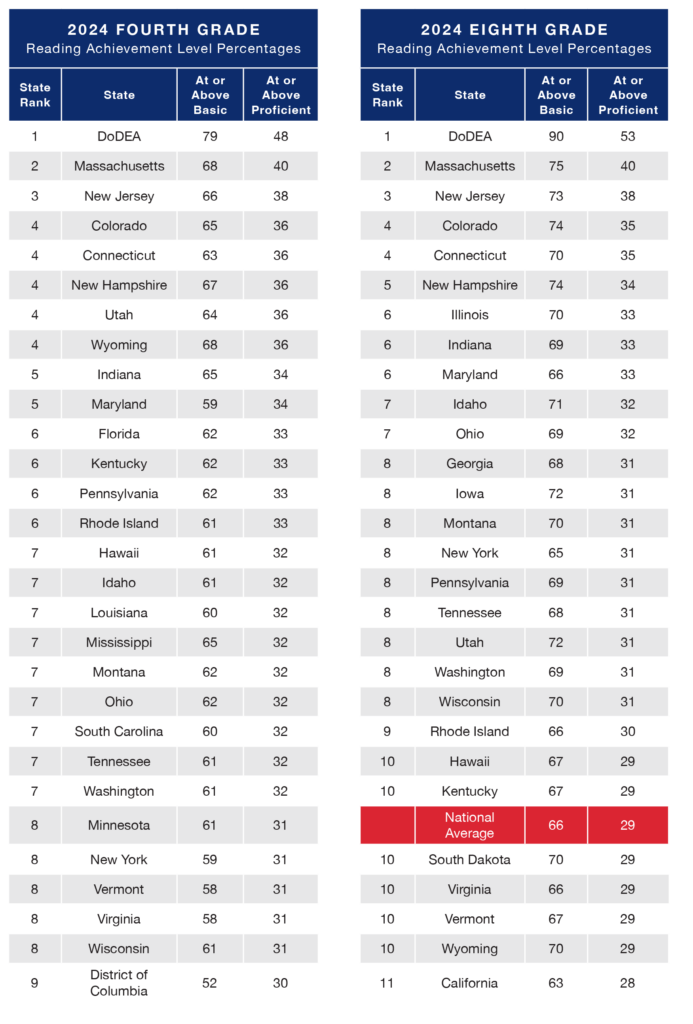
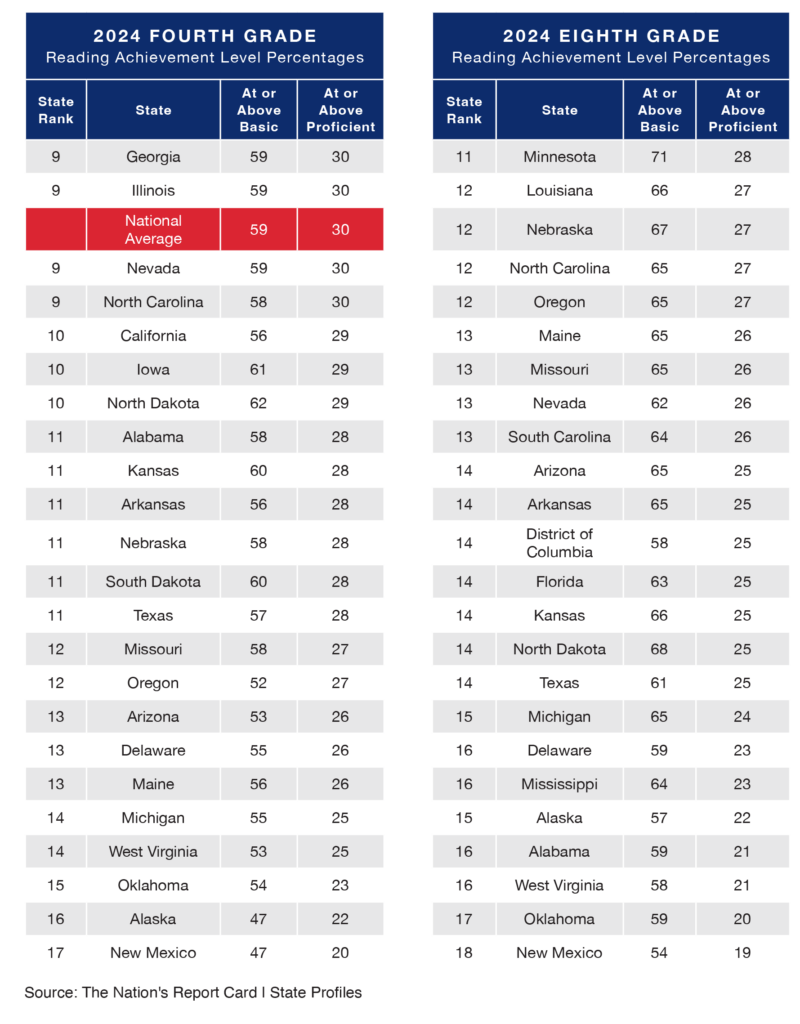
The National Assessment of Educational Progress (NAEP) is a nationwide assessment administered every two years to fourth- and eighth-grade students in reading and mathematics. Additional subjects, including civics and science, are assessed on a rotating schedule. First launched in 1969, NAEP is the largest and longest-running nationally representative measure of student achievement in the United States.
The NAEP assessment categorizes student achievement by three levels: Basic, Proficient, and Advanced.
Basic: Denotes partial mastery of prerequisite knowledge and skills that are fundamental for proficient work at each grade.
Proficient: Represents solid academic performance. Students reaching this level have demonstrated competency over challenging subject matter, including having knowledge of the subject matter, being able to apply such knowledge to real-world situations, and possessing analytical skills related to the subject matter.
Advanced: Signifies performance beyond Proficient.
States Ranked in Order of NAEP Reading At or Above Proficient
b. THE HONESTY GAP
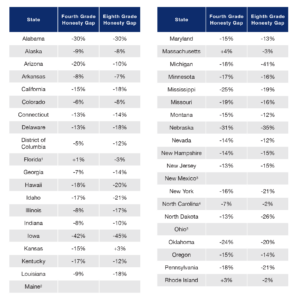
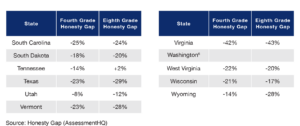
The Honesty Gap refers to the difference between the proficiency standards set by a state and those of the National Assessment of Educational Progress (NAEP). It is calculated by comparing the percentage of students scoring Proficient or Advanced on NAEP with those achieving the same levels on the state assessment.
A negative gap – where state proficiency rates exceed those on NAEP – suggests lower expectations and a potential dilution of academic rigor. Larger gaps indicate a greater need for states to reexamine and strengthen their proficiency standards.
2023-2024 Honesty Gap Snapshot in Alphabetical Order
1. Florida’s Proficient standard is more aligned with NAEP than its On Grade-Level benchmark. However, Florida uses On Grade-Level – a lower threshold – for school accountability and public reporting, whereas most states use Proficient. To maintain consistency with the Honesty Gap’s original methodology, we compare Florida’s Proficient level and above to NAEP Proficient and above. If we compared NAEP proficiency to On Grade-Level, Florida’s Honesty Gap would be significantly wider.
2. Maine does not publish state assessment scores by grade-level.
3. New Mexico does not publish state assessment scores by grade-level.
4. North Carolina defines proficiency as College and Career Ready, but also reports an On Grade-Level category, which represents a lower standard.
As with Florida, we compare what North Carolina deems as “proficient” and above to NAEP Proficient and above to remain consistent with the
Honesty Gap’s original methodology. If we compared NAEP proficiency to On Grade-Level, North Carolina’s Honesty Gap would be much larger.
5. Ohio does not publish state assessment scores by grade-level.
6.Washington does not publish state assessment scores by grade-level.
c. PARENT PERCEPTIONS OF STUDENT GRADE-LEVEL PROFICIENCY
Research conducted by Learning Heroes and Gallup shows that 90% of parents nationally believe their child is at or above grade-level in reading – despite declining proficiency rates across most states. This perception has remained steady for over a decade, even during the pandemic, when parents were more directly involved in their children’s learning. In contrast, NAEP data reveals that only about one-third of students read at grade-level.
This disconnect is significant, as it may reflect a gap in parents’ understanding of their child’s academic needs. When parents are aware that their child is behind, they are more likely to collaborate with teachers and seek additional support.
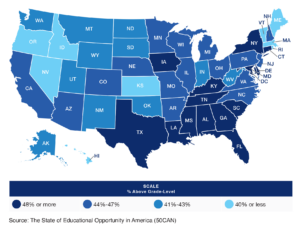
A recent state-by-state survey by 50CAN further highlights how parent perceptions vary across states, revealing the percentage of parents who believe their child is above grade-level in reading.
Percentage of Parents Who Believe Their Child Is Reading Above Grade-Level
4
GOVERNORS ADVANCING READING REFORM
Regardless of political dynamics, such as the makeup of the legislature or the relationship with the state education agency, governors in all states have the opportunity to lead efforts to advance effective reading policy. The examples below highlight how governors have used key levers of leadership, including:
- A. Convening authority to bring together diverse stakeholders.
- B. Holding stakeholders accountable to set clear expectations and
monitor progress. - C. Resource allocation to direct funding and support where needed.
- D. Influencing legislation to shape or advocate for policy change.
These examples, drawn from publicly available sources, represent a sample – not an exhaustive list – of how governors across varying political and educational contexts have played a pivotal role in driving reading improvement efforts.
a. CONVENING AUTHORITY
Governors possess a unique ability to bring together state agencies, experts, educators, and community members to confront challenges, build consensus, and chart a path forward for improving reading outcomes. Their influence and stature also position them to establish independent organizations dedicated to advancing literacy, sustaining momentum beyond any single administration.
Mississippi
Governor Phil Bryant issued an executive order in 2015 creating the Governor’s Task Force for Teacher Preparation in Early Literacy instruction, bringing together state agencies, higher education, and literacy organizations to improve teacher preparation for early literacy instruction.
The task force launched the Mississippi Momentum Project, a three-year initiative to strengthen literacy instruction among educator preparation faculty who taught courses on foundational literacy. Supported by the Kellogg Foundation, it began in 2017 with 40 faculty participants. First-time pass rates on the Mississippi Foundations of Reading exam rose to 65% from 54% in 2023. Representatives from the Higher Education Literacy Council, the Mississippi Department of Education, postsecondary institutions, the Barksdale Reading Institute, and the Center for Excellence in Literacy Instruction at the University of Mississippi participated.
Though the project ended in 2020, its success informed lasting literacy reform efforts. The project provided faculty with the Language Essentials for Teachers of Reading and Spelling (LETRS) curriculum, which is now included in two required early literacy courses for teacher candidates. Governor Bryant’s leadership helped build lasting political and institutional commitment to improving early reading instruction beyond his term in office.
Tennessee
In 2004, Governor Phil Bredesen partnered with the state legislature to establish the Governor’s Books from Birth Foundation (GBBF) – now the Governor’s Early Literacy Foundation (GELF) – as the statewide partner of Dolly Parton’s Imagination Library. For 15 years, GBBF expanded and sustained Tennessee’s Imagination Library, making it the only fully statewide program of its kind. GBBF secured funding and support through partnerships with major corporations – including Nissan, the Verizon Foundation, Amazon, and BlueCross BlueShield of Tennessee – and collaborated with state agencies to broaden its impact, including:
- Department of Children’s Services: Enrolled all eligible children in foster care.
- Department of Health: Distributed a “Welcome Baby” book to the family of every newborn.
- Department of Environment & Conservation and TN State Parks Conservancy: Launched the Storybook Trail program.
A 2009 GELF study in Knox County found that children who participated in the Imagination Library consistently outperformed nonparticipants on third-grade TCAP exams.
Under Governor Bill Haslam, GELF also partnered with the Department of Education on the Ready to be Ready initiative to improve third-grade reading proficiency. The initiative funded tuition-free literacy summer camps, where participating students improved reading accuracy by an average of 5%.
b. HOLDING STAKEHOLDERS ACCOUNTABLE
Governors hold high-profile and influential public positions, granting them a unique platform to speak out and be heard. This visibility provides a powerful tool for leadership, persuasion, and the advancement of key priorities – such as promoting reading and literacy – by leveraging the inherent authority of the office. As Colorado Governor Jared Polis aptly noted in the National Governors Association’s Let’s Get Ready! Roadmap for Governors, governors have the ability “not only to define a vision that brings people together, but to back it up with the evidence needed to monitor progress and hold stakeholders accountable.”
Virginia
Governor Glenn Youngkin has been a steadfast advocate for literacy throughout his tenure, beginning with the signing of the Virginia Literacy Act in April 2022. At the signing ceremony, Governor Youngkin emphasized the foundational role of reading in a child’s education, stating: “The most important thing we can do, as parents, as educators, and as a community, is ensure our children learn to read, so that they can read to learn. Today is a meaningful bipartisan step forward to give our students the tools they need to succeed not only in the classroom, but in life. We have a real challenge on our hands when it comes to childhood literacy. Over the last few years, Virginia has seen a decrease in reading proficiency, and the pandemic has magnified this challenge facing families, students, and educators.”
“The most important thing we can do, as parents, as educators, and as a community, is ensure our children learn to read, so that they can read to learn.”
— Governor Glenn Younkin
Since then, Governor Youngkin has continued to elevate the urgency of improving literacy outcomes, frequently drawing public attention to the state’s reading proficiency levels – including at a recent press conference addressing Virginia’s 2024 NAEP scores.
In September 2023, he further intensified his focus on reading by launching ALL IN VA, a $418 million statewide initiative designed to expand the Virginia Literacy Act, implement high-dosage academic tutoring, and address chronic absenteeism. Once again, Governor Youngkin took to the public stage, using a press conference to spotlight the initiative and call for collective action to support student success.
Rhode Island
Governor Dan McKee has leveraged his platform to launch Learn365RI, an out-of-school learning initiative introduced in April 2023 to expand educational opportunities through partnerships with municipalities, school districts, and community organizations such as the Rhode Island Department of Education (RIDE). Announced on his 100th day in office, the initiative called for strong local leadership, with Governor McKee stating, “A key component of our strategy to increase out-of-school learning time is to achieve a high-level commitment from mayors, town administrators, council presidents, and town managers across the state. They are the ones who are uniquely positioned to take this effort community-wide.”
To make the initiative measurable, Governor McKee set a bold goal: for Rhode Island’s education outcomes to meet or exceed Massachusetts’ by 2030. Specifically, RIDE aims to raise English Language Arts proficiency to 49% in 2030 from 31% in 2022, based on projected trends (RIDE).
Governor McKee has publicly highlighted progress, including in his 2025 State of the State Address: “Our flagship education initiative – Learn365RI – is driving progress in and out of the classroom… Over the past three years, our team… has helped our students reduce the RICAS ELA gap with Massachusetts by 34%… That’s progress, but we must accelerate it.”
“That’s progress, but we must accelerate it.”
— Governor Dan McKee
c. RESOURCE ALLOCATION
The power of the purse is one of the most effective tools governors possess to influence reading outcomes across their states. Most governors have the authority to craft and submit the initial budget proposal to the legislature and to exercise line-item veto power on appropriations bills. In addition, many governors can direct discretionary federal funds, apply for competitive federal grants, propose supplemental budgets, and issue executive orders – providing multiple avenues to prioritize and invest in literacy initiatives.
Massachusetts
Governor Maura Healey has prioritized access to high-quality instructional materials – particularly in early literacy – as a cornerstone of her education agenda. In January 2024, she started Literacy Launch: Age 3 to Grade 3, a five-year initiative aimed at improving reading proficiency by expanding access to evidence-based literacy instruction through high-quality materials, professional development, coaching, and technical assistance.
As part of the initiative, Governor Healey announced the opening of the Partnership for Reading Success – Massachusetts (PRISM) grant program in September 2024 and again during the launch of the second round in January 2025. PRISM grants provide public school districts with funding and professional development to collaborate with community-based preschool providers, aligning literacy curriculum, instruction, and assessment from early childhood through the early grades.
Massachusetts invested over $326,000 in the initial round of PRISM funding, followed by a significant increase to $5.5 million in the second round. To support the broader Literacy Launch initiative, Governor Healey allocated $20 million in the FY2025 state budget, with an additional $25 million proposed for FY2026, along with a separate $25 million investment in high-dosage tutoring to accelerate literacy gains (Mass.gov).
Ohio
In 2023, Governor Mike DeWine launched ReadOhio, a statewide initiative designed to raise literacy achievement by strengthening teacher capacity, fostering shared leadership, implementing a multitiered system of supports, and building strong partnerships with parents and communities.
Under Governor DeWine’s leadership, Ohio secured a $60 million Comprehensive Literacy State Development Grant from the U.S. Department of Education in October 2024 to enhance the quality of literacy instruction across the state (Ohio Department of Education and Workforce). In July 2025, Governor DeWine and the Director of the Ohio Department of Education and Workforce announced that $45.9 million of that grant had been awarded to 33 schools and districts to establish model literacy sites. These sites will provide literacy coaching, professional development, and daily reading instruction anchored in high-quality, evidence-based materials. They will also offer training to strengthen family engagement in literacy development. Announcing the awards, Governor DeWine stated: “By investing in our educators and aligning instruction to the science of reading, we are giving every Ohio student the opportunity to read confidently, succeed academically, and reach their full potential.”
“By investing in our educators and aligning instruction to the science of reading, we are giving every Ohio student the opportunity to read confidently, succeed academically, and reach their full potential.”
—Governor Mike DeWine
Although it is still too soon to fully assess the long-term impact of ReadOhio, early indicators are promising. According to the Ohio Department of Education and Workforce’s Kindergarten Through Grade 4 Literacy Report for the 2023-2024 school year, the percentage of third-grade students scoring Proficient or higher on the state ELA assessment rose to 64.5% from 62.3% in just one year. Additionally, the first cohort of ReadOhio coaching facilitated more than 5,600 coaching sessions during the same school year – underscoring the initiative’s early momentum and strong implementation.
d. INFLUENCING LEGISLATION
Governors whose party holds a majority in one or both legislative chambers can leverage their role as party leader to build consensus, align legislative priorities, and work closely with key lawmakers to advance and enact their policy agenda.
New Jersey
Governor Phil Murphy has been a vocal champion of literacy since 2024, when he helped usher in a comprehensive package of legislation aimed at strengthening reading instruction statewide. In his 2024 State of the State Address, he elevated literacy as a top priority for his administration, stating: “We will be introducing new initiatives to teach our kids the fundamentals of reading – like sounding out letters and combining them into words. It is simple: An emphasis on phonics in reading instruction is essential to the lifelong success of our children.” (NJ.gov)
“It is simple: An emphasis on phonics in reading instruction is essential to the lifelong success of our children.”
— Governor Phil Murphy
Governor Murphy then partnered with Senate Majority Leader M. Teresa Ruiz to advance two key literacy bills through the Legislature. These measures require universal literacy screenings for students in grades K-3 at least twice a year, establish a working group to recommend evidencebased literacy strategies, and create the Office of Learning Equity and Academic Recovery (LEAR) within the New Jersey Department of Education (New Jersey Business Magazine). Senator Ruiz acknowledged the governor’s commitment, stating: “I extend my deepest gratitude to… the governor’s administration, who rolled up their sleeves to make this legislation possible.” (NJ Senate Democrats)
Governor Murphy reinforced these legislative efforts with targeted funding. His FY2025 budget allocated $5.25 million to support implementation through grants such as Funding for Optimal Comprehensive Universal Screeners (FOCUS) – which helps districts administer high-quality literacy screeners – and Building Responsive Instruction through Data Guided Evaluation (BRIDGE) grants, which support the use of screening data to inform and deliver evidence-based instruction (NJ.gov). This financial backing helped ease concerns about the cost of implementation, making the reforms more broadly acceptable to legislators and school leaders alike.
Arkansas
Governor Sarah Huckabee Sanders played a central role in the swift passage and full implementation of the LEARNS Act, which became law in March 2023. As of the 2025-2026 school year, all provisions of the legislation are in effect. On literacy, the act mandates that districts adopt high-quality instructional materials for grades K-2 and requires the state to provide curriculumaligned, evidence-based training for educators. It also calls for the deployment of at least 120 literacy specialists, the adoption of a single statewide literacy screener, and the alignment of educator preparation programs with the science of reading – all aimed at strengthening early literacy outcomes (LEARNS).
Governor Huckabee Sanders employed a multifaceted strategy to ensure the act’s rapid passage. By declaring it her top legislative priority, she conferred significant political weight on the bill and effectively mobilized support within the Republican supermajority. This alignment minimized prolonged debate and curtailed opportunities for organized opposition. Notably, the Act was passed with an emergency clause, enabling it to take immediate effect rather than waiting the standard 91 days post-session. The entire process – from introduction to passage – was completed in just 15 days, underscoring the administration’s determination and strategic coordination.
5
FRAMEWORK FOR STRENGTHENING STATE READING OUTCOMES
This section is a comprehensive reference, exploring the following four essential components of effective reading policy and implementation in detail:
- A. Educator Preparation: Ensure new teachers learn how to teach reading correctly.
- B. High-Quality Professional Learning and Development: Ensure that sitting educators understand the science of reading and receive ongoing coaching and support.
- C. High-Quality Instructional Materials: Ensure that educators have access to instructional materials that align with the science of reading.
- D. Screening and Intervening: Ensure that educators use screeners and interventions that align with the science of reading to help identify and support struggling readers.
For each, you’ll find evidence-based best practices, implementation steps, guiding questions, and state examples to illustrate how these strategies are being applied in practice. Please note that the analysis draws from publicly available sources and may not fully reflect the specific context of your state.
Each component also includes a Measuring, Monitoring, and Continuous Improvement section – underscoring the state’s critical role in ensuring that policies become practices that make a difference for students. As with most policy initiatives, success lies in the details of implementation.
Statewide summative assessments remain a foundational tool for tracking progress in reading. These assessments provide actionable insights for policymakers, highlighting where to allocate resources, when to intervene in struggling schools, and how to evaluate district and campus performance over time. While formative and interim assessments offer frequent, real-time feedback at the classroom level, summative assessments are essential for identifying system-level trends and recognizing early signs of statewide impact.
Though many of these policy components may already be familiar, this section serves as a one-stop guide for identifying best practices and learning from leading states. These practices are also summarized in the at-a-glance checklist at the beginning of this packet and are complemented by forward-looking questions to help your team determine next steps.
a. EDUCATOR PREPARATION
Ensuring that new teachers are fully prepared to teach reading effectively is essential to improving student outcomes. To achieve this, states should prioritize two things:
- Holding educator preparation programs to rigorous, science-of-reading-aligned standards.
- Ensuring educator preparation programs measure new teacher preparedness through rigorous, reading-focused licensure exams and monitor new teacher pass rates.
Together, these measures help ensure that newly certified teachers enter the classroom ready to deliver high-quality, evidence-based reading instruction from day one.
Preparation Program Standards
States should require educator preparation programs to explicitly teach the science of reading and prepare future teachers to deliver it effectively. This entails establishing clear, comprehensive standards that encompass all components of the science of reading and holding programs accountable for full and faithful implementation.
- States should adopt detailed reading standards for their educator preparation programs.
According to the National Council on Teacher Quality (NCTQ), nearly all states have standards for elementary teacher preparation programs that refer to reading, but only 26 states have detailed standards about how teacher candidates should teach reading.
- Standards for educator preparation programs should clearly articulate what teacher candidates must learn, why each skill is essential to reading development, the instructional goals associated with that skill, and how to assess student mastery.
Specifically, these standards should comprehensively address the five foundational components of the science of reading: phonemic awareness, phonics, fluency, vocabulary, and comprehension. However, simply naming these components is insufficient. Effective standards must also detail how teacher candidates should apply their knowledge in the classroom and how they will assess students’ progress in each area. For example, as the NCTQ recommends, a strong standard on phonemic awareness should include an explanation of its role in reading development, common developmental milestones, targeted instructional objectives – such as word segmentation – and strategies for evaluating student understanding.
- The state should retain final authority over the approval and renewal of educator preparation programs, including full oversight of the accreditation process.
This ensures alignment with state standards – particularly those related to reading instruction – and allows the state to provide targeted, actionable feedback to help programs meet those expectations. High standards alone are not enough; meaningful improvement requires both clear accountability and sustained support from the state to drive real, lasting change in how teachers are prepared.
Preparation Program Content
The content delivered in teacher preparation programs should provide a clear, in-depth understanding of the core components of the science of reading and how to effectively teach each one. Just as critically, programs should offer structured opportunities for teacher candidates to apply this knowledge through guided practice in real classroom settings.
- Educator preparation programs should adopt a Structured Literacy framework, which systematically integrates instruction in phonemic awareness, phonics, fluency, vocabulary, and comprehension.
Despite the overwhelming evidence supporting this approach, only 36% of educator preparation programs nationwide adequately cover all five components of effective reading instruction, according to the National Council on Teacher Quality (NCTQ). Many programs continue to rely on Balanced Literacy, a model that emphasizes developing a love for reading but neglects to explicitly teach the foundational skills students need to become proficient readers.
- Preparation programs must provide teacher candidates with meaningful opportunities to practice and apply what they learn – whether through individualized tutoring, field-based teaching experiences, or structured peer-led exercises.
Practical application is essential for developing mastery. Yet 30% of educator preparation programs provide no opportunities for candidates to practice delivering instruction in any of the five critical components of the science of reading.
- Programs should explicitly prepare teacher candidates to meet the needs of English learners and struggling readers, both through targeted instruction and increased time spent on these topics.
English learners represent one of the fastest-growing student populations, yet nearly 70% of preparation programs allocate less than two hours of instruction on how to teach reading to multilingual learners. Similarly, 57% of programs devote less than two hours to equipping candidates with strategies to support struggling readers. This lack of preparation leaves future teachers underequipped to meet the diverse needs of today’s classrooms.
- Programs should prepare teacher candidates to identify and implement high-quality instructional materials.
Using high-quality materials offers many benefits to teachers, including reducing the time teachers spend creating materials, allowing them to focus more on instructional delivery. It is also essential for students; high-quality materials build knowledge and skills logically, are created using research-based strategies, and ensure that students are receiving instruction aligned to the states’ standards for reading.
Licensure
Licensure exams should serve as a critical safeguard, assessing whether teacher candidates have a firm grasp of the core components of the science of reading. As a final measure of readiness, these assessments help ensure that graduates of educator preparation programs are truly equipped to deliver effective reading instruction from their first day in the classroom.
- State licensure requirements should include a rigorous, reading-specific assessment to evaluate teacher candidates’ proficiency in evidence-based reading instruction grounded in the science of reading.
While most states require prospective teachers to pass a licensure exam, not all mandate a test that meaningfully assesses their ability to teach reading. According to NCTQ, more than half of states rely on inadequate licensure exams that fail to effectively measure whether elementary teacher candidates have the knowledge and skills needed to deliver high-quality, research-aligned reading instruction.
Measuring, Monitoring, and Continuous Improvement
Once states establish high standards for educator preparation and implement a reading-specific licensure exam, they should actively monitor the impact of these reforms. Ongoing evaluation enables states to identify what’s working, address unintended gaps, and make data-informed adjustments to policies and practices that support continuous improvement.
- Educator preparation programs should be required to publicly report detailed licensure test pass rates – including both first-attempt and best-attempt results – with data disaggregated by program.
This information should be made easily accessible through the state education agency to inform prospective teachers, strengthen accountability, and highlight programs that are most effective in preparing candidates to teach reading. While all states must submit some licensure data to the federal government under the Higher Education Act, these reports often omit critical details, such as first-time pass rates and number of attempts and are not always made publicly available at the state level.
- Use licensure data to drive program improvement.
Licensure outcomes should not only be reported – they should be used strategically to strengthen preparation programs. Programs should analyze their results to identify areas for growth, and states should consider this data when making decisions about program approval, renewal, or intervention. In this way, licensure data becomes a tool not just for compliance, but for continuous quality improvement in teacher preparation.
State Examples
Washington
Washington mandates comprehensive reading requirements for teacher candidates seeking endorsements in elementary education, middle-level humanities, reading, or English language arts. Candidates must demonstrate mastery of the five core components of the science of reading, as outlined by the Washington Professional Educator Standards Board.
Indiana
Indiana is legally required to conduct a detailed audit of educator preparation programs every four years, specifically evaluating their implementation of the science of reading. These audit results are made publicly available, providing greater transparency and enabling more frequent and focused scrutiny of reading instruction than the broader program review process typically allows.
Maryland
Maryland law requires educator preparation programs to include instruction on recognizing and using high-quality instructional materials, including digital resources.
Colorado
Colorado has established a rigorous program approval process to ensure educator preparation programs comprehensively teach all five components of the science of reading. Programs must complete a checklist and submit detailed course materials or syllabi aligned with Colorado’s standards for review. Subsequently, state officials and literacy experts perform on-site evaluations before recommending full or conditional approval, with conditional status granting programs a year to address identified deficiencies.
Florida
Florida’s Reading Endorsement Competencies explicitly address the instructional needs of English Learners, emphasizing how teachers should adapt their reading instruction to effectively support this growing student population.
Texas
Texas administers the Science of Teaching Reading Exam as a robust licensure assessment. The state uses pass rates, particularly the percentage of candidates passing within their first two attempts, as a key metric for approving educator preparation programs.
Wisconsin
Wisconsin requires that candidates for licensure as elementary teachers, special education teachers, reading teachers, or reading specialists pass the Wisconsin Foundations of Reading Test (FORT). The state publishes an annual report detailing program completers and first-time FORT passage rates to support transparency and accountability.
b. HIGH-QUALITY PROFESSIONAL LEARNING AND DEVELOPMENT
While school districts bear the primary responsibility for providing professional learning opportunities to their in-service teachers, state education agencies play a crucial role in supporting these efforts to ensure that such training meaningfully enhances teaching and learning outcomes.
States can adopt policies that mandate teacher participation in evidence-based training, such as instruction grounded in the science of reading, while also vetting and endorsing high-quality professional development programs. Additionally, states might incentivize districts to invest in proven programs. Robust state support for teacher learning and development not only conserves districts’ time and resources but also guarantees that their investments are directed toward effective, impactful training.
Ideally, districts provide a well-rounded continuum of professional learning opportunities:
- Workshops are the most effective form of professional learning for teachers in the beginning stages of implementing high-quality materials (Rivet Education).
- Coaching is most effective for providing ongoing support to teachers (Rivet Education). Many states have hired literacy coaches through their state department of education and deployed them to support evidence-based reading instruction across districts (ExcelinEd).
- Collaborative learning is strongly associated with the consistent use of high-quality instructional materials. This approach often takes the form of structured planning time among teacher teams, allowing educators to engage deeply with curriculum content and align their instructional practices. As one of the most common formats for curriculum-specific professional learning, collaborative learning fosters shared understanding, promotes coherence across classrooms, and supports sustained instructional improvement (RAND).
Whenever feasible, school leaders should prioritize embedding professional learning within the school day and leveraging existing resources. Time and budget limitations consistently rank as the two most significant barriers to implementing high-quality professional development. Integrating professional development into the regular school schedule – such as through curriculum-aligned professional learning communities (PLCs) or instructional coaching – can help mitigate these challenges. These approaches are often more time-efficient and cost-effective than traditional models, while still providing meaningful, job-embedded support for teachers.
While the format of professional learning opportunities should vary, there are characteristics of professional learning that experts agree every opportunity should have:
- Professional learning should be curriculum-based.
Effective teacher development must support educators in the implementation of high-quality, standards-aligned instructional materials. Rather than focusing solely on general content knowledge or instructional strategies, curriculum-based professional learning is specifically designed to align with the materials teachers are using in their classrooms. Research shows that when teachers receive targeted training and ongoing coaching tied to a specific curriculum, they are significantly more likely to use those materials consistently and effectively.
- Professional learning should be data-driven and grounded in reflection and feedback.
Teachers should be equipped with the skills to gather and analyze meaningful evidence – such as interim assessments, classroom observations, and student surveys – to better understand how instruction is landing with students. Professional learning should foster a culture of continuous improvement, helping teachers reflect on their practice and make data-informed adjustments to meet the evolving needs of their students.
- Professional learning should be responsive to teacher and school context.
The type and intensity of support needed to implement high-quality instructional materials varies based on factors such as teaching experience and school conditions. For example, a novice teacher introducing a new curriculum will likely require different supports than a veteran teacher who is already familiar with the materials. Similarly, at the system level, districts with high teacher turnover may require more frequent and intensive professional learning than those with more stable teaching staff.
Professional Learning Implementation
Just as selection of learning materials is critical to improving instruction, so are the systems and conditions that support the implementation of training.
- States should require all elementary teachers to participate in high-quality professional learning grounded in the science of reading.
Teachers with a deep understanding of the science of reading are essential to ensuring that students acquire the foundational literacy skills necessary for academic success. Yet, according to EdWeek, 72% of K-2 teachers report using instructional practices that cognitive scientists have found to be ineffective. Requiring evidence-based training for all elementary educators would help close this gap and ensure more students receive instruction aligned with how children actually learn to read.
- States should extend science of reading training to all middle-grade teachers.
While much attention is given to early literacy, many students continue to struggle with reading well beyond elementary school. However, states often do not require middle-grade teachers to receive training in the science of reading. Providing this professional development is critical to equipping teachers with the tools to support struggling readers before literacy gaps widen and become more difficult to close.
- States should identify, recommend, or require high-quality professional learning programs. Some states have taken proactive steps by specifying which science of reading trainings are approved or by offering vetted programs at low or no cost to districts and educators. Others support districts by curating guidance documents that help local leaders navigate the vendor landscape. By setting clear expectations and streamlining access to quality programs, states can play a pivotal role in elevating the effectiveness of professional learning statewide.
- Districts should pursue partnerships with expert third-party providers.
While most curriculum-based professional learning is currently delivered in-house by district staff or school leaders, this need not be the norm. Districts can expand the quality and variety of their offerings by partnering with external organizations – such as professional associations, regional education service agencies, and curriculum developers – to deliver high-quality, content-specific training. These partnerships can bring specialized expertise and capacity that may be difficult to sustain internally.
Measuring, Monitoring, and Continuous Improvement
To ensure professional learning is effective and responsive, states and districts should regularly analyze feedback and outcome data and be prepared to adjust policies, strategies, and offerings accordingly. This continuous improvement approach helps maximize the return on investment and ensures that professional learning is implemented well and remains aligned with educators’ and students’ evolving needs.
- Districts and states should actively measure and monitor teacher participation in professional learning.
Simply offering high-quality professional learning does not guarantee that all teachers will engage with it. It is essential to track participation rates, gather teacher feedback, and assess the connection between training and student outcomes. Transparent reporting on how many educators have completed high-quality training can also serve as a compelling early indicator of progress – one that builds public trust and reinforces the value of continued investment.
- Participation data and learning outcomes should inform continuous improvement.
Both districts and the state should regularly review participation trends and the impact of professional learning on instructional practice and student achievement. When certain providers or programs consistently fail to meet teacher needs, the state should communicate this clearly and provide guidance to help districts make informed adjustments. This feedback loop ensures that professional learning remains effective, relevant, and aligned with the evolving demands of classrooms.
State Examples
North Carolina
Under the Excellent Public Schools Act, North Carolina mandated that all elementary teachers complete LETRS (Language Essentials for Teachers of Reading and Spelling), a widely recognized, evidence-based professional learning program. To meet this ambitious goal, the state provided LETRS training to 44,000 K-5 literacy educators already in the classroom at the time the policy was enacted. Notably, the North Carolina Department of Public Instruction demonstrated transparency by publicly sharing completion data – both as an accountability measure and to celebrate progress. This visibility helped build public trust and highlight the state’s commitment to improving early literacy outcomes.
Minnesota
Minnesota’s READ Act establishes a phased, statewide approach to ensuring educators are well equipped to teach foundational reading skills. By July 1, 2026, all districts must provide training, selected from a state-approved list, to pre-K-3 classroom teachers, K-12 reading interventionists, special education teachers responsible for foundational literacy instruction, ESL teachers, and staff responsible for selecting literacy materials. By July 1, 2027, this requirement extends to teachers of grades 4-12 who provide foundational reading instruction, instructors in stateapproved alternative programs, and dual language immersion educators. This comprehensive policy reflects a statewide commitment to consistent, high-quality literacy instruction across grade-levels and teaching contexts.
New Mexico
The New Mexico Public Education Department developed and maintains a High-Quality Professional Learning Marketplace List, a curated resource that enables districts and schools to easily identify professional learning providers and experiences aligned with high-quality instructional materials. This centralized guidance supports informed decision-making at the local level and helps ensure that professional development investments are both strategic and effective.
Louisiana
Louisiana has developed Professional Learning Efficacy Indicators to evaluate the effectiveness and quality of professional learning providers, especially those supporting the use of high-quality instructional materials. Providers are rated on a five-point scale, and the results are published publicly to help district leaders identify and choose the most effective professional development programs.
c. HIGH-QUALITY INSTRUCTIONAL MATERIALS
Curriculum choices, like professional development selections, are largely decided at the local level. However, states have powerful levers they can use to guide and support districts in selecting high-quality instructional materials. They can require or strongly recommend that districts choose from state-vetted lists of high-quality curricula or offer financial incentives to encourage the adoption of materials that meet rigorous standards. In addition, states can collect and publish data on curriculum adoption across districts, helping to identify patterns, spotlight success stories, and determine where additional support or intervention may be needed.
Experts agree that high-quality instructional materials share several key characteristics:
- Aligned to the science of reading and state academic standards. Effective materials reflect the latest evidence from cognitive science, emphasizing the development of both language comprehension and word recognition skills, both of which are essential for students to become proficient readers.
- Designed to build background knowledge across disciplines.
Often referred to as “knowledge building,” these materials support reading comprehension by immersing students in content-rich texts across history, social studies, science, and literature. This approach ensures that students not only learn to read but also learn from what they read.
- Embedded with teacher and student supports.
High-quality curricula include built-in guidance to help teachers plan and deliver effective instruction. They should support differentiated learning, align to grade-level expectations, and deepen teachers’ own understanding of the content. Additionally, materials should be visually engaging and, where appropriate, incorporate technology to enhance instruction.
Adoption
States have an important role to play in helping districts adopt high-quality materials. Depending on the state’s laws, the state can require or recommend certain instructional materials to districts. It can incentivize districts to choose those materials by making the smart choice the easiest choice.
- States can promote high-quality curriculum by signaling to districts which materials align with both the science of reading and state academic standards.
While curriculum adoption typically occurs at the local level, states can guide decision-making by identifying, reviewing, and either recommending or requiring the use of vetted instructional materials. State education agencies may conduct these reviews directly or partner with credible third-party organizations such as EdReports. By endorsing or mandating high-quality curricula, states help ensure that local education agencies select resources with demonstrated effectiveness.
- While establishing a state-vetted list of approved curricula represents best practice, at a minimum states should equip districts with tools to make informed choices.
This includes providing evaluation rubrics, offering guidance on assessing the quality of supports for English Learners and struggling readers, and ensuring alignment with state standards and local priorities.
- To further facilitate adoption, states can ease administrative and financial barriers by offering grants or negotiating statewide purchasing agreements with publishers.
These efforts not only expand access to high-quality instructional materials but also promote equity and consistency across districts.
Measuring, Monitoring, and Continuous Improvement
While it is challenging to monitor which curricula districts adopt – and even more so to determine whether those materials are actually implemented in classrooms – the state should establish reporting mechanisms to gather this information. These systems can help identify gaps in curriculum use and determine where additional or alternative supports may be needed to ensure effective instruction.
- The state collects and publicly reports district-level data on adopted reading curricula or requires districts to publish this information.
According to NCTQ, only 18 states either publish this information on their websites or require districts to do so. An additional 12 states collect the data but do not make it publicly available. The data should be used to analyze curricula effectiveness based on student reading outcomes, and these findings can help states continuously improve policy, guidance, and professional learning efforts. - In districts where uptake of high-quality curriculum is low, state leaders should engage in candid, collaborative conversations with local education leaders to understand the barriers.
Curriculum adoption is often a complex and personal decision. By treating district leaders as critical partners in a continuous feedback loop, states can better understand local challenges
and refine their support to meet the real needs of educators and students.
State Examples
Louisiana
Louisiana strategically incentivizes the adoption of high-quality instructional materials by tying it to access to competitive funding. Through its innovative “Super App,” a unified platform for districts to apply for all state and federal education funds, Louisiana streamlines the funding process and encourages coherence in curriculum planning. Rather than requiring districts to navigate separate
funding streams, the Super App asks them to present a comprehensive plan for selecting and implementing high-quality instructional materials, regardless of the source of funds. This approach promotes a unified, strategic vision for curriculum adoption and ensures that funding is contingent upon a demonstrated commitment to high-quality materials.
Kentucky
The Kentucky Department of Education embeds guidance on selecting high-quality instructional materials into its annual leadership training. This professional development is provided at multiple levels – state, regional, district, and school – equipping education leaders with the knowledge and tools to research, evaluate, and choose evidence-based instructional resources.
Nebraska
Nebraska increases transparency and promotes informed decision-making through its Instructional Materials Map, which publicly shares the ELA (K-12), math (K-12), and science (K-8) curricula used by each district. This resource is informed by the state’s annual Instructional
Materials Data Collection and serves as a valuable tool for stakeholders seeking to understand curriculum choices across the state.
d. SCREENING AND INTERVENING
Assessing students’ reading skills is essential for early identification of those at risk for reading difficulties, such as dyslexia, and allows for timely intervention and support from both educators and families.
Reading screeners are most commonly administered in grades K-2, when early detection is most impactful, but should be continued in later grades for struggling readers. To foster transparency and engagement, the results of these screenings should be presented in a format that is clear, accessible, and easily understood by parents and the broader public.
Identifying Reading Difficulties
Early identification and intervention for reading difficulties is essential to student success. State summative assessment scores, while useful as a year-end touchpoint for educators, parents, and policymakers, are not suited for this purpose. Timely screenings and actionable intervention are key.
- Students in grades K-3 should be assessed with a universal reading screener at least three times per year, with continued screening in higher grades for students identified as struggling readers.
These assessments are essential for identifying students who may need additional support throughout the year, enabling teachers to tailor instruction and proactively address reading challenges. Screeners can also help predict which students are not on track to meet key literacy benchmarks and may be at risk for dyslexia or other reading difficulties.
- When a student is flagged as at risk for a reading difficulty, schools should promptly notify the student’s parents or guardians and provide clear, accessible information
about available support and resources.
Early and transparent communication empowers families to partner with educators in supporting their child’s reading development.
- Schools should be required to regularly monitor reading progress for students in grades 3-8, ensuring timely identification of those performing below grade-level or at risk of falling behind.
While foundational reading skills are expected by the end of third grade, ongoing assessment in upper grades is essential to ensure continued progress toward grade-level proficiency and to intervene when necessary.
- Students identified with reading difficulties should receive an individualized reading plan outlining the targeted support they will receive, such as evidence-based tutoring or small-group instruction.
This plan should also include clear guidance for families on how to support their child’s literacy growth at home, fostering a collaborative approach to reading success.
Measuring, Monitoring, and Continuous Improvement
Reading screeners generate valuable data that, when used effectively, can inform state policy, guide instructional practice, and ultimately improve student outcomes. States have a responsibility to analyze this data to assess the impact of current policies and make timely adjustments when progress is not being made. Equally important is maintaining transparency with families and the public, particularly to empower parents with the information they need to support their children’s reading development.
- States should collect, disaggregate, and publicly report student achievement data for all federally required student groups – including race, ethnicity, gender, and other key categories – in a timely and accessible manner.
Although federal law mandates this level of reporting, a 2023 analysis by the Data Quality Campaign found that 23 states failed to publish complete data for all required groups. To ensure equity and accountability, states must prioritize the completeness, clarity, and timeliness of this information so that families and policymakers can make informed decisions.
- Student reading data should be presented in a way that is actionable for both educators and families.
Simply collecting data is not enough; it must be accompanied by clear guidance on how to interpret the results and what steps can be taken to support students who are struggling. Screener data should serve as a tool for targeted intervention – not just at the classroom level, but also in how states allocate resources and support.
- States should align school improvement strategies and funding with student need, using screening data to identify and prioritize support for underperforming students and schools.
If the data suggests that current efforts are not yielding results, state leaders must engage directly with school divisions, educators, and families to understand barriers and recalibrate
supports. Resources should be deployed equitably and strategically, ensuring the greatest support reaches the students who need it most.
State Examples
Connecticut
Connecticut requires all public school districts serving grades K-3 to administer a high-quality, universal literacy screener selected from a list of state-approved assessments. The state’s approved list includes detailed information on how each tool measures essential components of reading, such as fluency, phonemic awareness, and comprehension.
Missouri
Missouri mandates that school districts screen students for dyslexia and other reading difficulties twice in kindergarten and three times annually in grades 1-3. Districts must select screeners from a state-approved list and provide at least two hours of in-service training for teachers on identifying and supporting students with dyslexia and related reading challenges (State of Dyslexia). Schools are also required to notify parents if their child is identified as at risk.
Oklahoma
Oklahoma requires school districts to administer a universal reading screener to all students in grades K-3 three times per year. Any student not reading at grade-level must receive an Individual Program of Reading Instruction, developed by a Student Reading Proficiency Team. This team includes the student’s parent(s) or guardian(s), the current reading teacher, a reading teacher from the next grade-level, and a certified reading specialist.
Ohio
Ohio law requires school districts to provide families with their child’s summative assessment results by June 30 of the same academic year, ensuring timely communication that allows parents to act on the information before the next school year begins.
Illinois
The Illinois Report Card offers families and stakeholders user-friendly, transparent data on student achievement at both the district and state levels. It presents assessment results in English Language Arts and other subjects, with year-over-year trends, growth percentiles, and proficiency rates. A dedicated tab also disaggregates performance by student group, making equity gaps easier to identify and address.
6
RESOURCES
As your state continues its efforts to enhance reading policies and practices, you may find the following expert-curated resources invaluable. These materials offer insights into lessons learned, best practices, recommended actions, and comprehensive state-by-state information on reading policy. They are thoughtfully organized according to the four best practice areas outlined in Section 4.
Educator Preparation Programs:
- Five Policy Actions to Strengthen Implementation of the Science of Reading: This report from the National Council on Teacher Quality provides a 50-state analysis of five policy actions to strengthen the implementation of the science of reading, covering educator preparation programs, reading licensure tests for teachers, high-quality curriculum adoption, and professional learning.
- The Reading League Compass: Providing Direction: This resource provides guidance on how to navigate the science of reading marketplace for a variety of stakeholders, including curriculum decision-makers, policymakers and state education agencies, administrators, educators, and educator preparation programs.
- False Assurances: Many states’ licensure tests don’t signal whether elementary teachers understand reading instruction: This brief from the National Council on Teacher Quality analyzes teacher licensure test requirements in all 50 states.
- Advancing Literacy Education: This tool from the Council of Chief State School Officers (CCSSO) provides a comprehensive strategy for embedding and scaling the science of reading and high-quality instructional materials in educator preparation programs.
High-Quality Professional Learning:
- Five Policy Actions to Strengthen Implementation of the Science of Reading: This report from the National Council on Teacher Quality provides a 50-state analysis of five policy actions to strengthen the implementation of the science of reading, covering educator preparation programs, reading licensure tests for teachers, high-quality curriculum adoption, and professional learning.
- The Reading League Compass: Providing Direction: This resource provides guidance on how to navigate the science of reading marketplace for a variety of stakeholders, including curriculum decision-makers, policymakers and state education agencies, administrators, educators, and educator preparation programs.
- The Supply and Demand of Curriculum-Based Professional Learning: This brief from Rivet Education defines what curriculum-based professional learning looks like, the demand for curriculum-based professional learning nationwide, and the landscape of providers.
- Fundamentals of Literacy Coaching: ExcelinEd partnered with the Florida Center for Reading Research to provide a series of 16 modules for state and district leaders to build the capacity of literacy coaches.
- How States Are Creating Conditions for Use of High-Quality Instructional Materials in K-12 Classrooms: This 2022 report from RAND discusses state policies to improve the adoption and use of high-quality instructional materials across CCSSO’s High-Quality Instructional Materials and Professional Development (IMPD) Network.
- The Elements: Transforming Teaching through Curriculum-Based Professional Learning: In this report, the Carnegie Corporation describes the essential features of curriculum-based professional learning.
- High-Quality Curriculum Implementation: Connecting What to Teach with How to Teach It: The National Institute for Excellence in Teaching shares six lessons and actions for district, school, and teacher leaders to implement effective professional learning structures connected to high-quality instructional materials.
High-Quality Instructional Materials:
- Five Policy Actions to Strengthen Implementation of the Science of Reading: This report from the National Council on Teacher Quality provides a 50-state analysis of five policy actions to strengthen the implementation of the science of reading, covering educator preparation programs, reading licensure tests for teachers, high-quality curriculum adoption, and professional learning.
- The Reading League Compass: Providing Direction: This resource provides guidance on how to navigate the science of reading marketplace for a variety of stakeholders, including curriculum decision-makers, policymakers and state education agencies, administrators, educators, and educator preparation programs.
- State of the Instructional Materials Market: The Availability and Use of Aligned Instructional Materials in 2023: EdReports’ annual report shares trends, successes, and areas of consideration for states, districts, educators, and product developers related to high-quality instructional materials.
- EdReports: The EdReports website provides free, educator-led reviews of instructional materials in ELA and other subjects, evaluating materials for components like foundation skills, comprehension, and teacher and student supports.
- Knowledge Matters Review Tool: This tool from the Knowledge Matters Campaign can help states, districts, and schools evaluate K-8 ELA curriculum for whether it strengthens reading comprehension. It is designed to be used in addition to other tools that evaluate curriculum for other essential components, not as the sole measure of quality.
- Market Explorer Map: This map from The Center for Education Market Dynamics shares nationwide data on district curriculum selection in ELA and math.
Screening and Intervening:
- Show Me the Data 2023: The Data Quality Campaign’s annual review of state report cards, evaluating whether they meet federal reporting requirements and how clearly the data is presented.
- A Policymaker’s Guide to State Summative Assessment Systems: This guide from the Education Commission of the States and EdTrust walks through federal assessment requirements and opportunities for states to innovate to create assessments that meet student needs and accurately measure learning